SUPER NATURE DESIGN
pascal triangle
SYNTHETIKA: Andy Thomas
Visual Bird Sounds
Andy Thomas
FILE SÃO PAULO 2025: SYNTHETIKA – Arte e Tecnologia
Visual Bird Sounds – Austrália
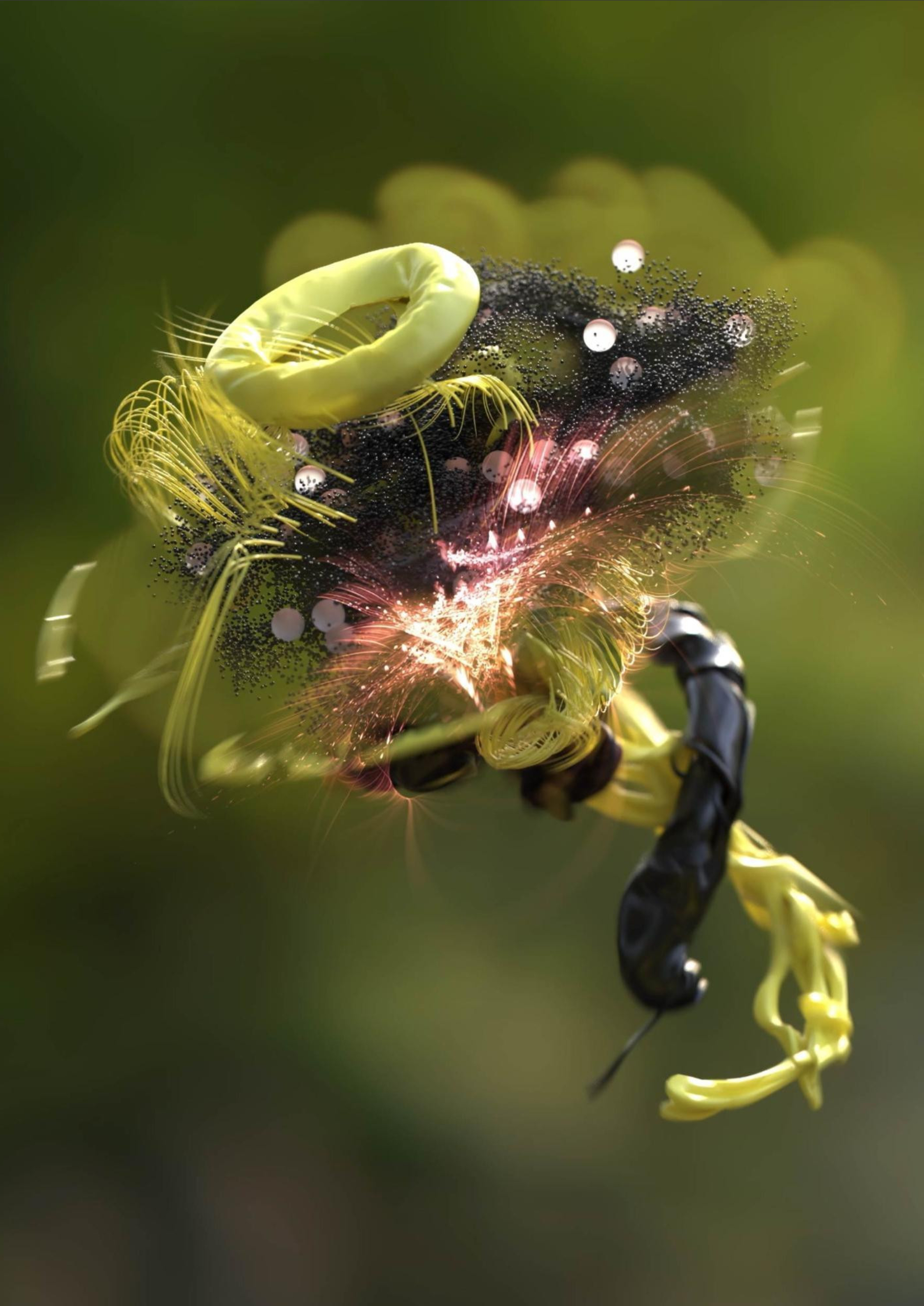
Visual Bird Sounds transforma cantos e sons de aves em visualizações 3D geradas por computador. As gravações são convertidas em figuras animadas que lembram organismos vivos digitais — como representações virtuais dos próprios pássaros. A obra convida o público a refletir sobre a beleza da natureza e a urgência de preservar seus habitats.
BIO
Thomas é artista especializado na criação de “formas de vida sonoras” e na visualização criativa de sons. Coleta gravações e imagens de aves e outros animais em expedições a regiões remotas, transformando esses dados em vídeos e obras digitais. Seu trabalho une ciência e arte ao fundir elementos da flora e fauna em composições visuais abstratas.
SYNTHETIKA: Ultravioletto
Mycelium — Natural Intelligence
Ultravioletto
FILE São Paulo 2025 | LED Show
Festival Internacional de Linguagem Eletrônica
Mycelium — Natural Intelligence – Itália
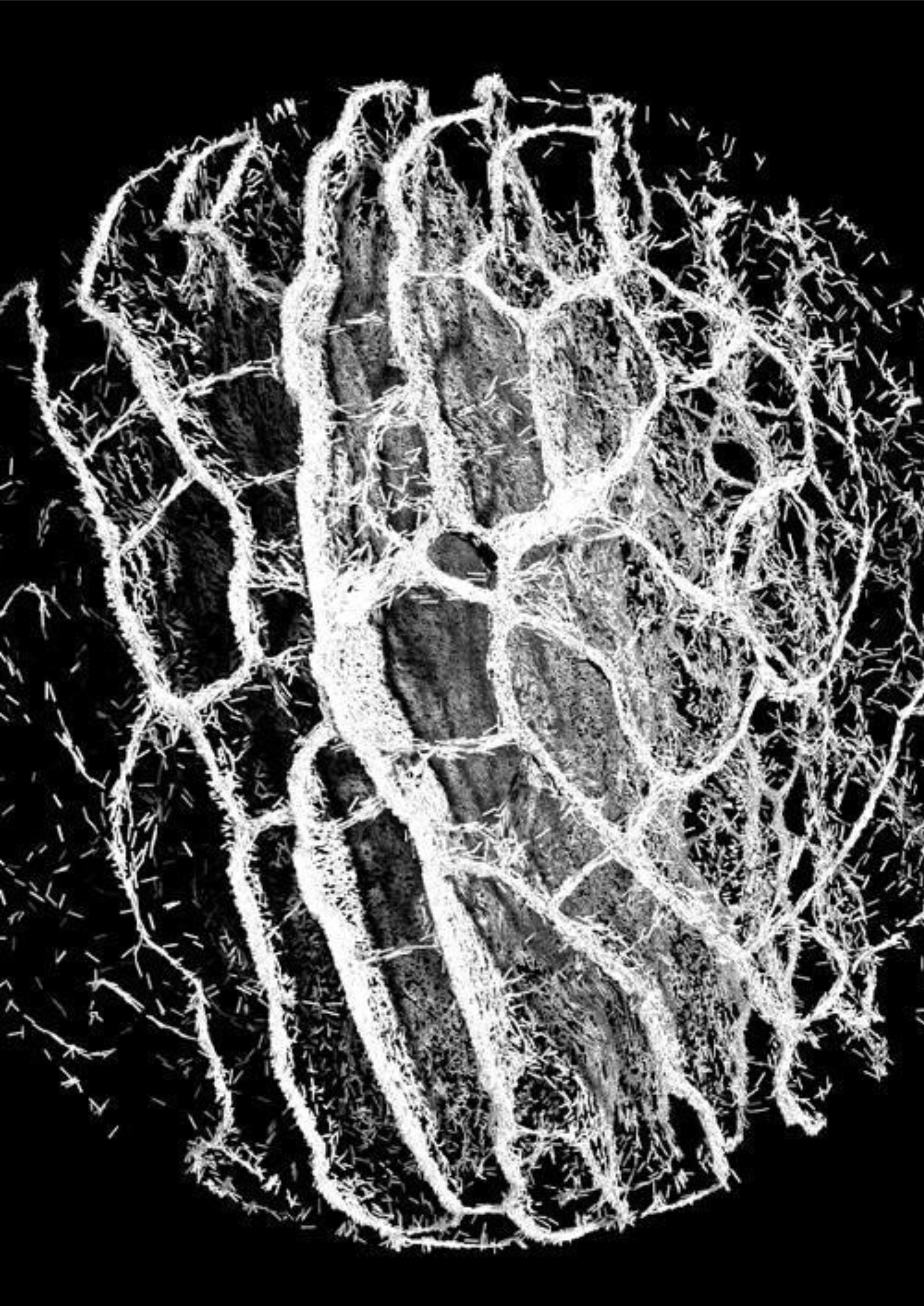
A inteligência é frequentemente vista como aquilo que distingue os seres humanos, com a tecnologia como seu produto. Essa visão antropocêntrica exclui grande parte do mundo natural da ideia de progresso. E se a inteligência for um processo distribuído, resolvendo problemas por meio de conexões? Fungos otimizam redes de alimentação e comunicação pelo micélio, oferecendo um modelo para repensarmos nossa relação com a natureza e as cidades. Ultravioletto explora esse conceito em um vídeo gerado por algoritmos.
BIO
Ultravioletto é um estúdio criativo especializado em fundir arte e design com tecnologias interativas. Com uma abordagem não convencional, o estúdio integra novas mídias em projetos de pesquisa inovadores, contando com designers, programadores, artistas 3D e produtores.
SYNTHETIKA: Pan
Towards a New Nature
Pan
FILE São Paulo 2025 | CGI Videos
Festival Internacional de Linguagem Eletrônica
Towards a New Nature – China
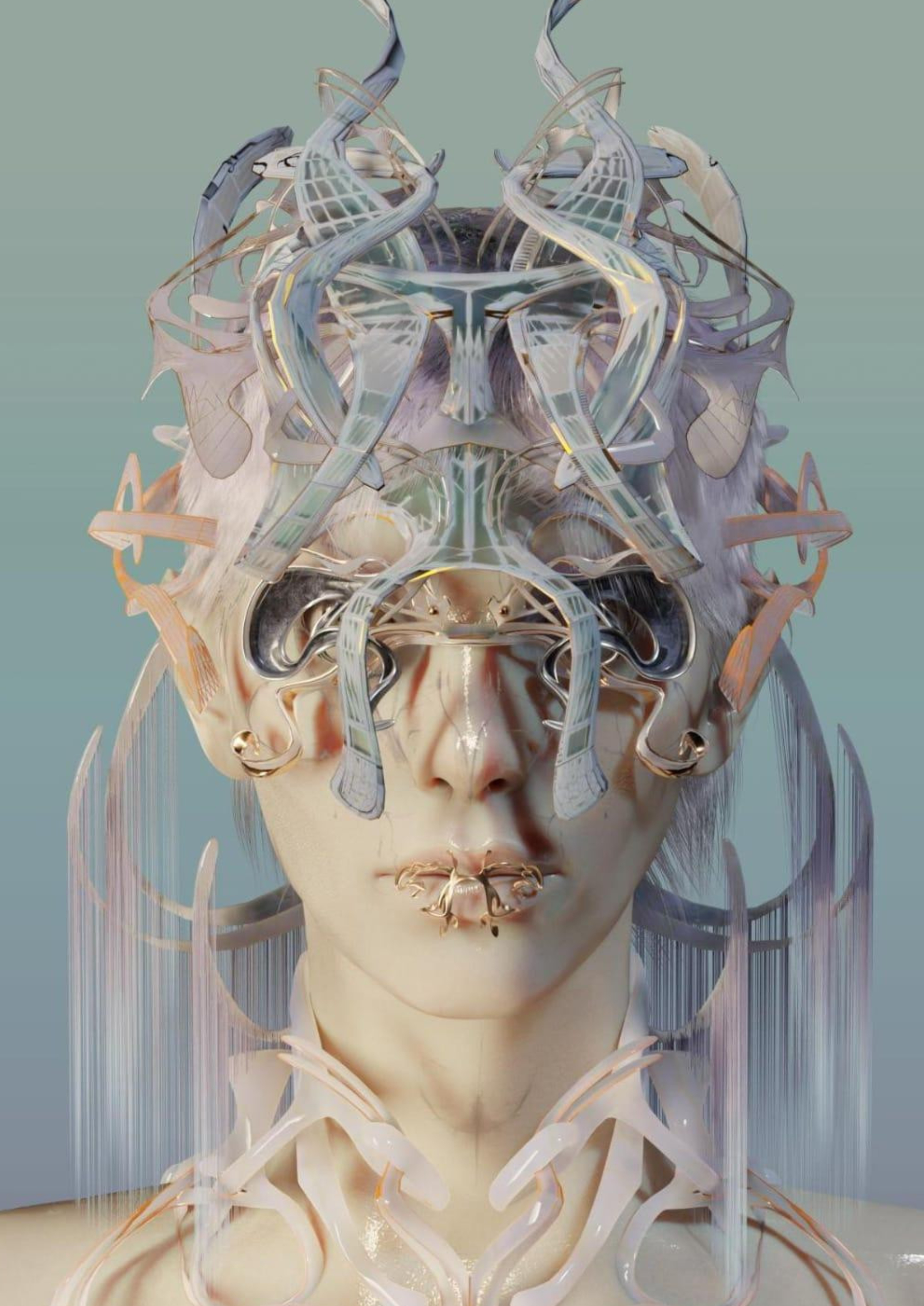
Os residentes do Metaverso podem ter penteados onde a fronteira entre a pessoa e o cabelo se desfaz, fazendo com que o cabelo se torne quase como um “órgão”. Esses penteados poderiam “germinar” ramos ou flores, ter um movimento dinâmico semelhante ao das plantas balançando ao vento e apresentar formas geométricas, cores e efeitos que ultrapassam as limitações do mundo físico.
BIO
Pan Qianqian está atualmente estudando Mídia Digital e Realidade Mista na Academia de Arte da China. Ela é especializada em design e produção 3D, além de arte de novas mídias. Está envolvida em imagens 3D, instalações interativas, roupas virtuais e outros campos. Suas obras foram exibidas na Primeira Exposição de Arte Digital e no Tianwen 2023: Aprendizado Mútuo entre Civilizações.
FILE SÃO PAULO 2025: SYNTHETIKA – Jiatong Yao
ChromaPause
Jiatong Yao
FILE SÃO PAULO 2025: SYNTHETIKA – Arte e Tecnologia – CGI Videos
Festival Internacional de Linguagem Eletrônica
ChromaPause – China
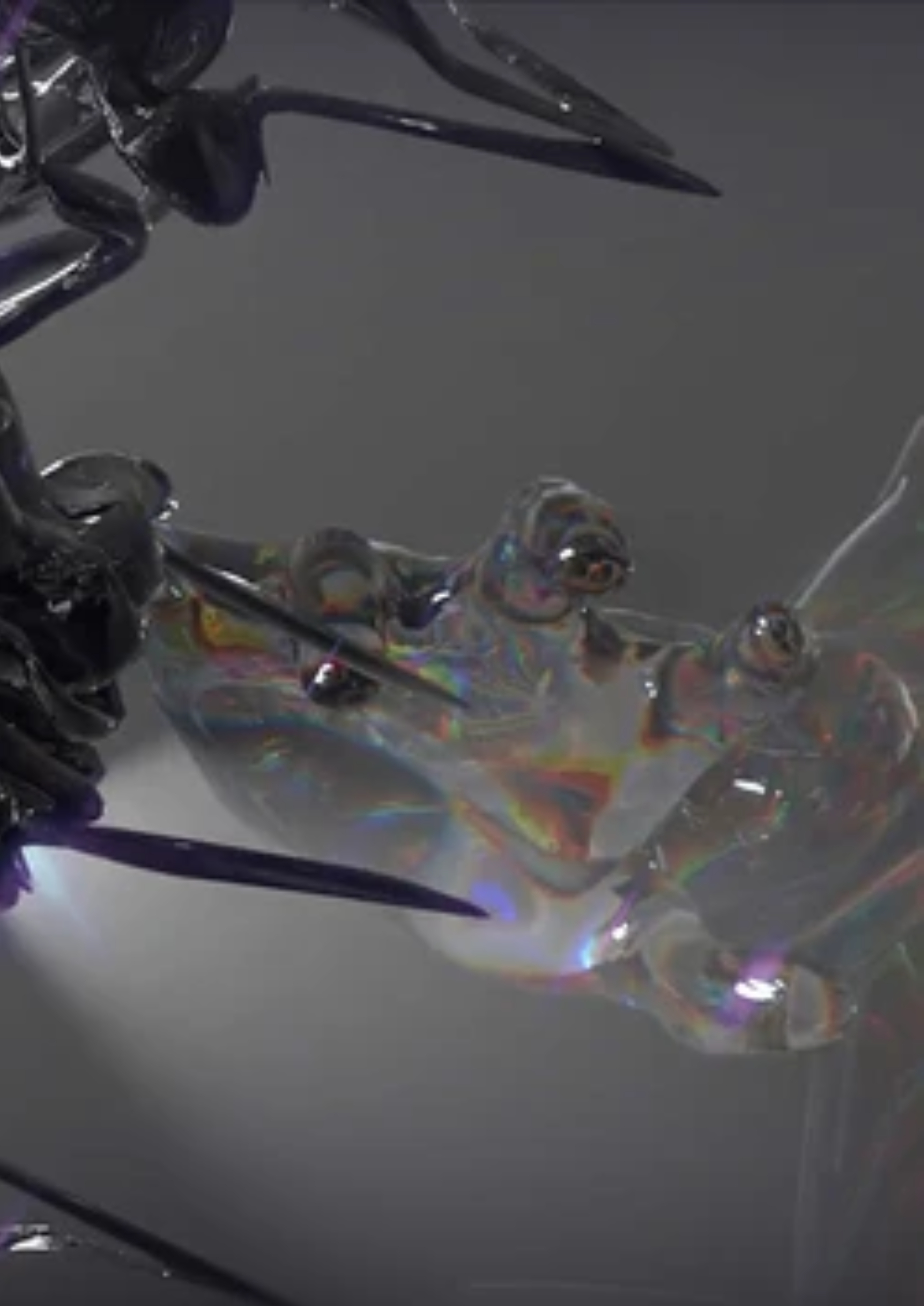
ChromaPause é um filme experimental que explora a relação entre vida urbana, identidade pós-humana e o anseio pela natureza em um mundo digitalizado. Em uma malha surreal, flores futuristas florescem, simbolizando o equilíbrio entre o orgânico e o sintético. Figuras pós-humanas se fundem à paisagem tecnológica, encarnando a convergência entre humanidade e tecnologia. A obra convida à pausa e reflexão nesse universo pulsante.
BIO
Jiatong Yao conecta arte, tecnologia e cultura, explorando XR, 3D, IA e computação interativa, refletindo sobre a transformação do eu moderno pela tecnologia, criando experiências imersivas que entrelaçam humanidade e era digital. Com formação em ciência da computação e arte técnica, desenvolve projetos inovadores sobre os impactos da informação na sociedade.
SYNTHETIKA: CRUDE_CASTIN
Progetto Leonardo Da Vinci: Neo-Renaissance
CRUDE_CASTIN
FILE São Paulo 2025 | CGI Videos
Festival Internacional de Linguagem Eletrônica
Progetto Leonardo Da Vinci: Neo-Renaissance – China
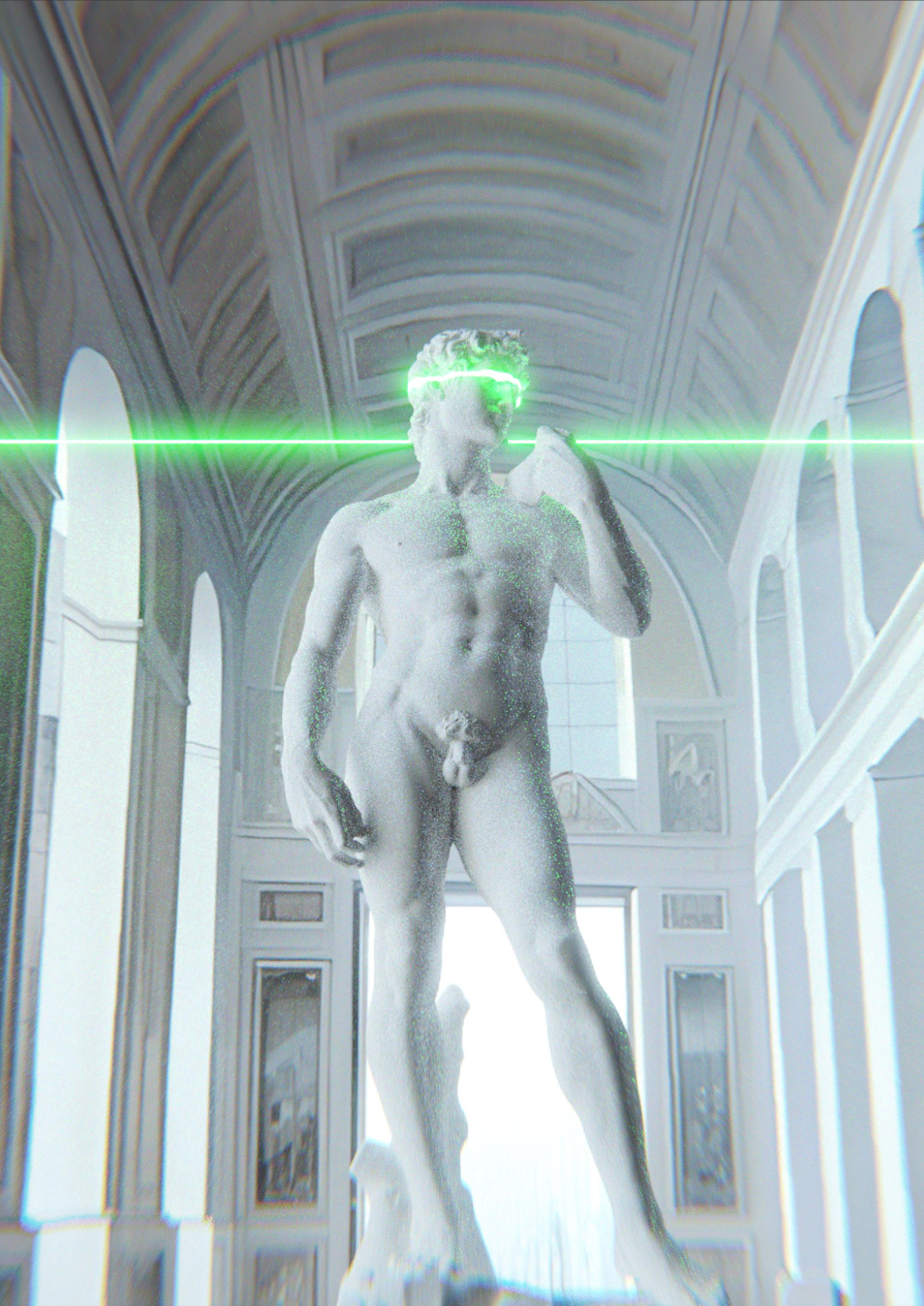
Neo-Renaissance usa o protagonista e Leonardo da Vinci como pistas para contar a história da vida próspera das pessoas na “nuvem”, o surgimento de uma crise latente e a conexão de sujeitos digitais no contexto da descentralização em um futuro próximo. O filme utiliza extensivamente materiais gerados por inteligência artificial (AIGC), entrelaçando o Renascimento e a Web 3.0 em uma mesma narrativa, com o objetivo de refletir sobre o desvanecimento do poder popular nas camadas inferiores dos diferentes processos sociais e sobre as imaginações para o futuro.
BIO
CRUDE_CASTIN é um coletivo criativo formado por jovens artistas. Seu foco está em revelar as estruturas de poder ocultas por trás da tecnologia e utilizar métodos diversos para explorar a tensão entre tecnologia e humanidade. Seu trabalho combina arte e tecnologia, refletindo sobre os dilemas da sociedade tecnológica atual por meio de temas como tecnologia e poder, história e natureza.
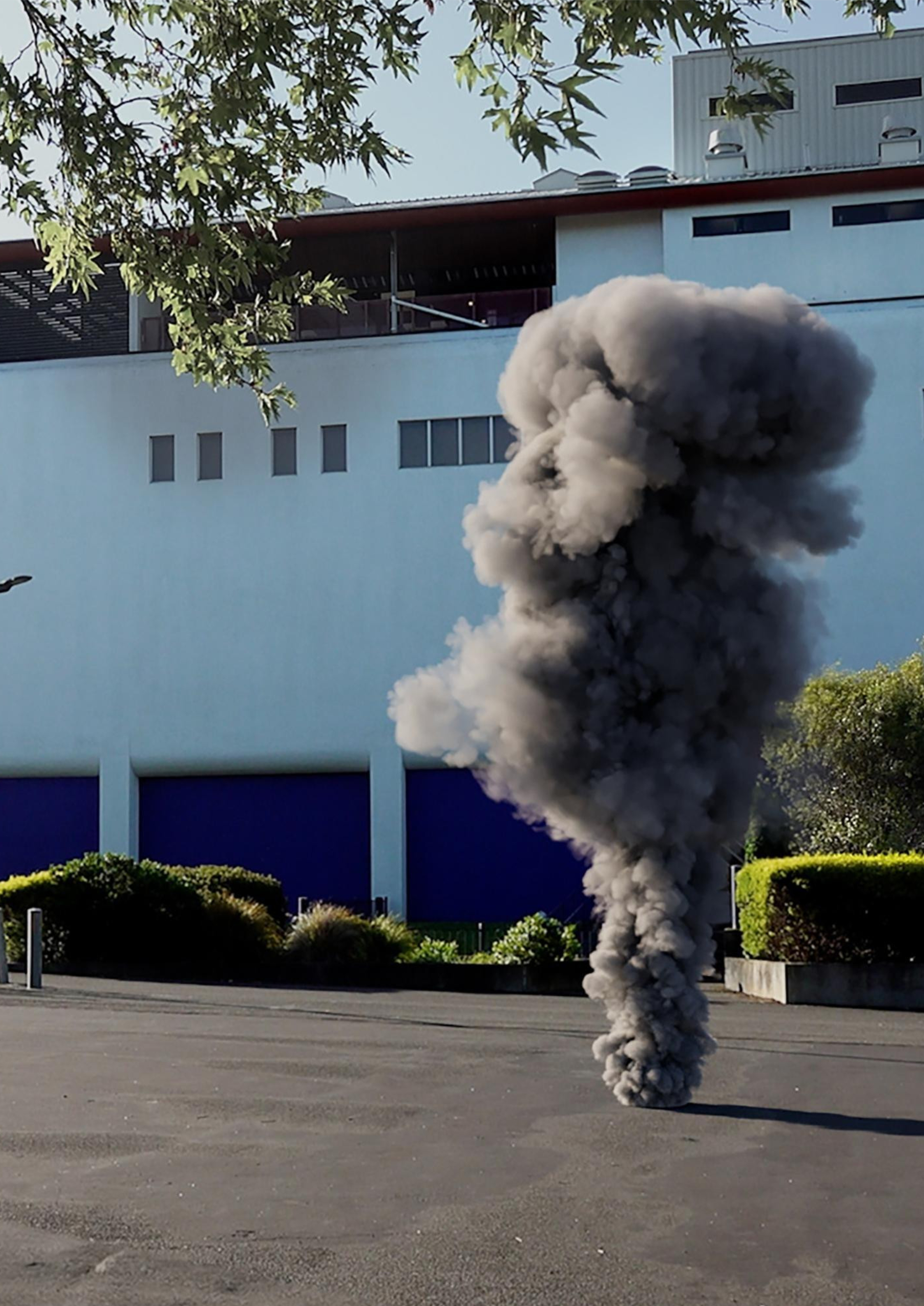
SYNTHETIKA: Brit Bunkley
Natural Intelligence
Brit Bunkley
FILE São Paulo 2025 | Videoart
Festival Internacional de Linguagem Eletrônica
Natural Intelligence – Nova Zelândia
Natural Intelligence é definida como “a inteligência criada pela natureza, por mecanismos evolutivos naturais”, em oposição à inteligência artificial. Com ela, “há um movimento dinâmico da inteligência natural que evolui de estados vagos, imprecisos e inconscientes para estados mais concretos e conscientes, realizando assim a essência da percepção” (Perlovsky e Kozma, 2007). É algo belo e profundamente falho, mas que se equilibra no fim.
BIO
Bunkley já expôs no Museum of New Zealand Te Papa. Participou da mostra Visions in the Nunnery na galeria Nunnery/Bows, em Londres, em 2022, e em 2024 no Rencontres Berlin, na Haus der Kulturen der Welt, em Berlim, além de ter exibido trabalhos na Artweek Gyumri, na Armênia. Em 2024, foi o vencedor do prêmio de Melhor Vídeo/Filme Artístico | Experimental no New York City Independent Film Festival, em Nova York.
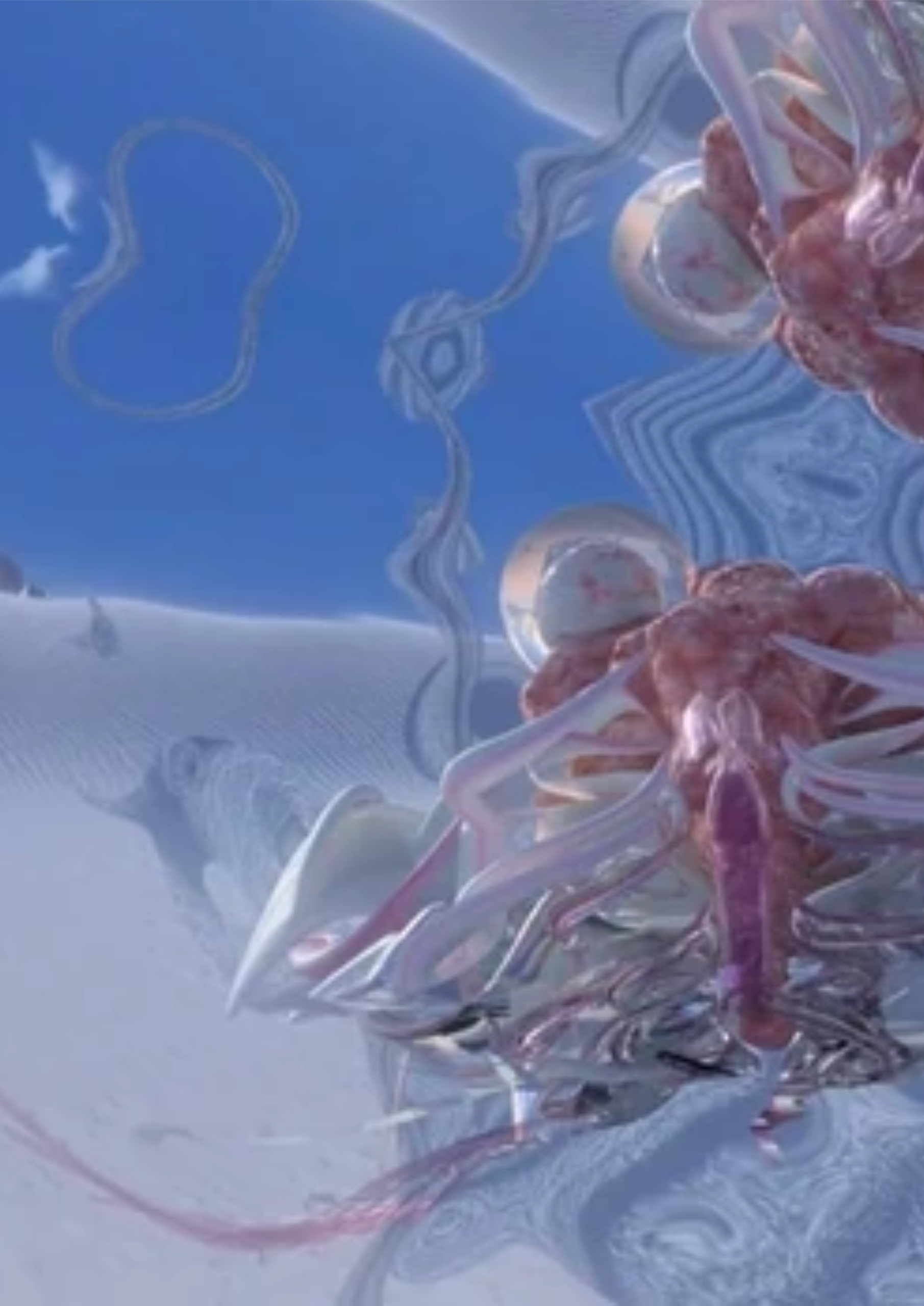
SYNTHETIKA: Yukang Tao
ArtiPerception
Yukang Tao
FILE São Paulo 2025 | Videoart
Festival Internacional de Linguagem Eletrônica
ArtiPerception – Estados Unidos
Baseada no dogmatismo científico, a obra reflete sobre a crença na capacidade da ciência de atingir um conhecimento absoluto e uma supremacia da objetividade, eliminando todas as ilusões das sensações humanas. No entanto, ao romper com essas peculiaridades científicas, surge a questão: qual é a essência ingênua por trás das partículas físicas, das ondas e das aproximações científicas?
BIO
Yukang Tao é um artista interdisciplinar que atua nas áreas de artes eletrônicas, animação, vídeo e performance. Suas obras aludem a questões de gênero e examinam a relação entre tecnologia, natureza e humanidade, abordando também temas como vigilância e a autoabsorção da sociedade nos meios de comunicação.
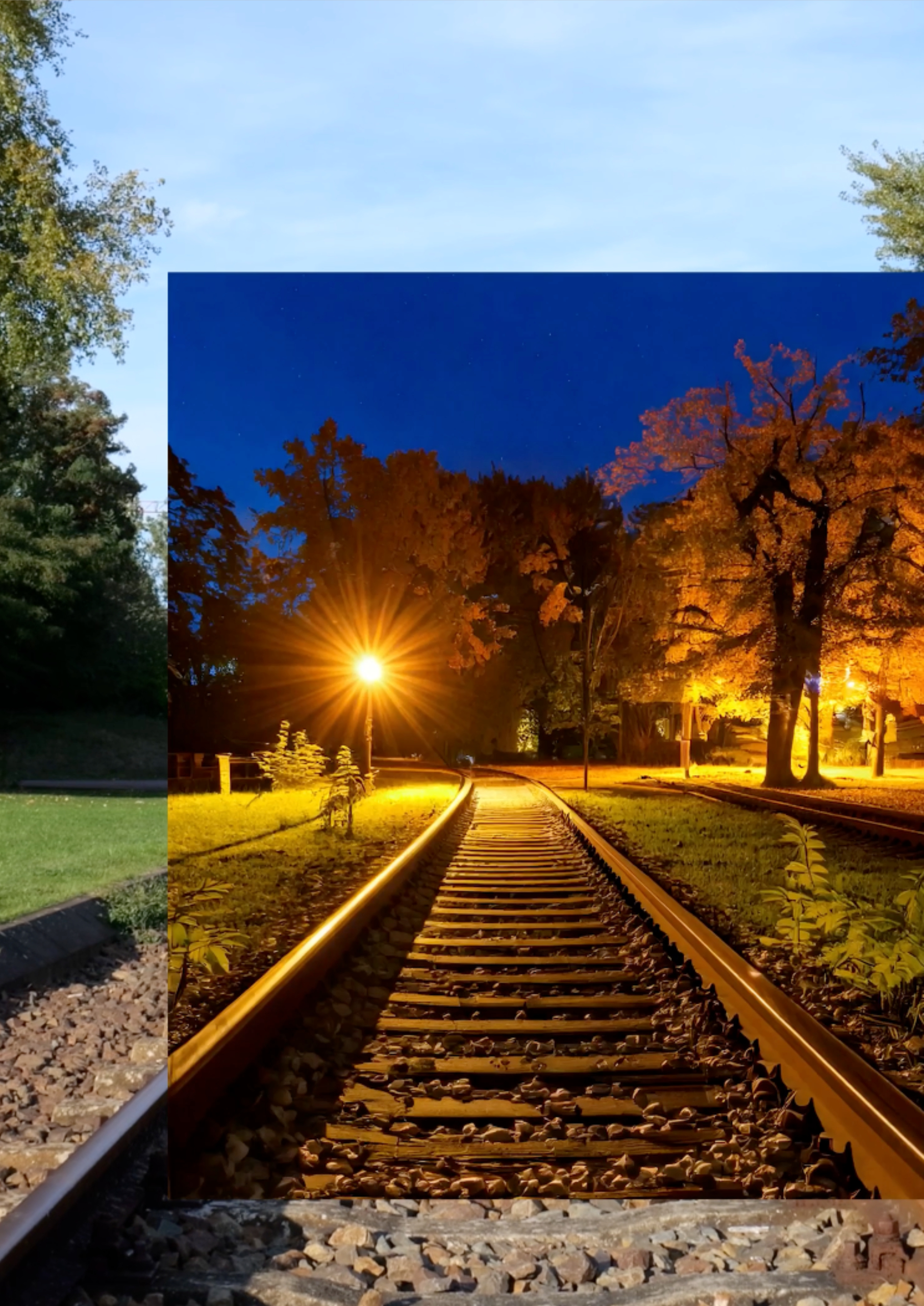
SYNTHETIKA: Caspar de Gelmini
Die Kunst ist der nächste Nachbar der Wildnis
Caspar de Gelmini
FILE São Paulo 2025 | Videoart
Festival Internacional de Linguagem Eletrônica
Die Kunst ist der nächste Nachbar der Wildnis – Alemanha
Em A arte é a vizinha mais próxima da natureza selvagem, Caspar de Gelmini inicialmente pretendia realizar todo o vídeo em filme Super8, e versões preliminares chegaram a ser produzidas nesse formato. No entanto, optou por refilmar tudo digitalmente. Um aspecto especial do vídeo é o uso intenso de lentes macro, aplicadas, por exemplo, na captação de gramíneas e na transição de imagens reais para imagens geradas por IA.
BIO
Caspar de Gelmini estudou Composição Musical e Videoarte nas Universidades de Música e Arte de Rostock, Weimar, Estocolmo, Basel, Salzburg, Stuttgart, Paris e Braunschweig (bacharelado e mestrado, tanto em Música quanto em Arte). Atualmente vive e trabalha como artista de mídia em Berlim, Alemanha, e leciona em uma escola de ensino médio.
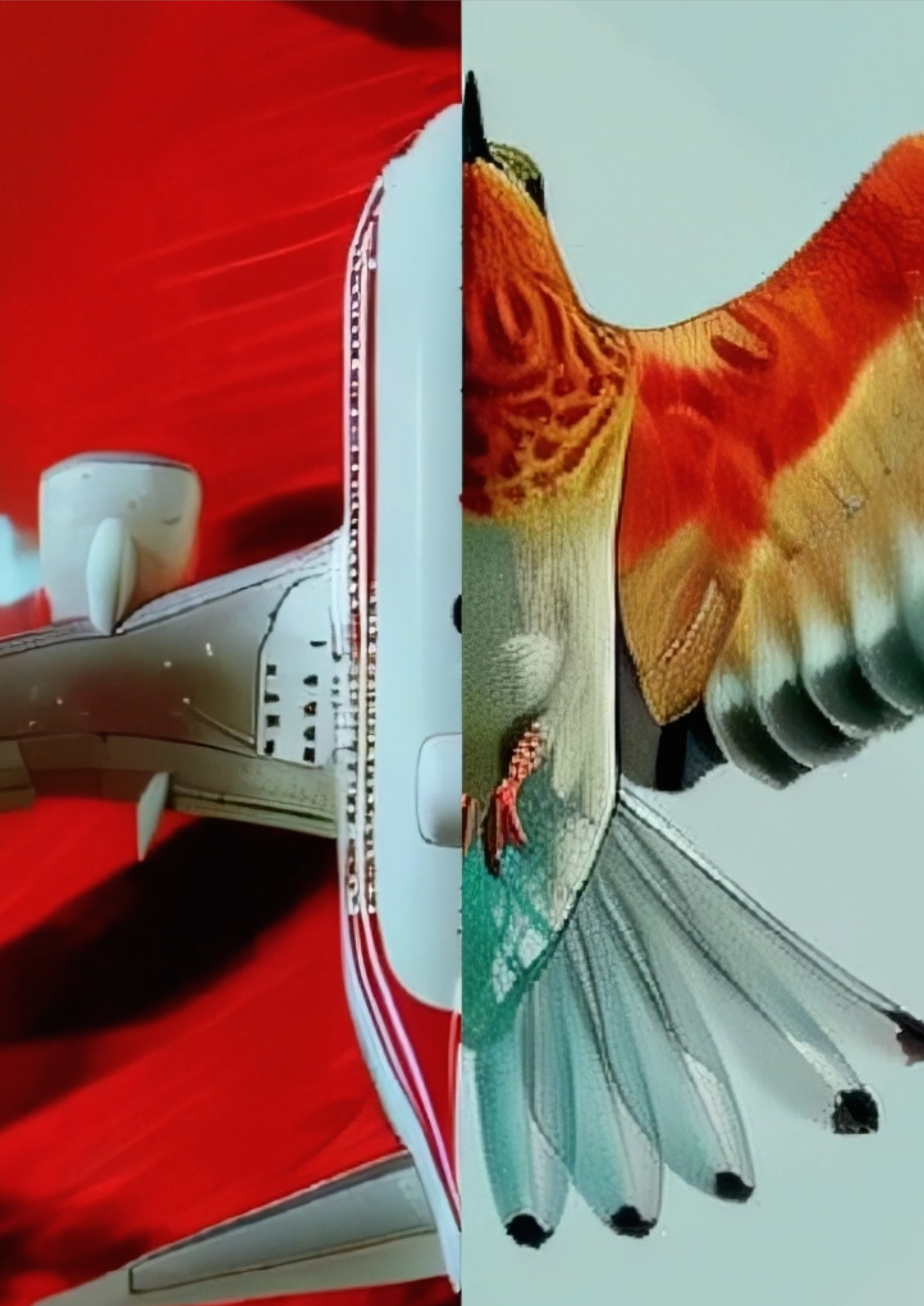
SYNTHETIKA: Ø STUDIO
Ørigin
Ø STUDIO
FILE São Paulo 2025 | AI Videos
Festival Internacional de Linguagem Eletrônica
Ørigin – Estados Unidos | Taiwan
Ørigin, um curta-metragem experimental criado com inteligência artificial, convida o público a explorar uma narrativa aberta por meio do uso inovador dessa tecnologia. Ao desafiar as percepções convencionais de arte e narrativa, o filme promove uma exploração dinâmica, não linear e visualmente cativante da relação em evolução entre a humanidade, a natureza e a tecnologia. Dirigido por Davis Chang (Chin-Hsiang Chang), Ørigin se distancia do fotorrealismo e das narrativas fechadas, optando em vez disso por simbolismo e ambiguidade nos visuais gerados por IA.
BIO
Ø Studio é um estúdio criativo premiado especializado em curtas-metragens gerados por IA e arte de novas mídias. Com uma mistura única de visuais experimentais e humor, suas obras, como The HØST, Black Høle e Ørigin, receberam reconhecimento e prêmios internacionais. Com sede em Los Angeles, o Ø Studio colabora globalmente com artistas, explorando a interseção entre humanidade, natureza e tecnologia.
SYNTHETIKA: Jenifer Haider Chowdhury
Verticity
Jenifer Haider Chowdhury
FILE São Paulo 2025 | AI Videos
Festival Internacional de Linguagem Eletrônica
Verticity – Bangladesh
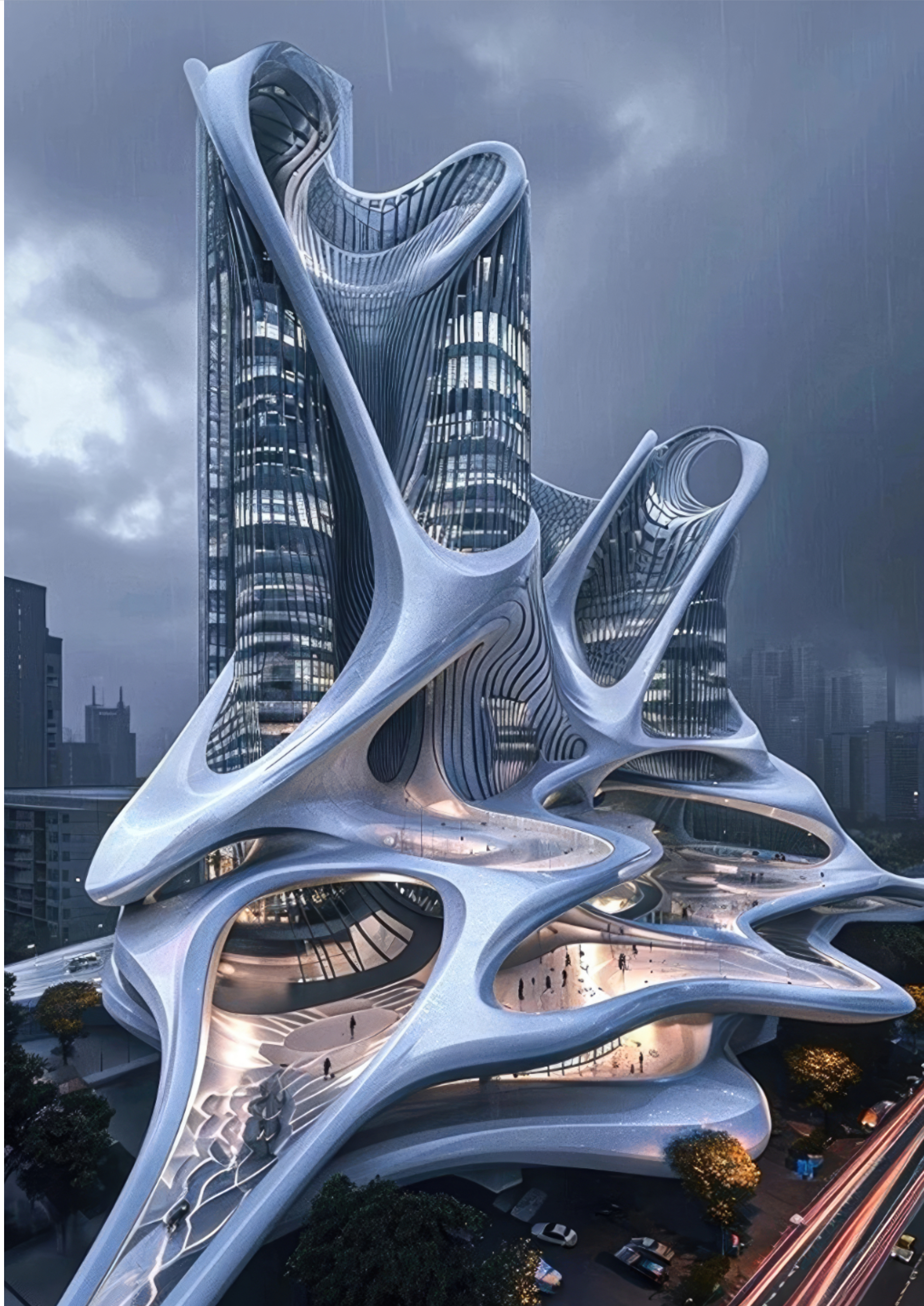
O que acontecerá na indústria de AEC (Arquitetura, Engenharia e Construção) daqui a mil anos? Neste mundo baseado em tecnologia de ponta, já começamos a dar passos na inteligência artificial e em outros setores avançados, como a biotecnologia, inspirada em mecanismos encontrados na natureza. Ao observarmos tudo isso, podemos afirmar que, no futuro, haverá muito dinamismo e diversidade no processo de desenvolvimento do design de arranha-céus.
BIO
Jenifer Haider Chowdhury é designer arquitetônica formada pela Universidade de Ásia do Pacífico, Bangladesh. Explora experimentos de arquitetura e moda com base em IA, com interesse por designs e ideias de estilo computacional paramétrico e dinâmico, tanto no campo da arquitetura quanto no da moda. Também é fascinada por surrealismo e ideias não tradicionais.
SYNTHETIKA: An-Ting e Ian Gallagher
Black-collared Starling 烏領椋鳥 (Hong Kong)
An-Ting e Ian Gallagher
FILE São Paulo 2025 | AI Videos
Festival Internacional de Linguagem Eletrônica
Black-collared Starling 烏領椋鳥 (Hong Kong) – Taiwan | Reino Unido
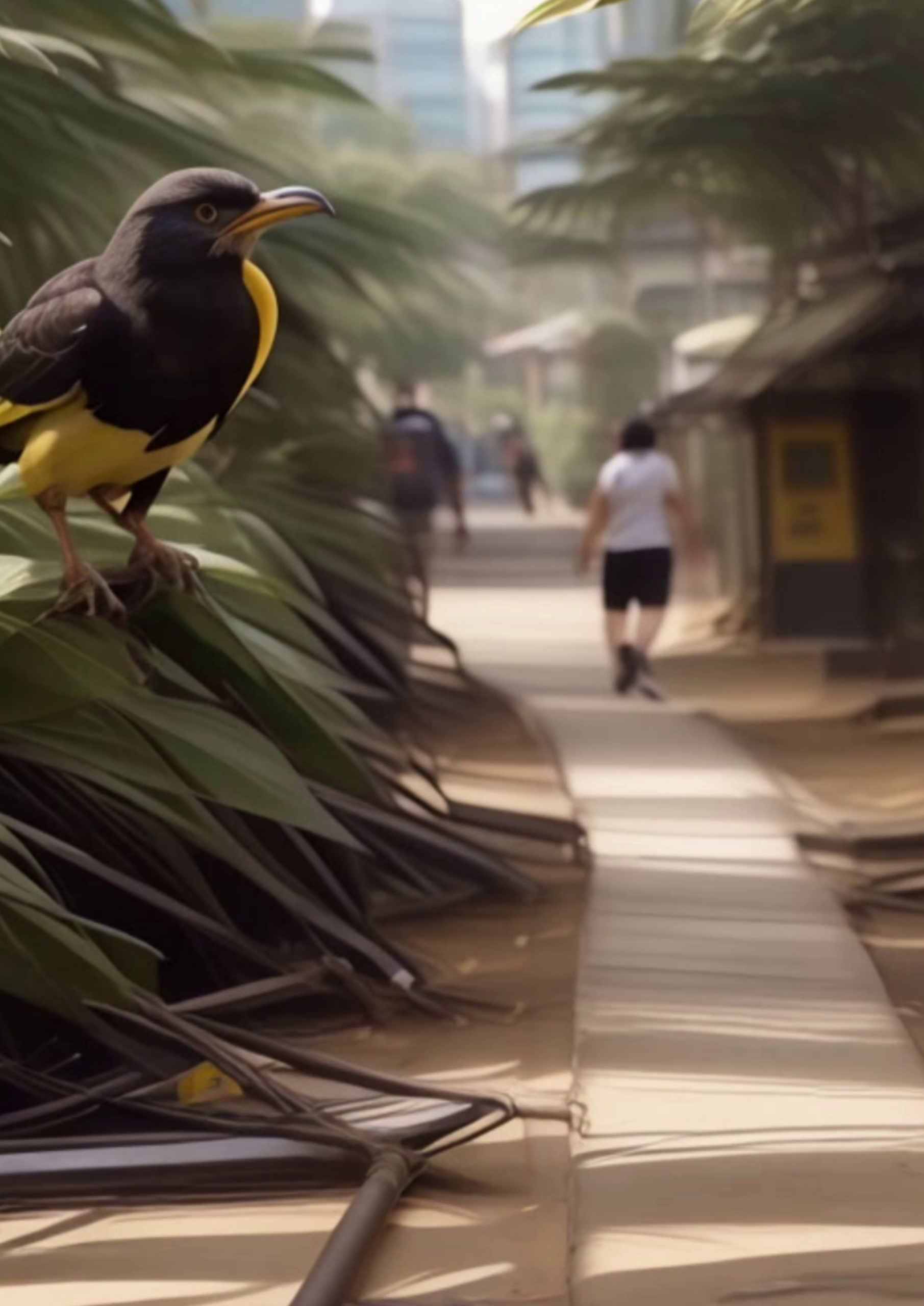
An-Ting mistura gravações de cantos de pássaros, música eletrônica experimental, paisagens sonoras e batidas intensas. Ian Gallagher usa tecnologias de ponta em inteligência artificial para documentar as experiências da dupla, com visuais ao vivo que reagem em tempo real à música de An-Ting.
BIO
An-Ting 安婷 é uma artista versátil que transita entre piano, composições eletrônicas e diversas outras formas de expressão artística. Ela transforma suas vivências em criações musicais, explorando a relação entre a humanidade, a natureza e o universo espiritual.
Ian Gallagher estudou Física Teórica em Edimburgo antes de concluir um doutorado em Sistemas Complexos na Universidade de Manchester. Foi profundamente envolvido na cena musical de Manchester, atuando como engenheiro de som, produtor de shows e também como músico no palco, colaborando com artistas como Daniel Johnston e Neva Dinova.
Este trabalho foi apoiado pelo British Council e pela organização Cryptic Glasgow.
SYNTHETIKA: Edwin van der Heide
Spiral of Time — Amazonas Brazil — UFAM
Edwin van der Heide
Interact with Spiral of Time — Amazonas Brazil — UFAM via FILE ARCHIVE
FILE São Paulo 2025 | Instalações
Festival Internacional de Linguagem Eletrônica
Spiral of Time — Amazonas Brazil — UFAM – Holanda
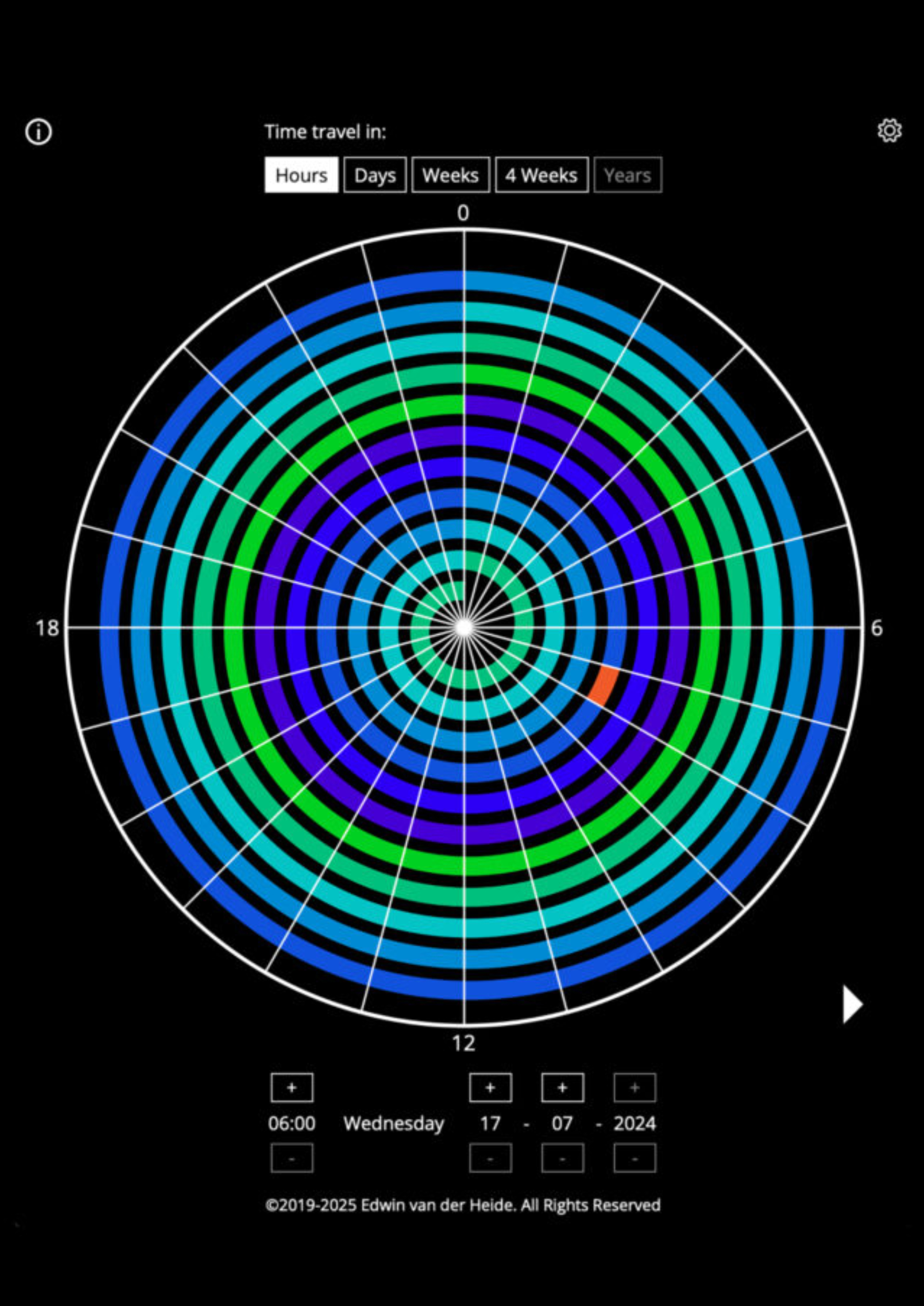
Spiral of Time captura e encena a paisagem sonora diversa de um local específico ao longo de vários anos. Ao documentar as dinâmicas naturais, culturais, espaciais e temporais únicas de um lugar, a obra homenageia as contribuições de todos os seus atores. A cada hora, é feita uma gravação de um minuto, resultando em um vasto arquivo sonoro ao longo do tempo. Ele é acessível online por meio de uma interface em forma de espiral, permitindo aos ouvintes explorar os padrões cíclicos revelados ao navegar pelo material em diferentes intervalos de tempo.
Desde 17 de julho de 2024, o artista tem gravado os sons da praça em frente ao MACBA (Museu de Arte Contemporânea de Barcelona). Trata-se de um espaço urbano muito interessante, diverso e vibrante. A obra está acessível online por meio do site https://www.macba.cat/en/spiral-of-time-placa-dels-angels/ e será também apresentada fisicamente no museu a partir de 10 de julho de 2025.
Edwin está expandindo o projeto para incluir outros locais de gravação ao redor do mundo — não apenas em contextos urbanos (dominados pelos humanos), mas também em áreas regidas pela natureza. O artista dedicou-se a um local de gravação na região amazônica. Desde 11 de fevereiro de 2025, Spiral of Time está instalado na Floresta Amazônica ao redor da UFAM (Universidade Federal do Amazonas), em Manaus. Trata-se de um dos maiores fragmentos de floresta urbana do mundo. Completamente cercada pela densa malha urbana de Manaus, essa floresta encontra-se isolada desde o final da década de 1980. Ela conserva características ecológicas ricas, incluindo áreas de floresta madura de terra firme, vegetação secundária em estágio avançado e pequenos trechos de campinarana (floresta de areia branca). Esse ambiente único oferece uma rara oportunidade para estudar as dinâmicas de uma floresta tropical dentro de um contexto metropolitano. Spiral of Time – UFAM imerge os ouvintes na vida acústica de um dos ecossistemas mais biodiversos do planeta. Esse contraste entre os ritmos naturais da floresta e os padrões artificiais da cidade enriquece a narrativa mais ampla de Spiral of Time, oferecendo uma reflexão mais profunda sobre coexistência, mudança e continuidade em diferentes ambientes.
BIO
Edwin van der Heide é artista, compositor e pesquisador com foco em som, espaço e interação. Seu trabalho expande os limites da composição musical em direções espaciais, interativas e interdisciplinares. Ele cria instalações, performances e ambientes imersivos onde o público é colocado no centro, incentivado a se envolver de forma sensorial e investigativa.
Maxim Zhestkov
Simulation Hypothesis
In Simulation Hypothesis, Zhestkov equally seeks inspiration in pre-historic cultures of cave art and ancient bas-reliefs. He plays with a visuality that precedes written language, from a time in which early humans used clay to make vessels and figurines.
The artist uses the inspiration from ancient forms of art and transforms it into digital sculptures using simulations and algorithms based on principles of nature.
The show takes viewers on a conceptual journey, immersing them first in Clouds of Creation, a large-scale projection that recreates the Big Bang, and then guiding them through micro manifestations of this transformative moment of genesis.
Refik Anadol
Machine Hallucinations — Sphere
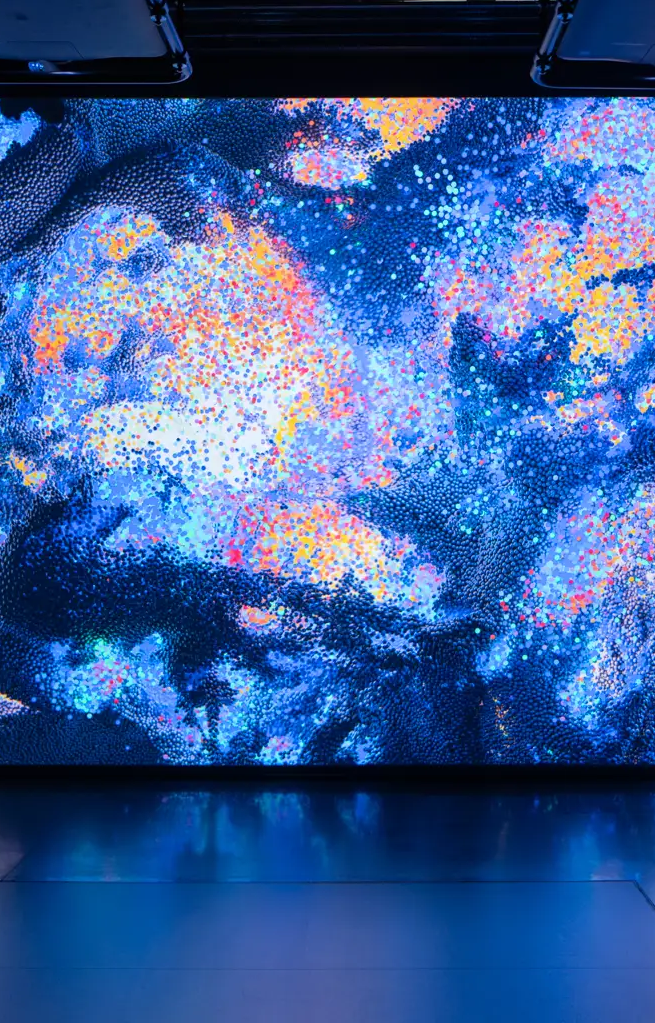
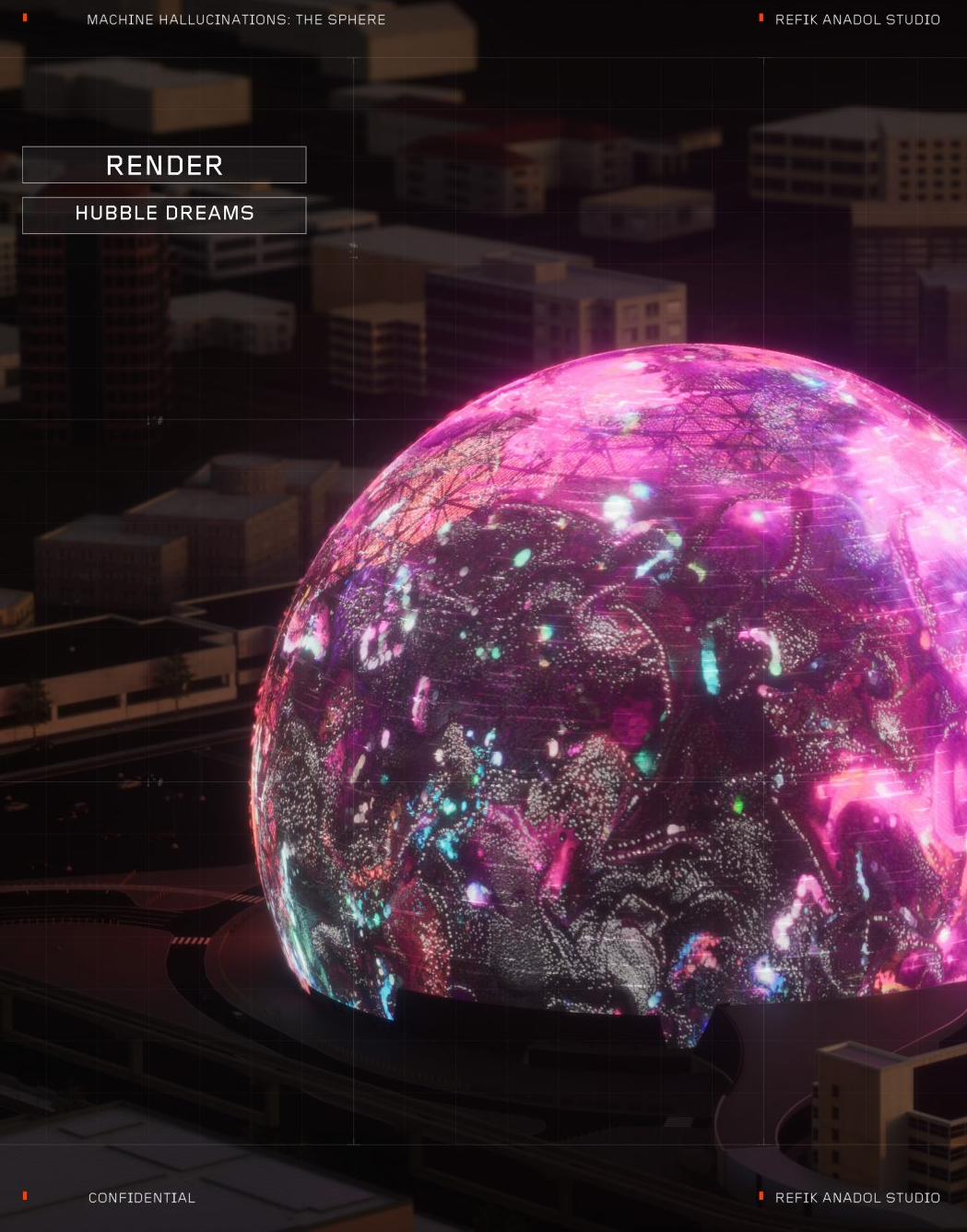
The artwork presents a series of AI Data Sculptures that incorporates vivid pigments, shapes, and patterns, aiming to create a collective, meditative, and multisensory experience. This immersive experience simulates the rhythms of various environments and invites the visitors to imagine alternative realities constructed by invisible data movements around them.
Machine Hallucination: The Sphere features dynamic visualizations of data that are based on vast archives containing visual imageries of space and nature while celebrating the unique architecture of The Sphere. For this project, Anadol and his team used these themed datasets as the building blocks for the three distinct chapters of the artwork and trained a unique AI model with subsets of the collected image archives. After the training, when idle and unsupervised, the “machine mind” generates new aesthetic visuals and color combinations through unique lines drawn by algorithmic connections.
ENESS
Modern Guru
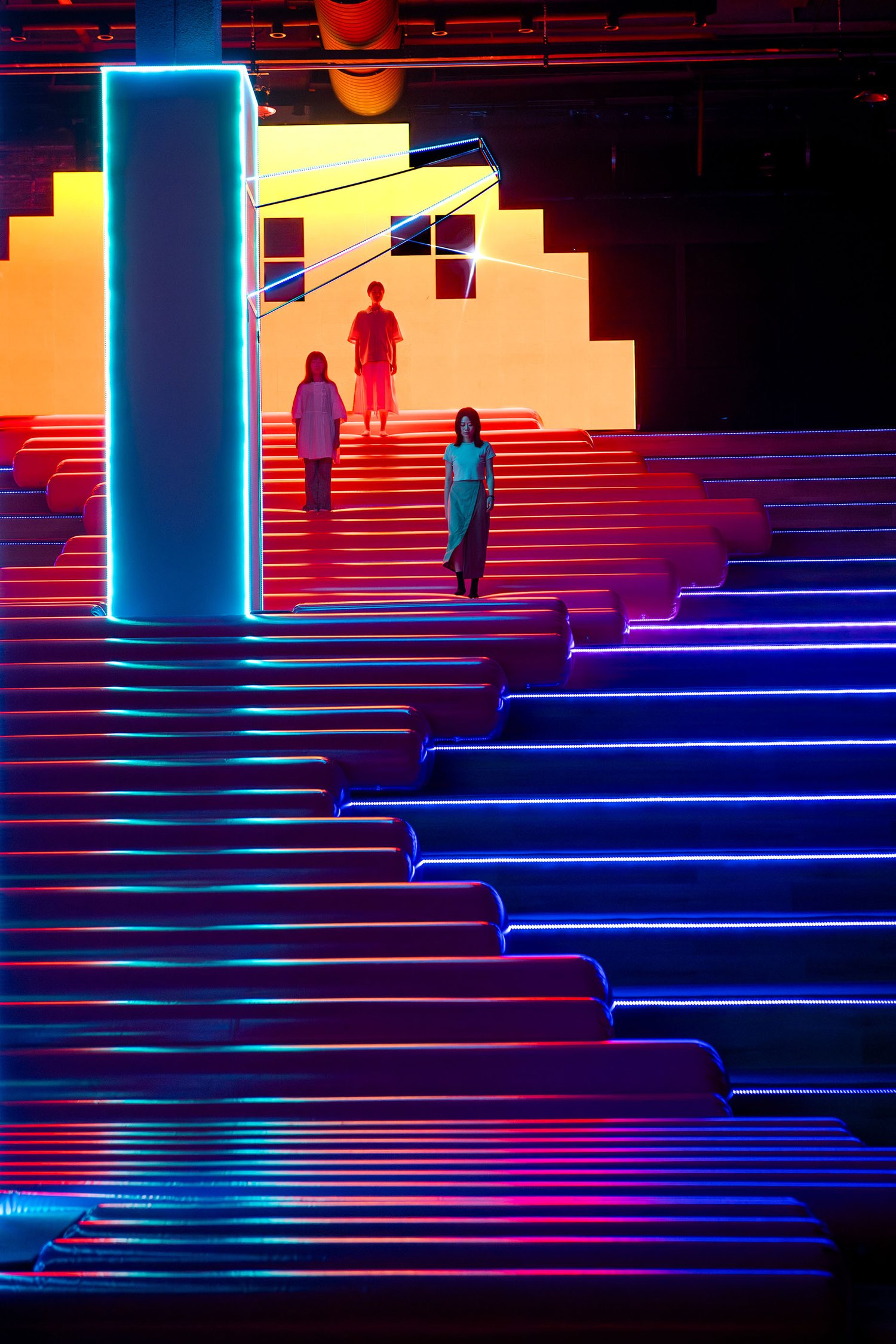
Modern Guru is a translucent ovoid with four huge digital eyes, floating above a ceremonial ring of LEDs. From his mouth flows a ream of absurdist messages, and in a statement about the true nature of lived experience, a new message is delivered when visitors take a photo of Modern Guru – a missive produced only for those who seek to photograph life rather than live the moment. This immersive new media art installation uses the intersection of art and technology to explore modern paths to happiness through unique interactions with characters along a mystical journey of discovery. Visitors are asked to commit to the path – a tight and winding trail with subtle points of connection along the way – a glowing landscape of oversized, whimsical mountains that chant incantations and blink innocently from digital eyes.
Having communed with the Guru, visitors then weave their way back through this warped and strange world full of illusions and delusions, perceptions and deceptions, all the while bathing in luminescent light; embracing big, gentle forms; and following their own path up the pink tongue staircase to meet the one who oversees the whole fantastic dominion, the Sun God.
QUBIT AI: Marc Vilanova
Shell of
FILE 2024 | Installations
International Electronic Language Festival
Marc Vilanova – Cascade – Spain
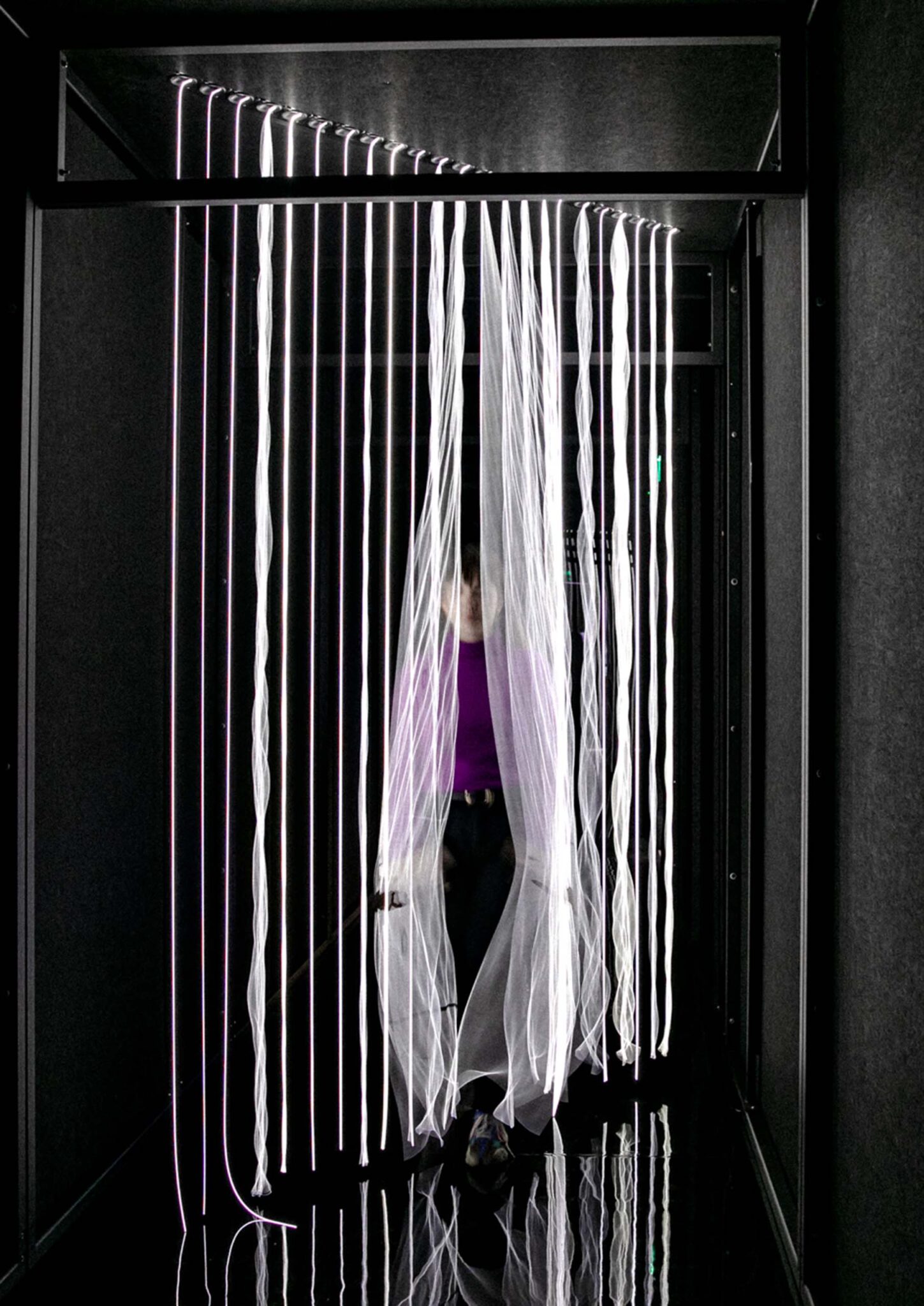
Waterfalls are a continuous source of infrasonic frequency found in nature. Although inaudible to humans, they play a crucial role in ecosystems, especially for migratory birds who use them as a compass. However, many waterfalls have lost their frequencies due to climate change. The work creates an immersive experience in which the audience interacts with the visualization of sound waves, experiencing the vibration of sound through illuminated strings.
Bio
Marc Vilanova is a sound and visual artist who works at the intersection of art, science and nature. Vilanova’s artistic production has always been led by a spirit of innovation fueled by an interest in new media. His practice combines sound/light installations, performance, and sculpture.
Credits
This work was partially carried out within the scope of the EMAP program at gnration, with the support of the Creative Europe Culture Programme, the Avatar Center in Quebec City and the Ramon Llull Institute.
Photo:
Eloise Coomber

QUBIT AI: Infratonal
Useless Hands
FILE 2024 | Aesthetic Synthetics
International Electronic Language Festival
Infratonal – Useless Hands – France
When our hands become useless, what will we choose to do with them? We can use AI to visualize the unthinkable, the strangely familiar yet indescribable forms and structures. Generative AI could be used as an amplifier of our ability to explore abstraction and surrealism rather than a simple mirror of our usual perceptions.
Bio
Infratonal is an artistic project led by Louk Amidou, a Paris-based multidisciplinary artist who works at the intersection of digital arts, electronic music and interaction design. He uses algorithms to create hybrid visual and sound pieces which aim to be performed by the human gesture as intangible instruments. He questions the artwork’s nature at the age of AI and the relationship between the artist and the algorithm.

Vincent Leroy
Echo Lens
Emerald Lake, Canada
Hybrid, Vincent Leroy’s work oscillates between the real and the virtual, the natural and the artificial, drawing its inspiration from both nature, which often sites his work, and from the digital world. Whether its kinetic sculptures, immersive installations or monumental works, movement is almost always Vincent Leroy’s raw material. The kind of movement that inspires life, amazement, and a permanently shifting viewpoint.

Craig Green
Spring/Summer 21
The spring 2021 collection reflects that mentality, and highlights the more commercial offerings of the brand, which are normally buried underneath his over-the-top runway styling. Carryover styles — such as quilted jackets, padded vests, parkas, shirts and hoodies with cutout hole and lace trim details — are available in pine green, beige, raisin purple, and midnight blue, and take center stage in the look book. Even Green’s signature frame-like constructions around the body have been toned down. Instead of using experimental and colorful materials, Green has hung deconstructed parts of a shirt or a jacket on metal frames. The effect is of two people interacting in one sculpture.

Elisabeth Chojnacka
Henryk Górecki
Concerto for Harpsichord and String Orchestra Op. 40
Harpsichord: elisabeth chojnacka
Less than nine minutes long, the bipartite Concerto for Harpsichord (or Piano) and String Orchestra, which the composer sometimes called a “prank”, is a veritable volcano that carries the listener away from the very first bars with its immense energy. Its repetitive, motoric nature and rhythmic vigour suit the specific, slightly clattery sound of the harpsichord which is usually somewhat amplified, complemented by the chordal texture of the strings. In both parts, the mood of the piece clearly draws on the highlander music of the southern Podhale region, of which Górecki was a great admirer. In the context of his monumental sacred music from the same period, this Concerto is like the artist’s brief “respite”. It reflects the whirl and “profane” energy of a folk dance.
Elżbieta Chojnacka, to whom the piece was dedicated, has always stressed that every performance of the Concerto, which she has played throughout the world, ends with an encore. The piece meets with such acclaim from the audience, and is one of the most striking – and most joyful – compositions in the composer’s output. “A spectacular plaything”, as Teresa Malecka has described the piece.

Maxim Zhestkov
Elements
Elements is an experimental art film by Maxim Zhestkov about nature, physics, art and love. More than 2 billion elements / particles governed by tensions and forces of nature were used to tell stories and show emotions through the motion of collective behavior.
The film is a trial to explore the idea that everything around us and inside us is made from simple elements / blocks which can be arranged in complex relationships and become compound structures. We could project this idea into emotions, behaviours, thought processes, relationships, life, planets and the 23.
PETER GREENAWAY
بيتر غريناواي
彼得·格林纳威
פיטר גרינווי
ピーター·グリーナウェイ
피터 그리너웨이
Питер Гринуэй
The Pillow Book
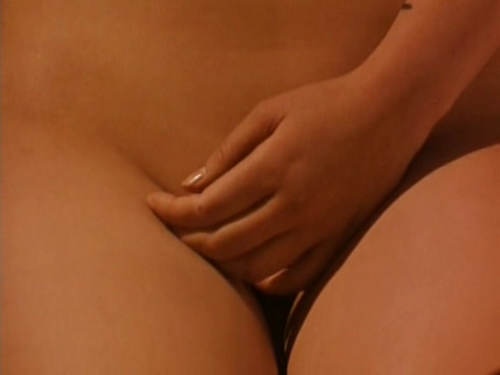
Beautiful to behold and impossible to forget, THE PILLOW BOOK is auteur Peter Greenaway’s erotically-charged drama about love, death, revenge and the indelible nature of our earliest memories. Each year on her birthday, Nagiko (Vivian Wu) would became her father’s canvas, as he painted the creation myth in elaborate, elegant calligraphy on her body. Years later, she continues the practice with a succession of lovers, including a bisexual translator (Ewan McGregor) who becomes a pawn in an escalating game of vengeance against her beloved father’s exploitative publisher. Told in a series of chapters and featuring innovative cinematography and picture-in-picture techniques, Roger Ebert called THE PILLOW BOOK “a seductive and elegant story [that] stands outside the ordinary.”
cinema full

Hiroshi Matoba
Sun and Moon Room
Sun and Moon Room in the Art Museum of Nature and Human Non-Homogeneity, located in Bungotakada City, Oita, houses one of the interactive art installations designed to extend one’s physicality in contact with the nature. The concept of this work is a room where visitors can play with sunlight. As visitors walk through the room, small apertures on the ceiling automatically open and close, following their movements. The aperture system is designed to envelop the visitors’ bodies in light and to change the shape of the light cast at their feet, mimicking the waxing and waning of the moon. Visitors’ movements are detected by sensors, which trigger to open only the apertures located in the direction of the sun. The room is controlled to create an interior condition that represents the weather of the moment using a program for analyzing live data released by the Japan Meteorological Agency.

Andy Wen
Shenzhen Genzon Technology Innovation Center
Aedas
Cette image vivante implique les possibilités infinies dans l’intégration de la technologie, de l’énergie et de l’innovation. La conception propose des ascenseurs-navettes et des terrasses partagées le long du côté centripète de chaque tour pour engendrer un environnement de bureau relaxant à expansion verticale. La zone ouverte s’étend longitudinalement et se rejoint naturellement au fond; accentué par l’éclairage intérieur, des contours d’étamines dorées émergent et les panneaux de verre incurvés se présentent comme des pétales, faisant allusion à la muse florale du projet.

Katherine Melancon
Vers un parlement du vivant II
Les plantes et les objets qui constituent l’oeuvre animée ont tous été glanés dans l’aménagement en face de la Maison de la culture, cet été, où l’installation est présentée. Que sont-ils devenus maintenant que l’automne s’est installé? Le sol qui accueille les plantes et les fleurs en train de dépérir fourni ses données de pH à l’installation qui module le rythme de l’animation selon son alcalinité ou son acidité. La nature agit sur sa propre sa représentation, elle a le dernier mot sur l’oeuvre initiée par un humain.

Neri Oxman
MAN-NAHĀTA
Computational growth across material and urban scales offers a framework for design through self-organization, enabling the generation of vast, diverse forms exhibiting characteristics like those that emerge through the biological growth processes found in Nature. In this project, we construct an oriented volume spanned by surface normals of the shape at every point. The value of the oriented volume drives the iterative deformation of the shape. Depending on the parameterization of this process, we can obtain distinctly different growing forms. Importantly, the emergence of these forms is driven only by the time evolution of a geometric operator acting on the shapes iteratively, thereby connecting geometry and growth through an algorithm. To form the Man-Nahata landscape, the buildings of the urban landscape are transformed through repeated morphological closing operations, where the field of influence follows a gradient from the center to the outskirts of a circular region.

Theo Triantafyllidis
Ritual
An undisclosed location. Dry land under a scorching sun. Something abominable has happened here in recent memory. Now a ritual is taking place. The remains of what was once human are flickering in darkness. Nature is reclaiming what is hers. She is savage and unforgiving. She is laughing at us. Her sinister laughter echoes in the emptiness. Ritual re-imagines the notion of site-specificity within the mediated landscape. The digital and physical work for this exhibition sit in a forgotten mining town somewhere in the California desert. The viewer is invited to interact with Triantafyllidis’ new live simulation, sculptures and custom electronics blurring the line between the real life and online experience

Shaun Hu
META ISLANDS
Shaun Hu is een nieuwe mediakunstenaar gevestigd in New York City. Zijn kunstwerken zijn nauw geïntegreerd met technologie en onderzoeken de relatie tussen mens, natuur en samenleving in het tijdperk van digitale technologie vanuit een uniek perspectief.
.
Shaun Hu is a new media artist based in New York City. His artworks are closely integrated with technology and explore the relationship between humans, nature and society in the age of digital technology from a unique perspective.

AZUMA MAKOTO
Système Environnemental Encapsulé
Cette machine est entièrement équipée d’une machine à brouillard comme pour envelopper les plantes dans un brouillard des deux côtés et d’un système d’alimentation en eau goutte à goutte qui peut être activé en fonction de la situation afin de maintenir l’état d’une plante et de contrôler la température et l’humidité intérieures. De plus, la forme cylindrique peut capturer entièrement la lumière naturelle à des angles de 365 ° depuis les verres, et elle peut correspondre à la croissance des plantes en ayant la plus grande échelle de hauteur de la série. Les ventilateurs au plafond jouent le rôle du vent et une plante peut écouter la musique des haut-parleurs étanches. La machine absorbe des éléments essentiels – pluie, vent, lumière et son – par des moyens artificiels et complète un petit monde où son cycle écologique est condensé. Cela nous permet d’admirer la beauté des plantes en n’étant pas affecté par l’environnement extérieur.

Ryoichi Kurokawa
ad/ab Atom
Kurokawa then analyses, filters and distorts this data into an artistic rendering of an atomic space in which the laws of quantum mechanics would theoretically be visible. “The term ‘ad’ in the title means ‘to/toward’ etymologically as a prefix in words of Latin origin and ‘ab’ means ‘away from'”. he explains. “It is recombinant of neologism ‘adatom/abatom’ which means ‘to atom/from atom’, where the laws governing nature blur“.

Danièle Huillet and Jean-Marie Straub
Moses und Aron
Oper in drei Akten Arnold Schoenberg
.
Jean-Marie Straub
homage
R.I.P
.
Moses und Aron, known in English as Moses and Aaron, is a 1975 film by the French filmmaking duo of Jean-Marie Straub and Danièle Huillet based on the unfinished opera of the same title by c. During its 1975 run at US festivals, it was also known as Aaron and Moses, and was frequently reviewed as such.
It is one of three films based on Schoenberg works Straub and Huillet directed, the other two being Einleitung zu Arnold Schoenbergs Begleitmusik zu einer Lichtspielscene , a short film made directly before Moses und Aron, and, over two decades later, an adaptation of the one-act comic opera Von heute auf morgen. The film retains the unfinished nature of the original opera, with the third act consisting of a single shot with no music as Moses delivers a monologue based on Schoenberg’s notes.The film was shot on location in Italy and Egypt. It utilized the same team of cinematographers as Straub and Huillet’s Chronicle of Anna Magdalena Bach. The soundtrack and cast of the film is the same as the 1974 recording conducted by Michael Gielen (Philips 6700 084).The original German version of the film was dedicated to Holger Meins, a former cinematography student who joined the Red Army Faction in the early 1970s and died on hunger strike in prison. This dedication was censored by German broadcasters for the film’s first transmission in 1975. The English subtitles of Schoenberg’s dense German libretto were prepared by assistant Gregory Woods, who is credited on the DVD.The film was shown at the 1975 Cannes Film Festival, but was not entered into the main competition.
.
cinema full

Bruce Nauman
Nature Morte
Nature Morte focuses on Nauman’s long relationship to his own studio, a variation on his four unique multi-projection videos, Mapping the Studio (2001). Three viewing stations, each consisting of an iPad linked to a wall-sized projection, provide an interactive exploration of the 3D studio space. Only now the artist is absent, and the participant becomes performer as he/she manipulates the large scale video projections on an iPad using touch control. The participant is free to navigate anywhere throughout the space, selecting broad vistas or individual objects. Using a hand-held 3D scanner, Nauman recorded hundreds of images that allow participants to select an object and locate close-up anything found there, and further reorient the image to see an object from above and below, and at times inside-out. The resulting mobility intensifies the experience of the viewer/performer. Presenting a static, but immersive re-creation of his studio space, Nauman’s pieces once again play at the tenuous lines between the body and space, perception and physical material.

Iris van Herpen & Dutch National Ballet
Biomimicry
For the ‘Biomimicry’ film, Iris van Herpen and Dutch National Ballet explore the symbiotic relationship between the metamorphic force in which fashion and dance interlace. The film, directed by Ryan McDaniels, sees the mesmeric dancer JingJing Mao undulating into liquescent shapes and transcending into graceful figures that reflect her myriad of movements. The concept of the creation stems from the notion of biomimicry — the design and production of materials and systems that are modelled on biological processes. In line with Iris van Herpen’s continuous pursuit to materialise the invisible forces that structure the world, the film focusses on the bond between humanity and nature.

Synichi Yamamoto, Seiichi Sega & Intercity-Express
Noesis
This project was made by inspiration from law of nature and cosmology such as, “View from Inner Earth” ”Wrapped up in Nothing” “Re-mix the Border” “Constructal Law” “Emerging Moments” “Universal Architecture”, and “Superstring Theory”.Science and art have been getting closer in media art scene. Visualization of data and visualization of wave shapes has been actively pursued.

Lotte Geeven
ECHO CHANT
In a universe from which no particle escapes, every voice eventually fades away. No matter how loud or often a call shouts or how urgent the message is. At least… in theory. But what about real life? As a roaring voice in full force rises from a protest over a square, it sets billions of atoms in motion above a crowd. “No justice, No Peace!” The message of vibrating particles charged with kinetic energy empowers the mass and shakes the established order on a verge of collapse. All according to the laws of nature. Dutch artist Lotte Geeven listened to these hotspots of change around the world after the streets and squares had been swept clean and silence had returned. Looking for an echo.

Lebbeus Woods
The Light Pavilion
The Light Pavilion by Lebbeus Woods in collaboration with Christoph a. Kumpusch, in the Raffles City complex in Chengdu, China, by Steven Holl Architects.
.
The Light Pavilion is designed to be an experimental space, one that gives us the opportunity to experience a type of space we haven’t experienced before. Whether it will be a pleasant or unpleasant experience; exciting or dull; uplifting or frightening; inspiring or depressing; worthwhile or a waste of time, it is not determined by the fulfillment of our familiar expectations, never having encountered such a space before. We shall simply have to go into the space and pass through it. That is the most crucial aspect of its experimental nature, and we – its transient inhabitants – are experimentalists.Lebbeus Woods and Christoph a. Kumpusch

Brodbeck & de Barbuat
Les 1000 vies d’Isis
Les 1000 vies d’Isis (The 1000 lives of Isis) highlights the birth of an imaginary character created entirely by computer. A virtual identity whose daily life is imagined in images. The fictitious staging of these moments photographed in the South of France interrogates Photography and Portraiture by introducing a questioning on the nature of images, their link to reality and to the identity of the living.
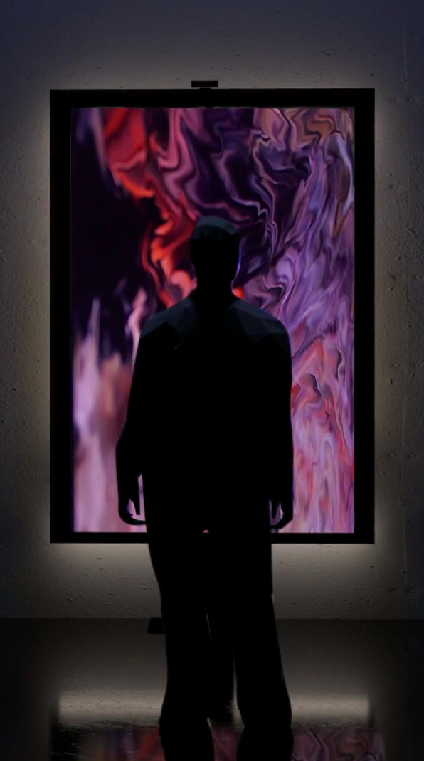
Kati Katona
Kati Katona est une artiste multimédia basée à Budapest. Son travail est axé sur la génération, animation procédurale et 3D, art de l’installation interactive, mappage de projection et conception sonore. Kati s’inspire fortement des éléments de la nature, des structures biomorphes et des algorithmes trouvés dans la nature. En tant qu’artiste visuelle, elle a participé à divers projets audiovisuels, tels que Zagar AV Experience et se concentre constamment sur l’expérience des dernières technologies.

SAŠA SPAČAL MIRJAN ŠVAGELJ ANIL PODGORNIK
50Myconnect
Myconnect “offers the experience of a symbiosis of connection between humans, nature and technology. The spectator becomes an actor by lying in a capsule, equipped with a helmet and body sensors measuring the variations in his rhythm This data is modulated and transmitted to a closed universe of mycelium culture (white mushroom) to produce alterations using electrical resistance. These variations in turn generate signals, sent back to the person in the form of vibration, sound and light. Each cycle can be different depending on whether the experience is stimulating or calming. This type of perceptual exchange enabled by technology reveals how much the human being is an integral part of the complex network that links him to his environment.
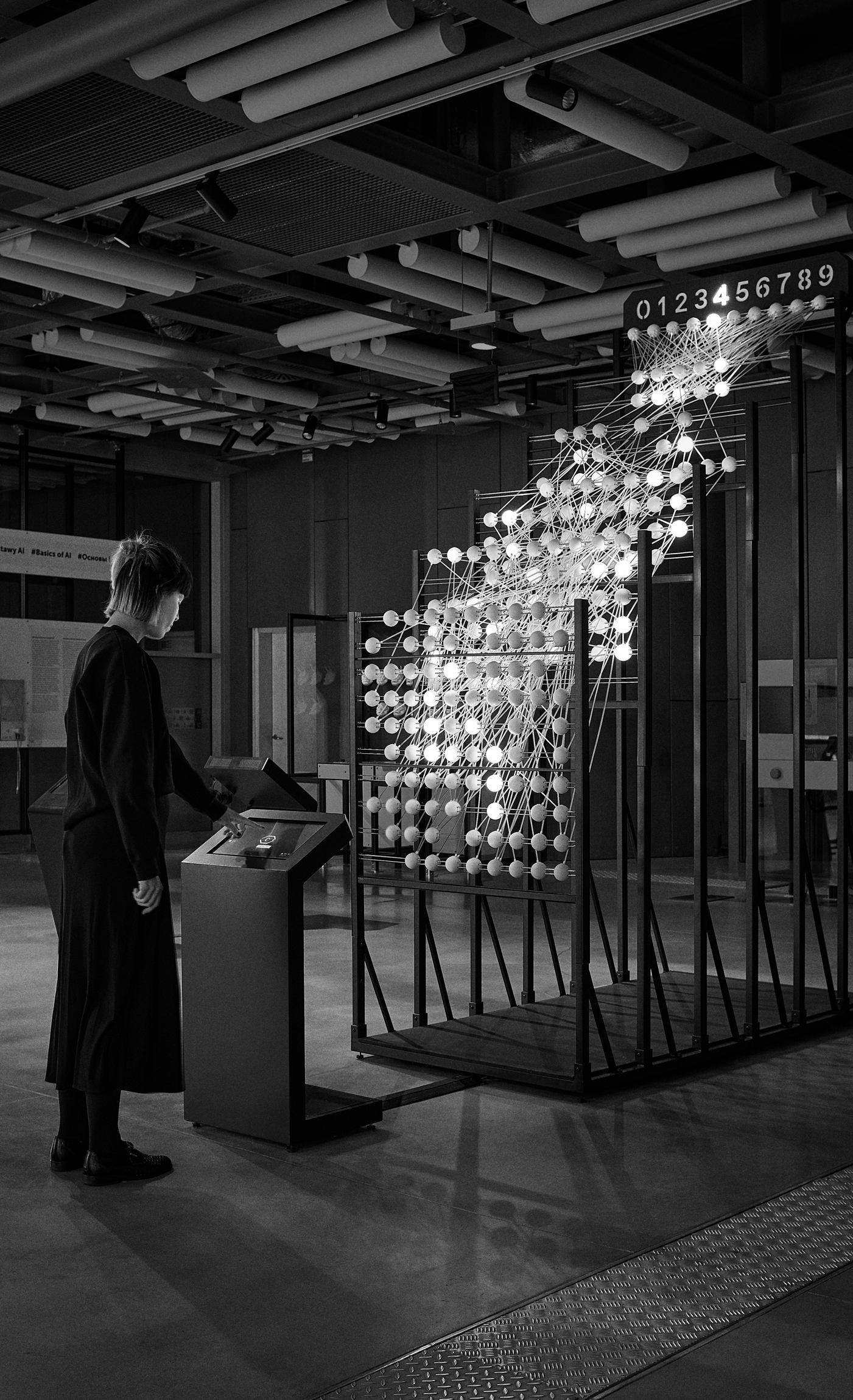
Pangenerator
The abacus
THE ABACUS is probably the first ever 1:1 interactive physical representation of real, functioning deep learning network, represented in the form of a light sculpture. The main purpose of the installation is to materialise and demystify inherently ephemeral nature of artificial neural networks on which our lives are becoming increasingly reliant on. As the part of new permanent exhibition devoted to the Future the installation aims to engage and educate the audience in artistically compelling ways being the manifestation of art and science movement goals.
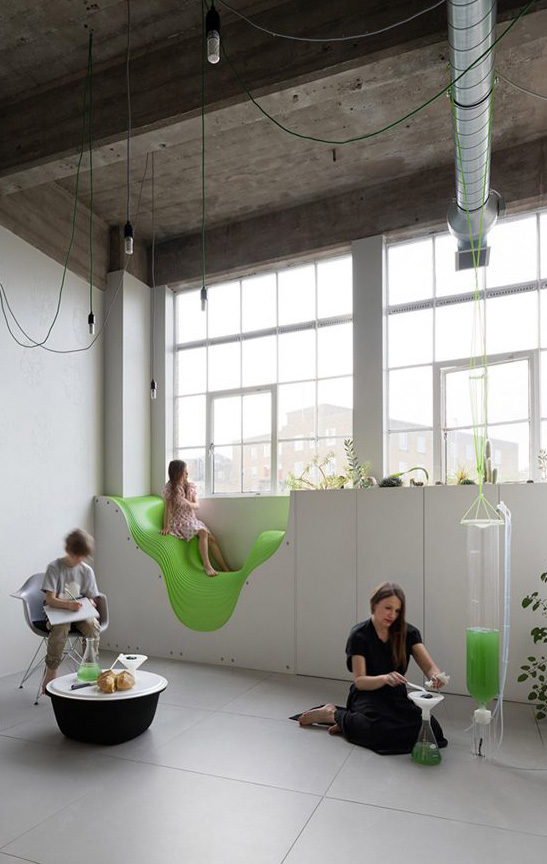
ecoLogicStudio
BioBombola
The Coral
Home Algae Garden
In June 2020 ecoLogicStudio has devised BioBombola, a pioneering project that invites individuals, families and communities to cultivate a domestic algae garden – a sustainable source of vegetable proteins. BioBombola absorbs carbon dioxide and oxygenates homes more effectively than common domestic plants while fostering a fulfilling daily interaction with nature. Each BioBombola is composed of a single customized photobioreactor, a one metre tall lab grade glass container, filled with 15 litres of living photosynthetic Spirulina strain and culture medium with nutrients.

Jon & Vangelis
VANGELIS
R.I.P
Horizon
In amongst the rings of confusion
Silencing the thought powers one by one
It seems all so incredible
Our own ability to confuse – to sacrifice
To enlighten like a shakespearian play
We foolish and happily hold on to sanity
While all around the pushing feelings
The twisting and turning of our hearts
Displaying an almost indefinable strength
Of purpose – a reason a reason a reason
Where no reasons seems to exist
Yet, as in a vision, a voice transcending
All our imagination, jewel of life
Guiding light heralding a joyous new dawn
Clear and gifted time
Divine nature – super nature
The supreme gift of knowledge and space
In this cacophony of life
Peace will come
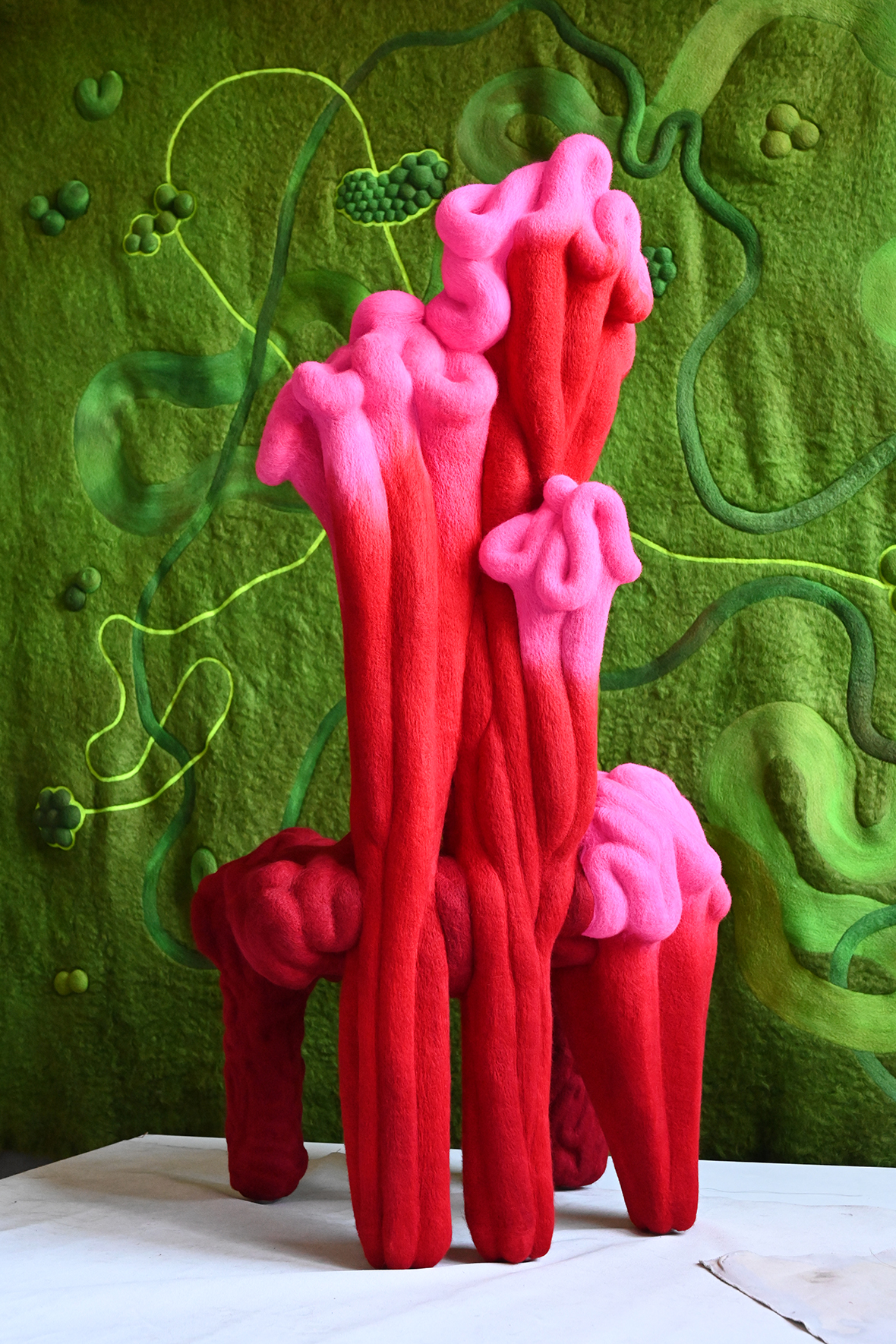
Liam Lee
Untitled 05
“I look at forms in nature for inspiration – from microscopic organisms like bacteria and viruses, to moss covered stones, branches of trees, the human body, seedpods, landscapes, star charts, etc., then try to bring all of these disparate elements together in the work”

Lukas Truniger, Itamar Bergfreund & Bruce Yoder
Ethereal Fleeting
A series of clouds is generated by a machine-like sculpture. They appear, float over the surrounding environment and then dissolve into thin air again. The delocalization of this instant of natural beauty evokes a surreal experience. The installation forms a juxtaposition of a metallic structure and synthetic imitations of clouds. This supposed contrast between human technology and nature is explored in a space of unseen possibilities for symbiosis.

MARCO BAROTTI
MOSS
Depuis le début de la pandémie, la pollution de l’air a diminué dans de nombreuses régions du monde. Nous assistons à un moment sans précédent en termes de réduction des émissions industrielles et de l’empreinte carbone. Moss est une sculpture sonore cinétique alimentée par des données sur la qualité de l’air générées par l’indice mondial de la qualité de l’air. La sculpture vivante est conçue pour analyser l’air de nos villes et réinterpréter les données avec des modes de respiration et des paysages sonores en évolution. De Berlin à Bombay, Moscou et Pékin. Le public peut expérimenter en temps réel la qualité de l’air du monde transformée en une installation sonore cinétique. Le projet contribue à la recherche mondiale et incite les citoyens à participer au débat sur la qualité de l’air et la démocratie sur terre. Moss vise à créer un engagement civil en apprenant de la sagesse de la nature et du service de la technologie.

Marco Barotti
PALOURDES
Dans la nature, les palourdes sont des détecteurs de polluants ; ils servent de minuscules systèmes de filtration. Clams est une collection de sculptures sonores cinétiques qui convertissent les données des capteurs de qualité de l’eau en sons et en mouvements. Chaque « palourde » est fabriquée à partir de déchets plastiques recyclés et contient un haut-parleur. Le paysage sonore microtonal en constante évolution confère à chaque coque une action d’ouverture et de fermeture subtile et réaliste. Les lectures en temps réel d’un capteur de pureté de l’eau standard placé dans la rivière, le lac ou la mer des villes où l’œuvre d’art est présentée, constituent la base de la musique, qui est générée par un processus en constante évolution basé sur les niveaux de qualité de l’eau sur temps. Les palourdes invitent le public à établir des liens entre l’art médiatique, la sonification des données et la durabilité environnementale.

Jennifer Steinkamp
From, the Future
The art is about waiting, something the entire world population knows since the onslaught of Covid-19. The title was also inspired by a dream where I told a scientist I was from the future and he believed me. My interpretation of the dream relates to my interest in the luminous thoughts of the 13th-century Persian poet Rumi, he clearly describes what our souls really are, beautiful, sacred, beyond time. I am fascinated by the existential impermanence of beauty. Beauty offers us a deep connection to the experience of life. The animation consists of cut flowers continuously falling from the sky, it can be seen by looking up to the ceiling. The title infers the signature on the note of a gift.