highlike

lauren dimaya krystal li heidy cordero arias

every time the stars align
FILE LED SAO PAULO 2018
“Every Time the Stars Align” fuses different natural elements of crystals, plasma and flowers in a lava lamp environment. Red crystals freeze with rigid edges and thaws into a relaxing mood. Plasma liquid rises and falls reflecting a lava-like quality. Flowers fluctuate between a spectrum of color symbolizing intense human affections. Contradicting and uniting flat and deep spaces, the three elements compose and decompose.

SONJA VORDERMAIER

sleepwalkers
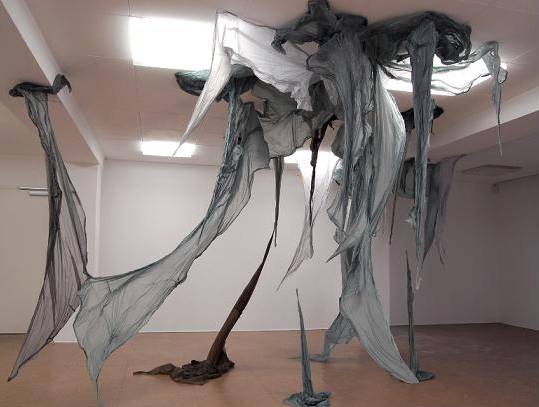
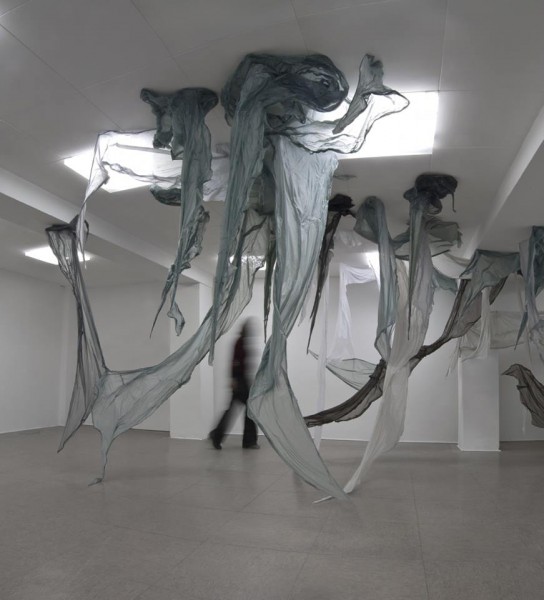
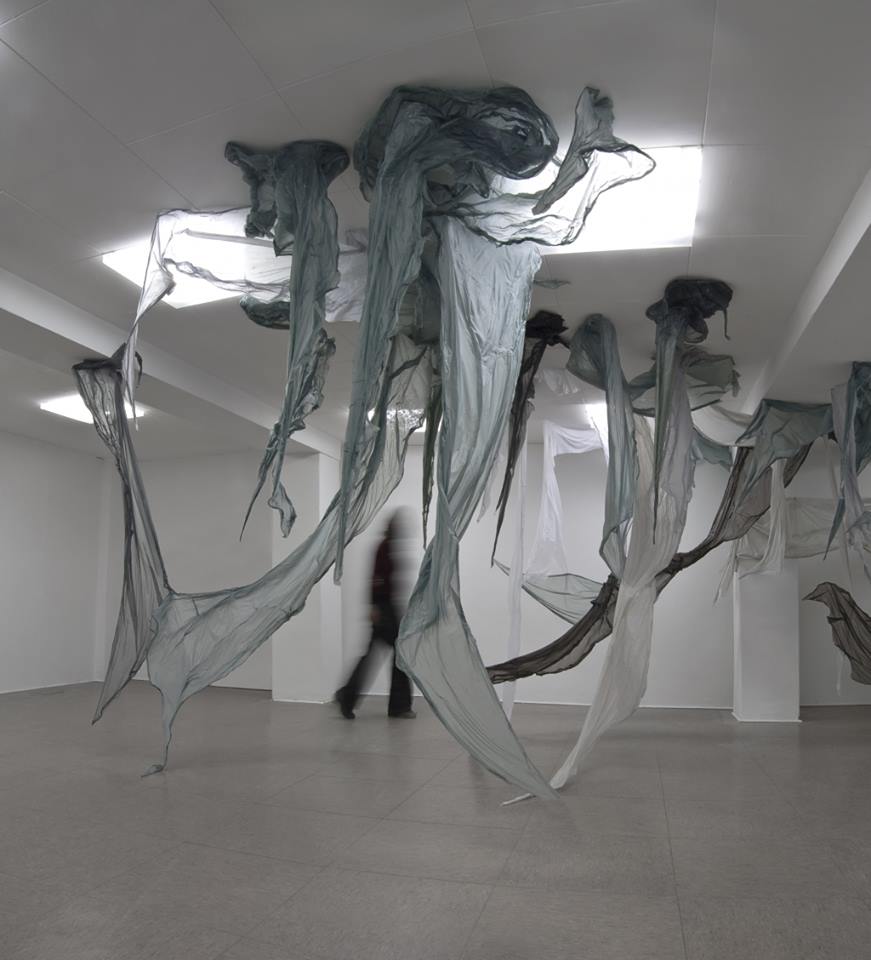
在她的作品中,艺术家Sonja Vordermaier(* 1973)研究了多种材料的特定特性和动态品质。 Vordermaier雕塑和房间装置令人不安的美感,无论是棱角形的或无定形的,晶体的或植物的,技术性的还是猖ramp的-Vordermaier雕塑和房间装置的令人不安之美都是基于将常见的建筑材料转变为具有令人着迷的刺激力和几乎无穷无尽的联想潜力的结构。
»材料的组合导致相反的共生关系:软变硬,固体变轻,柔韧性变硬。艺术家的以过程为导向的作品(…)也是雕塑概念的作品,通过对非典型材料的表演性处理加以扩展,这些非典型材料在它们的联系中达到了新的材料状态。物体变成了物体,不仅触发了观看者的肉体接触,而且触发了他们的情感接触。«(Wiebke Gronemeyer)

LENOX-LENOX

impossible objects

TMRRW


TMRRW(dot)net combines predictable and unpredictable change in order to form a cubic time capsule of tomorrow’s relics. Predictions arise by mapping the course of natural disasters and desiccated resources, and non-predictions are postulated from science fiction and myth. The resulting guided tour of The Last Gallery presents attributes of artifactual design and nostalgia: we will remember impact events and Y2K12 hysteria; thirst, wetness, and all things glossy; sitting, leisurely commodities, and decoration. This piece intends to simulate future documentation of the past, while simultaneously proposing precursory relics.

SEIKO MIKAMI

Desire of Codes


This interactive installation in three configurations to expand.
Ninety structures resembling tentacles with built-in small surveillance cameras are placed across a white wall[Ninety Wriggling Wall Units, while six robotic search arms equipped with video cameras and laser projectors are suspended from the ceiling [Six Multi-perspective Search Arms]. Each device senses observe and follow as mosquito movements the positions and movements of visitors, and turns toward detected persons in order to observe their actions. In addition 4.7m round-shaped projection screen that looks like an insect’ s compound eye which installed in the back of the exhibition space[Compound Eye Detector Screen].

KAZUHIKO HACHIYA

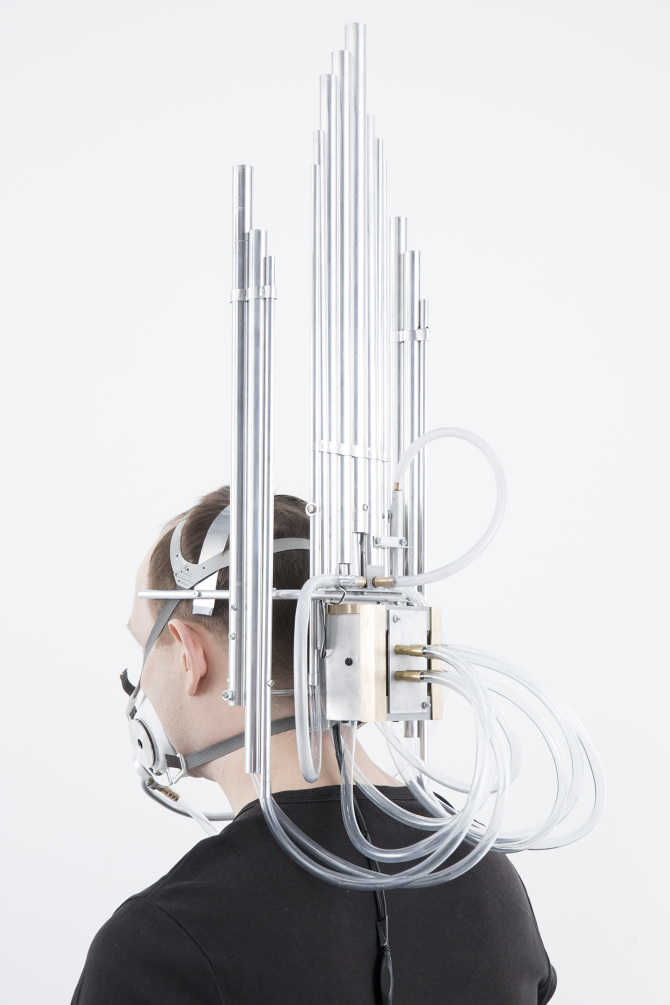
Inter Dis-Communication Machine


Equipments which exchange views between two persons. You can only see through the other person’s eyes when you wear these machines, which forcibly put you in the other’s place. These were made to obscure the border between identities of two persons

FILE SÃO PAULO 2025: SYNTHETIKA – #FFFF00

Impression: São Paulo

#FFFF00

FILE SÃO PAULO 2025: SYNTHETIKA – Art and Technology – Video Art
Electronic Language International Festival


Impression: São Paulo – Taiwan

This is a silent video of colors sourced from São Paulo, which #FFFF00 have never been to, photos found on the Internet. While Impressionists painted outdoors in order to capture “the realistic scenes outside the studio,” today’s artists no longer do this — for the world now comes to us in the form of image. The work highlights this mediated reality, evoking the impression of the place with a hypnotic atmosphere.

BIO

#FFFF00 is imagining another art. Her mi̍h-kiānn swings between joke and protest against institutions. With appropriation, multiplicity and low-budget as main tools, strives to pave the way for outsiders. Graduated from National Taiwan University of Arts, has participated in group exhibitions in Asia, Europe, and America.
Synthetika: the age of artificial creativity | FILE 2025

Synthetika

Unlike Hegel, who called the set of ideas of a given era the “spirit of the times” (Zeitgeist), we could call our era “Zeitsynthetik” (the time of the synthetic). In the classical period, art was inseparable from religion, whose essence was spirituality; in modernity, spirituality was replaced by the ideologies of grand narratives (capitalism and socialism). The classical arts invented poetics and aesthetics: the beautiful and the sublime. Modern art invented the avant-garde that proposed to be revolutionary, its driving force was the dialectic of the new without the old, and on the other hand, postmodernists mixed everything with everything, including the old with the new. Today we live in the era of synthetic technologies, the era of disruptive technologies. In which the new of modernity is no longer sufficient or surprising. Syntheticity is the new vector: synthetic algorithms; synthetic virtual realities; synthetic intelligences. The driving force behind synthetic art is: 1) the fusion of new art and technological innovation, and 2) the inter-creativity between the artist and artificial creativity. Prompt engineers strategically simulate personas for AIs in order to move away from triviality and thus obtain more creative results. Synthetic intelligences are no longer just instruments, but partners of artists in the construction of a creative and innovative symbiosis.

Art and culture are going through a moment in which creativity ceases to be just human, it becomes artificial; syntheticity thus prospects a post-culture, a new FORM: the form SYNTHETIKA.

Ricardo Barreto

Curator and co-founder of FILE

Electronic Language International Festival

Ryoji Ikeda

point of no return

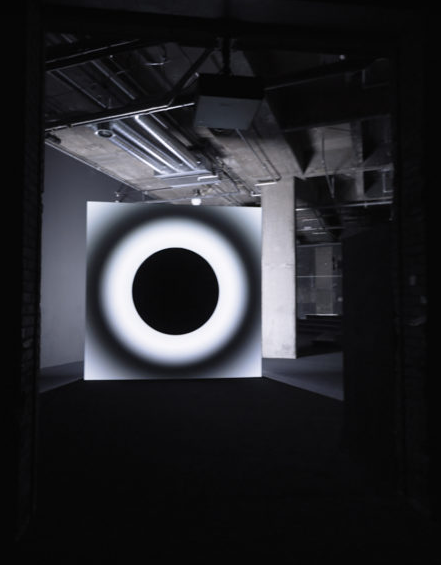
With point of no return, Ryoji Ikeda condenses the unknowable chaos of the event horizon of a black hole into a work of order and balance. Composing a delicate assemblage of basic shapes, sounds, light and shadow, the artist eschews the intricacies of data for a more sculptural approach. While gesturing towards the sublime, the infinite expanse of space and the immense, reality-warping gravitational force of a black hole, he focuses in on the beauty of the physical, bringing together a few simple elements to make sense of something unthinkably complex. Through his own artistic process of playing with space, the artist finds purity in basic structures while drawing inspiration from the vast scope of the universal. “point of no return is a very simple, very intense piece,” he says.

Aqua Creations

Manta Ray Light
Aqua Creations creates hand crafted lighting design. Each piece is designed in their studio, on a made to order basis by their team of artisans who have been working for 30 years. Through spellbinding designs combined with master craftsmanship and innovative technology, light fuses with function and becomes art.
Lotte Geeven

ECHO CHANT
In a universe from which no particle escapes, every voice eventually fades away. No matter how loud or often a call shouts or how urgent the message is. At least… in theory. But what about real life? As a roaring voice in full force rises from a protest over a square, it sets billions of atoms in motion above a crowd. “No justice, No Peace!” The message of vibrating particles charged with kinetic energy empowers the mass and shakes the established order on a verge of collapse. All according to the laws of nature. Dutch artist Lotte Geeven listened to these hotspots of change around the world after the streets and squares had been swept clean and silence had returned. Looking for an echo.
Ei Wada

Toki Ori Ori Nasu – Falling Records

FILE FESTIVAL


In this work, open reel tape recorders are placed on top of high pedestals and, as they play back, the magnetic tape unspools down into plastic receptacle below. The tape that accumulates in the container piles up as time passes, weaving an unusual pattern in the space. When the tape stops accumulating it is wound back up at high speed to a symphonic soundtrack. The pattern that had existed until then is extinguished and a new pattern is then woven.

Actual Objects

Vicky
Vicky is an interactive film that tells the non-linear story of a future hurricane on the southern border of the United States in 2028. The narrative, which is augmented by sound design from Theo Karon, is spread across multiple screens, each of which houses a different character reflecting on the situation in different ways.

aes+f

allegoria sacra

This piece by AES+F takes the Italian Renaissance art piece Allegoria Sacra in order to show a modern representation of perjury. There are political and religious tones but there is not an overt statement trying to be made. AES+F are asking their audience to take a deeper look at how we see the Western and Eastern worlds, and how all people are judged.

FUSE

FRAGILE
Fragile is an audio-visual installation that aims to investigate the relationship between stressful human experience and the transformations that occur in our brain. Recent scientific research has shown that neurons belonging to different areas of our brain are affected by stress. In particular stress causes changes in neuron circuitry, impacting their plasticity, the ability to change through growth and reorganization.
Our process exploits the scientific data provided by the Society for Neuroscience and elaborates this information trying to show the effect of external interactions on our nervous system and ultimately on our relationship with the outside world. In order to achieve this we developed an artwork composed of different digital representations following one another, branching into 5 screen projections.

STUDIO DRIFT

Herumtreiber
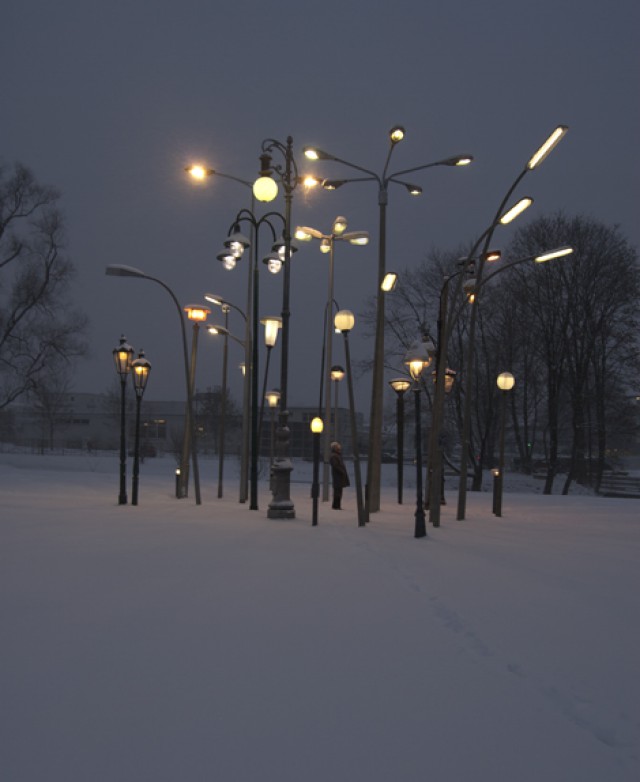
Drifter fordert den Betrachter auf, unser Verhältnis zu unserer oft als statisch und leblos akzeptierten Lebensumgebung zu überdenken. Es erzeugt ein Gefühl des Unglaubens und der Verschiebung und erzeugt Spannungen zwischen Menschlichkeit und Natur und Chaos und Ordnung. Losgelöst von unseren Erwartungen schwankt die Arbeit zwischen dem Möglichen und Unmöglichen.

The Man from the 9 Dimensions

The Man from the 9 Dimensions

Based on the latest scientific data and hypotheses, Takashi Shimizu, the pioneer of horror movies, visualizes the world as theoretical physicists see it in order to create a new kind of science movie. The world’s first 3D full-dome movie on the “Theory of Everything”; the ultimate goal of physics to describe all natural phenomena by a single, consistent theory. Physics is in crisis. Our understandings of the microscopic world of elementary particles and of the macroscopic world of the universe are in contradiction. Scientists are striving to resolve the contradictions and construct the Theory of Everything. Be ready to be surprised by the new world of vibrating strings and hidden dimensions predicted by the most promising hypothesis, the Superstring Theory.

Scientific Advisor: Hirosi Ooguri

Director: Takashi Shimizu

Hiroshi Ishiguro

Mindar
Революция машин уже пришла в религию – по крайней мере, в Японии. Буддийский храм в городе Киото решил изменить свои практики, чтобы стать ближе к людям, и установил там робота. Твоя роль? Объявляйте проповеди верующим. Робот Миндар ростом почти шесть футов имеет женский голос и был создан в честь буддийского божества милосердия Каннон. Руки, лицо и плечи корпуса робота покрыты силиконом (имитирующим человеческую кожу). Это все. Все остальное состоит из открытых металлических шестерен.


.

Mindar

A revolução da máquina já entrou na religião – pelo menos no Japão. Um templo budista na cidade de Kyoto decidiu mudar suas práticas para se aproximar das pessoas e instalou ali um robô. Qual é o seu papel? Anuncie sermões aos crentes. Com quase um metro e oitenta de altura, o robô Mindar tem uma voz feminina e foi criado em homenagem à divindade budista da misericórdia Kannon. Os braços, rosto e ombros do corpo do robô são cobertos com silicone (imitando a pele humana). É tudo. Todo o resto consiste em engrenagens de metal expostas.


.

Mindar

The machine revolution has already entered religion – at least in Japan. A Buddhist temple in the city of Kyoto decided to change its practices in order to become closer to people, and installed a robot there. What is your role? Announce sermons to believers. Almost six feet tall, the robot Mindar has a female voice and was created in honor of the Buddhist deity of mercy Kannon. The arms, face and shoulders of the robot body are covered with silicone (imitating human skin). It’s all. Everything else consists of exposed metal gears.

Coralie Vogelaar

Random String of Emotions

Emotion recognition software analyzes our emotions by deconstructing our facial expressions into temporal segments that produce the expression, called Action Units (AU; developed by Paul Ekman), and breaking them down into percentages of six basic emotions, happy, sad, angry, surprised, scared, and disgusted. In this video the artist uses this decoding system to turn the process around. Here – instead of detecting AUs – a computer is used to generate a random string of AUs. In this way complex and perhaps even nonexisting emotional expressions will be discovered. These randomly formed expressions, played in random order, are then analyzed again by professional emotion recognition software.

Masaki Fujihata

Voices of Aliveness
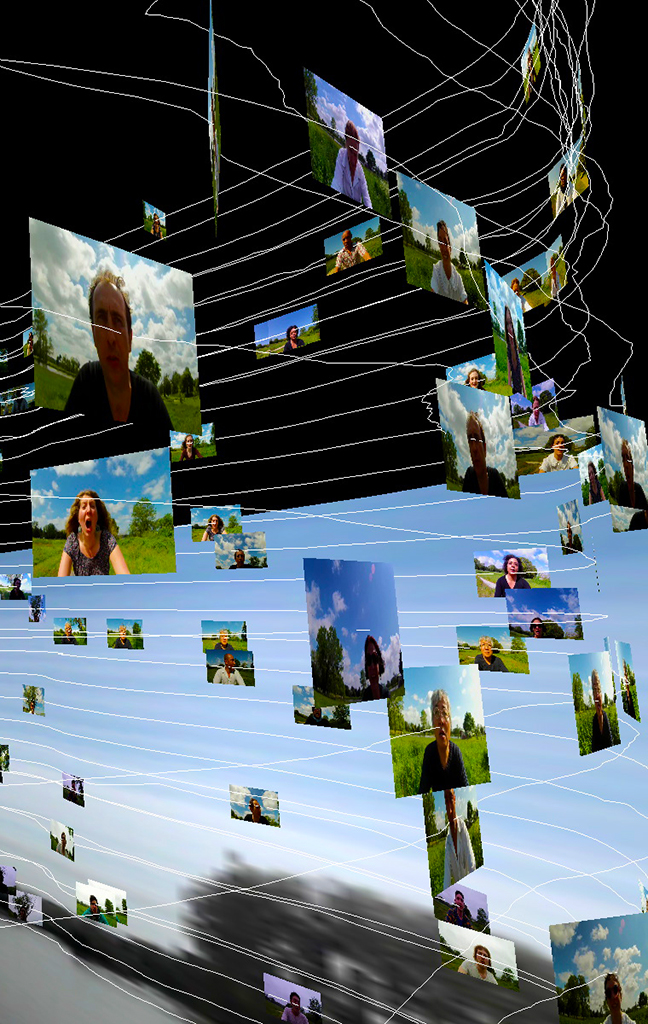
This project, upon the initiative of l’Ecole des Beaux-Arts de Nantes, has been conceived as a meta-monument where are gathered video sequences recorded by a camera with GPS. People are screaming while biking in a 500 m circle in the countryside. The traces of this route can be visualized thanks to lines that form a sort of tower in the virtual space, where it can go on indefinitely. On these lines, in an order that looks more like a music score than a succession of shootings, mobile video screens simultaneously display the image of the performances.

Skylar Tibbits

Aerial Assemblies
Self-Assembly is a process by which disordered parts build an ordered structure through local interaction. We have demonstrated that this phenomenon is scale-independent and can be utilized for self-constructing and manufacturing systems at nearly every scale. We have also identified the key ingredients for self-assembly as a simple set of responsive building blocks, energy and interactions that can be designed within nearly every material and machining process available. Self-assembly promises to enable breakthroughs across every applications of biology, material science, software, robotics, manufacturing, transportation, infrastructure, construction, the arts, and even space exploration.

Playmodes Studio

“Espills” is a solid light dynamic sculpture. Built using laser beams, laser scanners and robotic mirrors, it is inspired by crystalline formations. A set of geometric figures that float in the air and which suggest, in an abstract way, the transmutation of matter from chaos to order. Dust becoming crystal, being eroded and becoming sand again.

Jacqueline Hen

Light High
The installation LIGHT HIGH is aimed at guiding the perception through targeted acoustic and visual phenomena into border areas in which ambivalent experiences set in and the habitual experience of space is abolished.[…] A mirrored ceiling together with a thin reflecting surface of water on the ground and a grid arrangement of lights are creating the spatial illusion of an infinite vertical space of light and darkness. By traversing a small bridge, the visitor can cautiously discover the immersing endlessness beneath his/her feats and above his/her head.

Ayoung Kim

In Search of Petra Genetrix

Petra Genetrix, the protagonist of the series Porosity Valley, is a migrant, mineral, and data cluster. In this lecture performance, the artist traces the origin of Petra Genetrix who constantly crosses borders, gender boundaries, and the concept of existence and nonexistence and creates her own hyperbolic mythology. While utilizing audio and video excerpts from her existing works, Ayoung Kim uses her own voice to create a verbal narrative exploring those agents who cross boundaries. By doing so, she continues to trace multifaceted crystal faces of Petra Genetrix, who is fundamentally porous and ambiguous.

Mycelium Network Society

Franz XAVER + Taro + Martin HOWSE + Shu Lea CHEANG + global network nodes
Mycelium Network Society (MNS) investigates the unique abilities of mycelium, the collective name given to thread-like networks of fungal cells, to share and process information. Launched at the Ecologies excursion of transmediale 2017 in Berlin, in 2018 MNS takes on a franchise mode—inviting alternative art spaces and bio-hack labs to become nodes within a mycelium network, and to host workshops, residencies and exhibitions investigating mycelium, fungus and spores. Mycelium is henceforth used as a structure through which to connect co-habitants across borders, to develop channels for constant communication, to construct political tactics and contest economic collapse. The network currently comprises six nodes across France, the UK and USA, and most recently four sites in Taiwan.

Push 1 stop and Woulg

Interpolate
Interpolate incorporates live coding and generative processes to create an audio/visual performance where visuals control audio, and audio controls visuals. Stark, minimal, generative 3D geometry and particle systems take the audience through the music, conveying the physicality of the sound while mapping out the emotional landscape of the melodies. To interpolate means to determine an intermediate value or term in a series by calculating it from surrounding known values; on stage Push 1 stop and Woulg send data wirelessly to each other in order to be able to patch new interactions between audio and visuals in real time, and interpolate the missing data between sound and image.

Denise Ritter

Small World Wide
small world wide is gebaseerd op het small world fenomeen dat zegt dat iedereen in de wereld via een korte keten van directe kennissen met elkaar verbonden is. In 2013 wees geluidskunstenaar Denise Ritter 10 audiorecorders toe aan 10 startende personen, die de recorders via een aaneenschakeling van persoonlijke kennissen zouden moeten richten op het bereiken van 10 geplande bestemmingen. Die plaatsen en de tussenstappen moeten worden gedocumenteerd door middel van een geluidsopname. Dit kunnen bijvoorbeeld geluiden zijn of geluiden die kenmerkend zijn voor het dagelijks leven of de woonruimte. Maar er worden geen richtlijnen gegeven. Het is alleen toegestaan ​​om de recorder door te geven aan directe bekenden. De directe weg naar de bestemming via een vreemde of niet-verwante is niet toegestaan. Zo ontstonden 10 routes over de hele wereld, en tot op de dag van vandaag ontving de artiest meer dan 30 uur aan geluidsopnames van over de hele wereld. De geluidsopnames vertonen onverwachte globale overeenkomsten wat betreft de opnameplaatsen en -situaties die de deelnemers hebben gekozen.

Juuke Schoorl

Liquid Skin
‘Liquid Skin’ is a visual research towards the changing boundaries between the physical world of the human body and the digital world. By borrowing techniques found in touch screen technologies, but instead of following the cold underlying logic of present day devices, it proposes a situation where this border becomes liquid and sensual with an emphasis on the fluidity of touch and movement. Turning the skin itself into a medium of visual expression without the constraint of the technical grid.

Kohui

Disorder
혼란, 무질서 혹은 고장난”
Order가 무너지면 새로운 틈과 간격이 생겨난다. 균일했던 틈과 간격은 Disorder에서 예측불가하고 비정형적이며, 지속적으로 변화한다. 이 틈과 그들의 이동경로 사이의 역학에서 우리는 새로운 Order를 제시하고자 한다.

Jürg Lehni

Four Transitions
Die Installation Four Transitions (2020) des interdisziplinären Schweizer Künstlers Jürg Lehni besteht aus vier an einer Wand montierten Boxen, die jeweils den Entstehungsprozess einer Zahl in einer deutlich unterschiedlichen Farbe und Technologie zeigen. Im Kontext neuer Medien und internetbasierter Kunst, wo die Definitionen von Kunst offen sind und die Beziehung des bewegten Bildes und der Arbeitsstrukturen zum Betrachter im Mittelpunkt steht, rückt der performative Aspekt der Arbeit in den Vordergrund wie die Dinge dargestellt werden. Seit der Postmoderne erweist sich die Frage nach dem Dargestellten im Hinblick auf den semiotischen Aspekt der Kunst als zu einfach oder zu allgegenwärtig, um dem Werk gerecht zu werden. Die Tatsache, dass? hier ist leicht zu beantworten: Four Transitions repräsentiert eine Echtzeit-Digitaluhr. Das Werk entfaltet seine Tiefe am deutlichsten, wenn dieser Einfachheit des semiotischen Aspekts die Komplexität der Performativität des Werkes gegenübergestellt wird.

Andrius Arutiunian

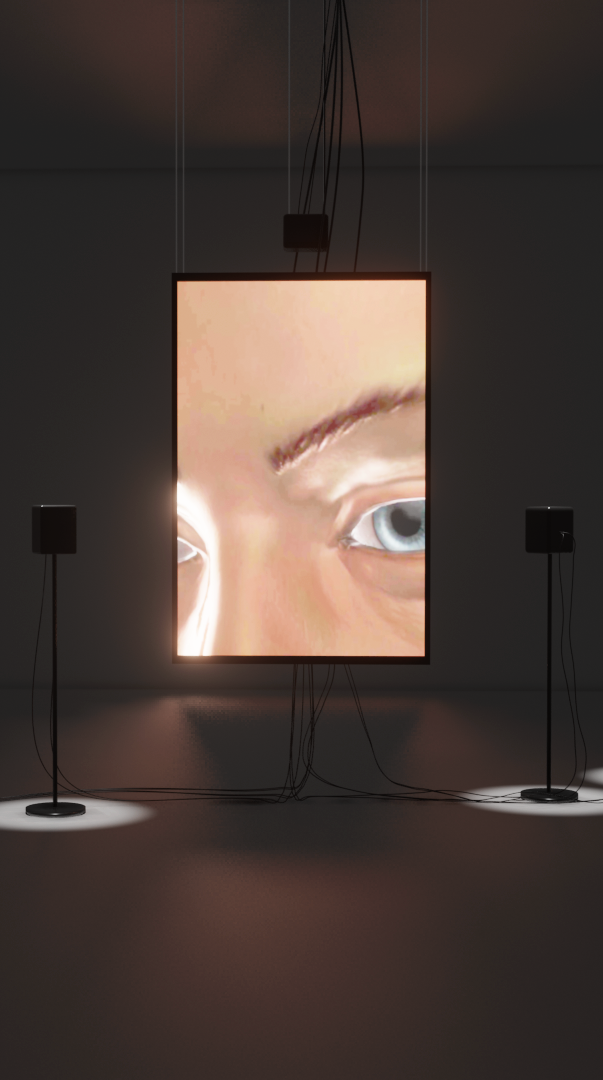
The Irresistible Powers of Silent Talking
サイレントトーキングの魅力的な力は、自動化された欺瞞検出システムとその国境監視への使用を調査する施設です。これは、EUに入る移民の顔の微妙な表情をスキャンするために開発されたiBorderCtrlアルゴリズムに基づいています。仮想アバターが最初に人にインタビューした後、iBorderCtrlは、非公開の一連の基準を使用して、その信憑性のレベルを決定します。基本的に、それは真実または欺瞞についてのアルゴリズムの仮定に基づいて決定を下します。

disnovation.org

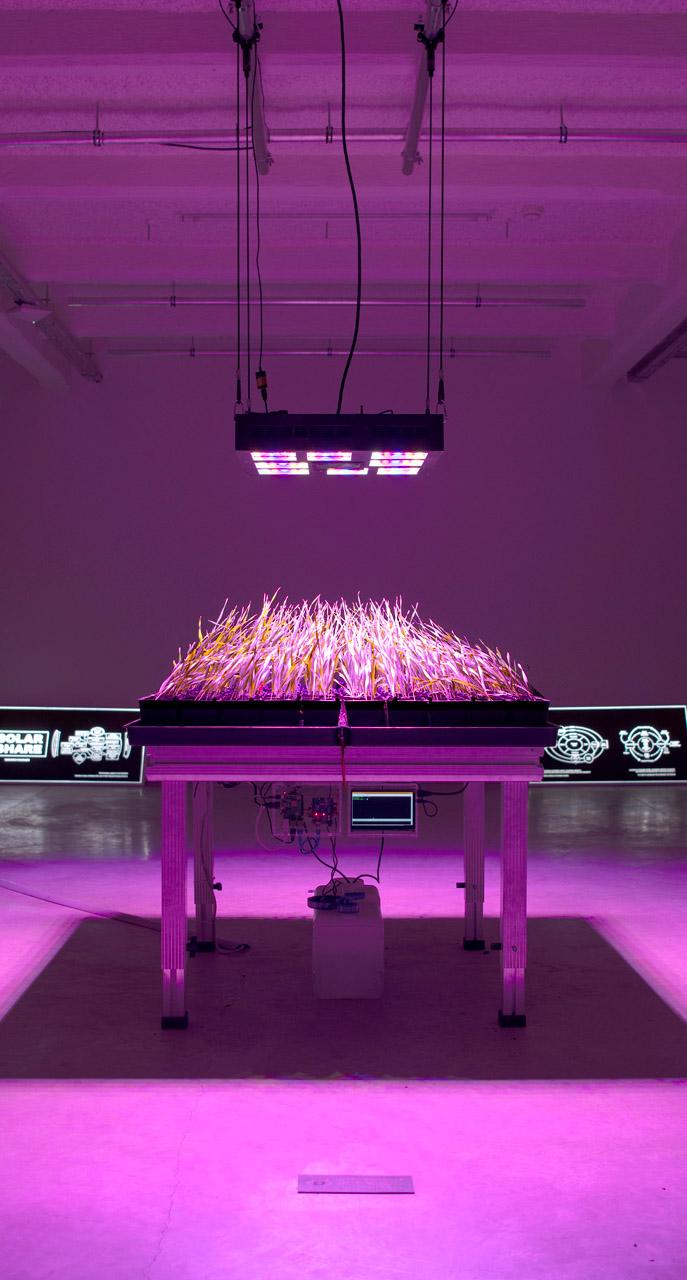
LIFE SUPPORT SYSTEM (AKA. THE FARM)
This artistic provocation seeks to estimate the orders of magnitude of critical ecosystem services fundamental to all planetary life processes. This experiment consists of 1 square meter of wheat, cultivated in a closed environment. Critical inputs such as water, light, heat, and nutrients are measured, monitored and displayed for the public. This procedure makes palpable the immense scale of ecosystem contributions, and provides a speculative reference for a reckoning of the undervalued and over-exploited “work of the biosphere.”

Andrius Arutiunian

The Irresistible Powers of Silent Talking
The Irresistible Powers of Silent Talking – это установка, исследующая автоматизированные системы распознавания обмана и их использование для наблюдения за границей. Он основан на алгоритме iBorderCtrl, который был разработан для сканирования микровыражений лиц мигрантов, въезжающих в ЕС. После того, как виртуальный аватар впервые дал интервью человеку, iBorderCtrl определяет уровень его правдивости, используя нераскрытый набор критериев. По сути, он принимает решения на основе алгоритмических предположений об истине или обмане.

ALISA ANDRASEK

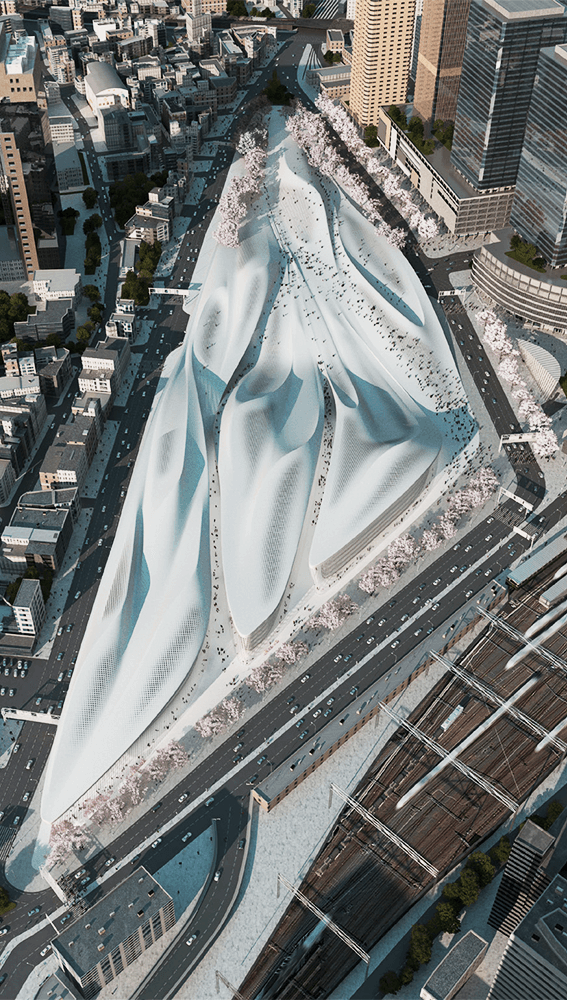
Cloud Osaka
Envisioned as a high-resolution urban interchange, Cloud Osaka embodies Biothing’s approach to complex design synthesis across multiple orders of scale. Due to its central position in the city, a high convergence of users and one of Asia’s densest transportation nodes found in the adjacent JR Osaka Station, the key driver for the project was to understand 2.5 million people traversing the site every day. This is nearly 10 times the number of daily passengers at the busiest airports in the world. Such an extreme volume of pedestrian traffic, compounded by other forms of traffic in the area, warranted choosing computational physics simulation ordinarily used to simulate systems like river flows; indeed, a key driver for the project became the concept of a “river of people”.

Liam Young

In the robot skies
In the Robot Skies is the world’s first narrative shot entirely through autonomous drones. In collaboration with the Embedded and Artificially intelligent Vision Lab in Belgium the film has evolved in the context of their experiments with specially developed camera drones each programmed with their own cinematic rules and behaviours. The film explores the drone as a cultural object, not just as a new instrument of visual story telling but also as the catalyst for a new collection of urban sub cultures. In the way the New York subway car of the 80’s gave birth to a youth culture of wild style graffiti and hip hop the age of ubiquitous drones as smart city infrastructure will create a new network of surveillance activists and drone hackers. From the eyes of the drones we see two teenagers each held by police order within the digital confines of their own council estate tower block in London. A network of drones survey the council estates, as a roving flock off cctv cameras and our two characters are kept apart by this autonomous aerial infrastructure.

Liam Young

Planet City

Planet City, by Los Angeles-based film director and architect Liam Young, explores the productive potential of extreme densification, where 10 billion people surrender the rest of the planet to a global wilderness. Although wildly provocative, Planet City eschews the techno-utopian fantasy of designing a new world order. This is not a neo-colonial masterplan to be imposed from a singular seat of power. It is a work of critical architecture – a speculative fiction grounded in statistical analysis, research and traditional knowledge.
It is a collaborative work of multiple voices and cultures supported by an international team of acclaimed environmental scientists, theorists and advisors. In Planet City we see that climate change is no longer a technological problem, but rather an ideological one, rooted in culture and politics.

SOOMI PARK

LED Eyelash
The LED Eyelash project is brought into the world from a simple question: Why do women want larger and bigger eyes? Asian women tend to have stronger needs for bigger eyes as a standard of beauty, but relatively few of them are born with naturally big eyes. Those without big eyes can only look for alternative ways to make their eyes look prettier, i.e., larger, by using a repertoire of skills such as putting on makeup and wearing jewelry. Sometimes, the desires for bigger eyes can become almost obsessive, and many women opt for plastic surgery in order to make their dream come true. Soomi calls this, the fetish of Big Eyes. LED Eyelash is a clever product that speaks to many women’s desire for bigger eyes. It features a sensor to turn on and/or off. The sensor can perceive the movements of the pupil in the eyes and eyelids. If you wear it and move your head, LED Eyelash will flicker following your movements. It is as simple to use as wearing false eyelashes and as easy to remove as taking off a piece of jewelry.

c-lab

Tech Camouflage: Anti-Facial Recognition.
Model: Kim Jeong Eun
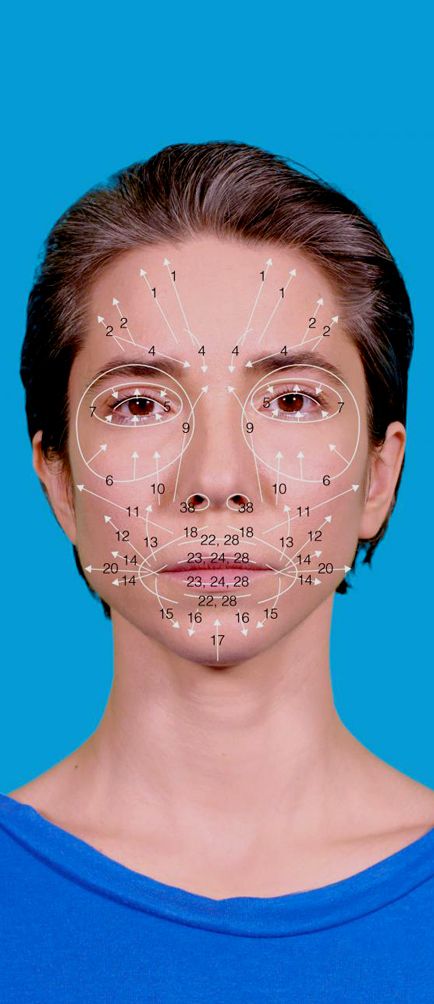
In order to help understand the main discourses covered by the project and to explore various interpretations on the theme of * c-lab 1.0, ‘Beauty, familiar familiarity’, we conducted a “Technology camouflage: anti-facial recognition technology make-up workshop” as a linked program. . Recognizing that facial recognition technology that is widely used with the generalization of smartphones and SNS can also be used as a way to monitor and control individual freedom, as a new form as an alternative to protect personal privacy from such technologies This is a workshop program that has practiced make-up and hairstyle.

ANOUK WIPPRECHT

PANGOLIN DRESS

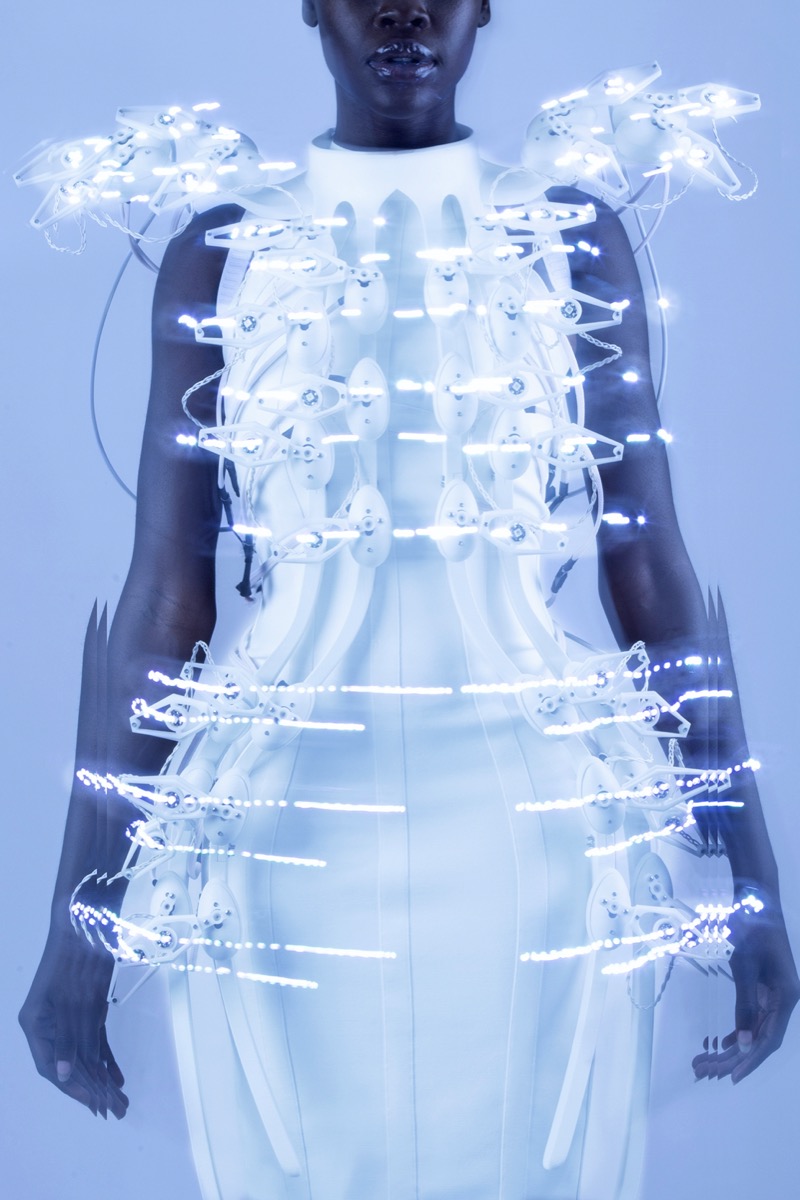
The Pangolin Scales Project demonstrates a 1.024 channel BCI (Brain-Computer Interface) that is able to extract information from the human brain with an unprecedented resolution. The extracted information is used to control the Pangolin Scale Dress interactively into 64 outputs.The dress is also inspired by the pangolin, cute, harmless animals sometimes known as scaly anteaters. They have large, protective keratin scales covering their skin (they are the only known mammals with this feature) and live in hollow trees or burrows.As such, Pangolins and considered an endangered species and some have theorized that the recent coronavirus may have emerged from the consumption of pangolin meat.Wipprecht’s main challenge in the project’s development was to not overload the dress with additional weight. She teamed up 3D printing experts Shapeways and Igor Knezevic in order to create an ‘exo-skeleton like dress-frame (3mm) that was light enough to be worn but sturdy enough to hold all the mechanics in place

Masaki Fujihata

Orchisoid

“Mobility, technological invention, and artistic invention “It’s not just about putting new media into art, or even making new media art. It is about making new media as an artist, about being an artist in new media. Therefore, if it is not only a question of renewing art by injecting it with new means, new tools, new subjects, it may be a matter of shifting its borders to the point of considering experiments, technological inventions, such as art-related events, as part of the artistic project ”. In my opinion, here is how to re-found art and breathe new life into it for years to come! Fujihata’s work leads us to think of Art as “technical conduct”. In this conduct, technique is not instrumentalised, it is therefore freed from having to serve FOR something, it does not have to be effaced in front of what it serves. But this notion is very “fragile” as Pierre-Damien Huyghe points out to us. Indeed, if the technique “is no longer used for” it is no longer “necessary”. We must therefore consider that what is not necessary is precisely what is useful. Highlighting the usefulness in a technique without going through a notion of service is precisely what is at stake in Masaki Fujiata’s artistic position. In his work, it is about exploring the possibilities of a group of techniques so that they do not end up in the use where they are usually agreed. At the heart of Fujihata’s work we are dealing with techniques rich in possibilities. The artist has an artistic conduct which does not seek the means to do something with these techniques but which seeks to discover them. The artist positions himself as a discoverer making both learned and humorous attempts … “Jorane Rest