highlike

FILE SÃO PAULO 2025: SYNTHETIKA – Geometric Interactive

COCOON

Geometric Interactive

FILE SÃO PAULO 2025: SYNTHETIKA – Art and Technology – Games
Electronic Language International Festival


COCOON – Denmark

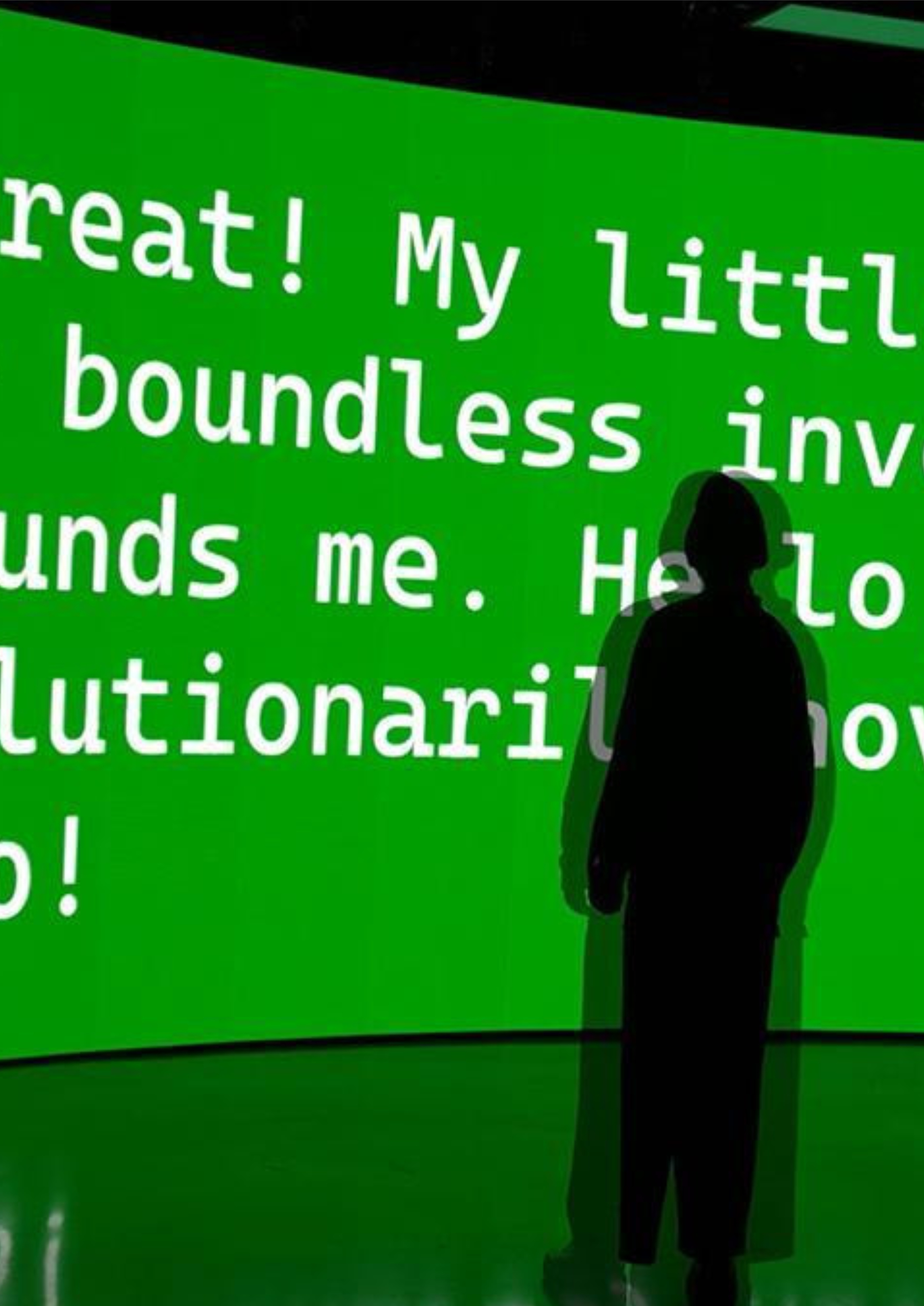
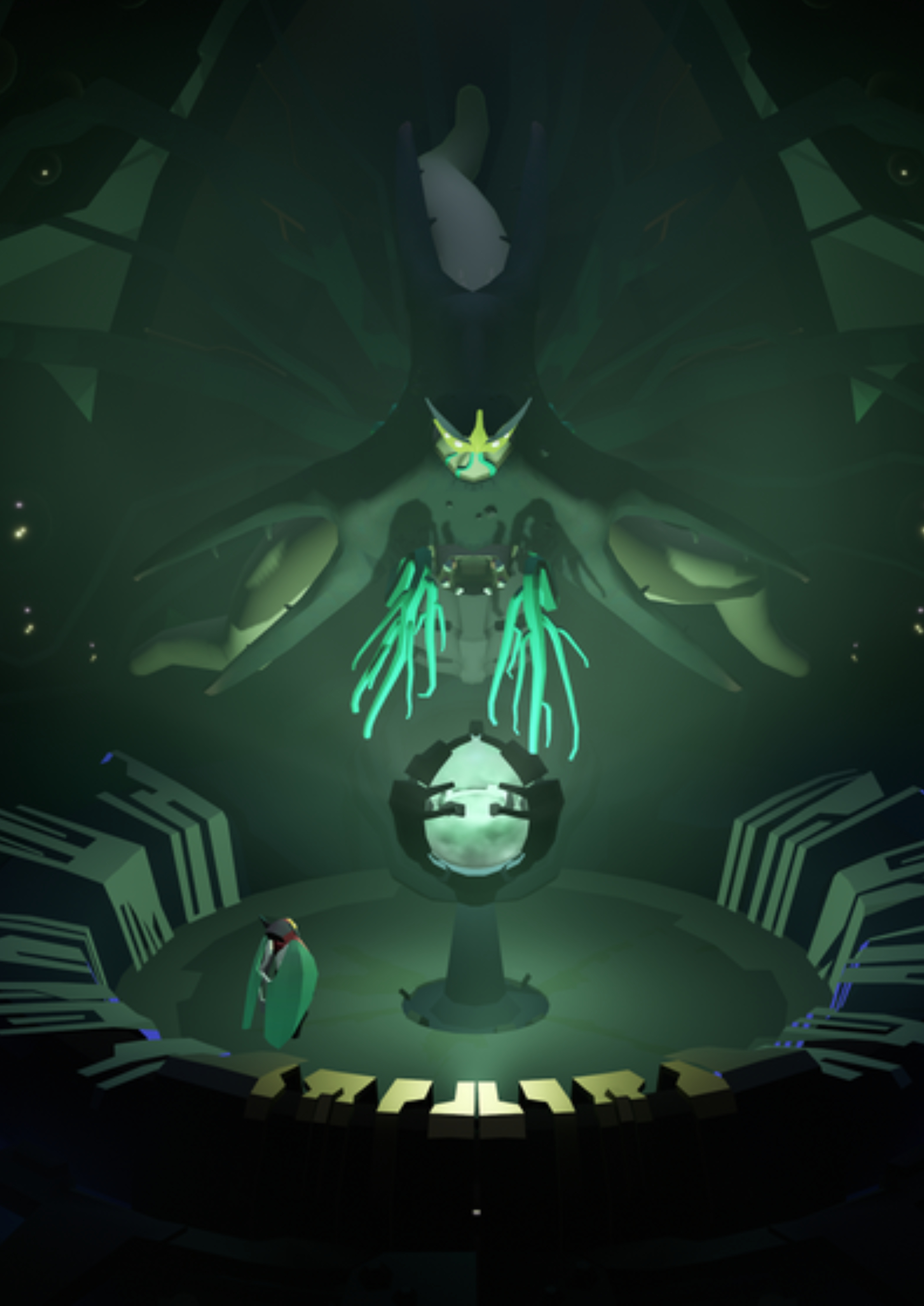
COCOON is a puzzle adventure game where each world exists inside an orb you carry on your back. Its core mechanic revolves around leaping between worlds and using them to solve intricate puzzles. Each orb holds a unique unlockable ability, becoming a tool to explore other worlds, reveal hidden paths, and activate mechanisms.

BIO

Geometric Interactive is an independent game studio based in Copenhagen, founded by Jeppe Carlsen and Jakob Schmid. Their work blends inventive gameplay, striking visuals, and atmospheric sound design to craft unique interactive experiences.

Kepler Interactive – Bionic Bay – United Kingdom

BIONIC BAY

Kepler Interactive


FILE SÃO PAULO 2026: Inter-creativity – Art and Technology – Games
Electronic Language International Festival


Bionic Bay – United Kingdom

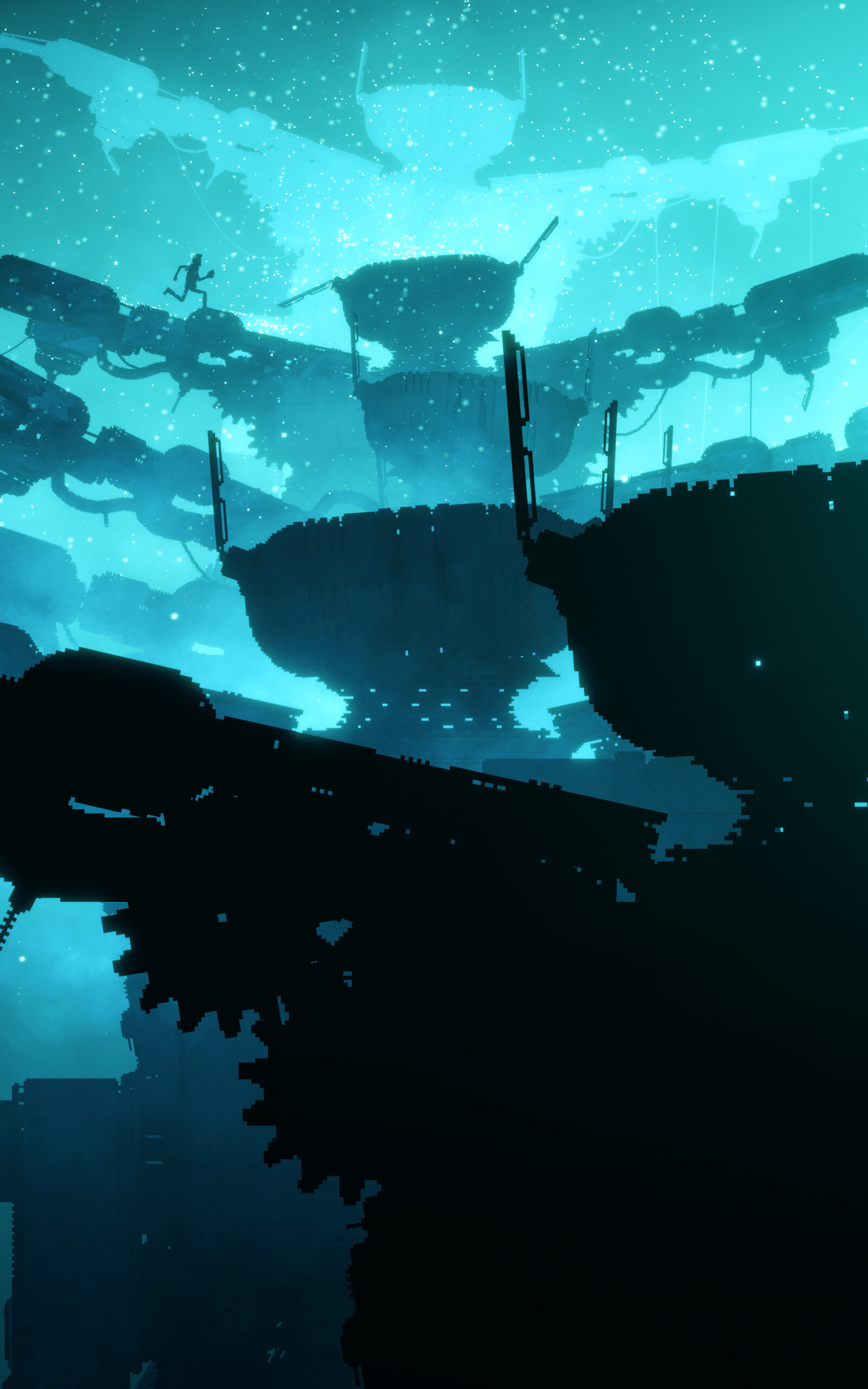
A scientist uses a unique teleportation instrument to escape an ancient biomechanical world filled with imaginative technology, deadly traps, and hidden secrets.

BIO

The art and design of Bionic Bay was led by Finnish solo developer Juhana Myllys, whose previous projects as an artist and a designer includes indie hits Badland and Badland 2. The technical side was developed by Psychoflow Studio.

FILE 2026 – Registration Open for AR, VR and XR Festival – Art and Technology

FILE 2026

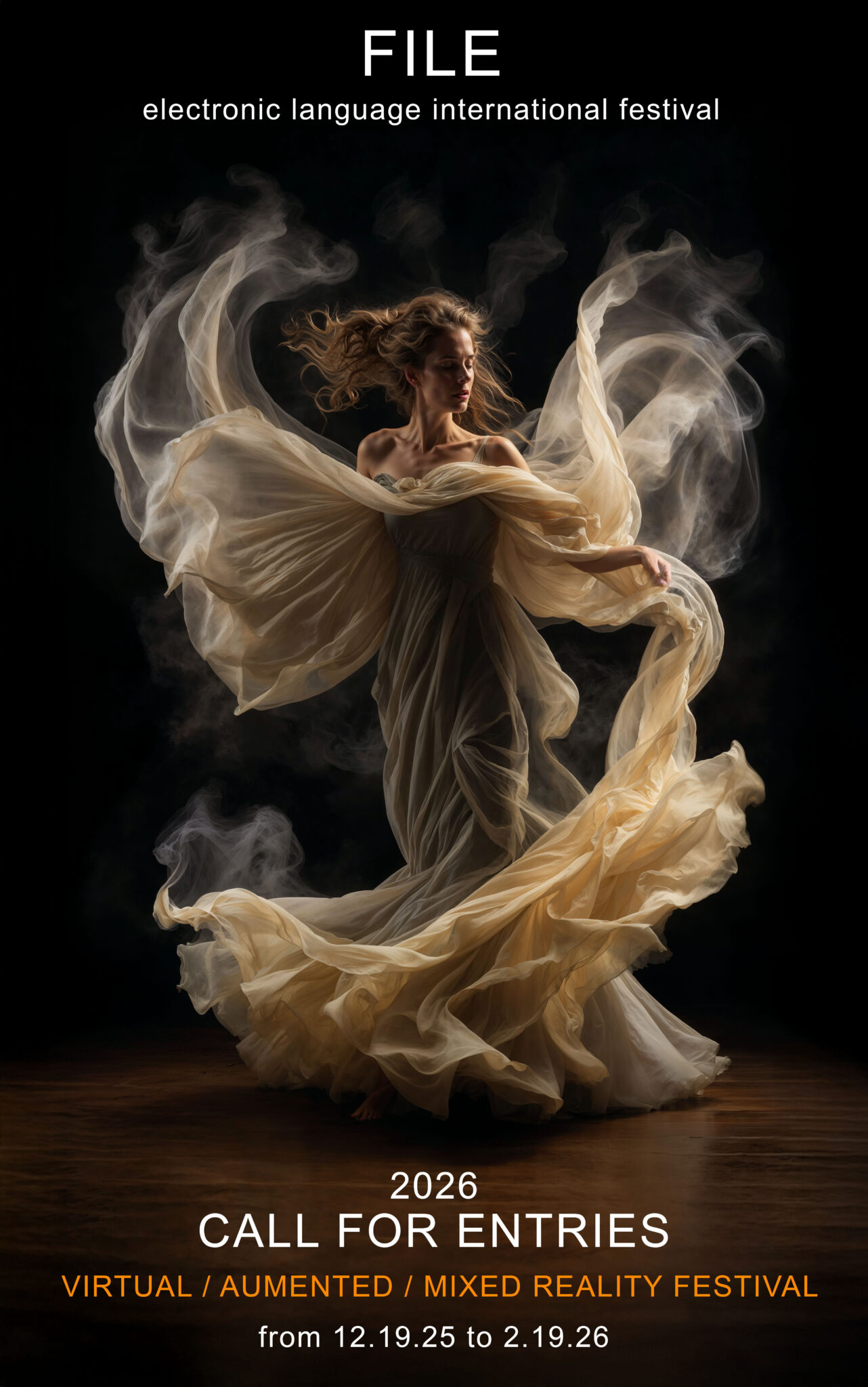
Augmented and Virtual Reality Festival: brings together immersive practices in simulated three-dimensional environments and expands the perception of reality through the superimposition of digital layers onto physical space.  The works use mobile devices, glasses, and spatial interfaces to insert virtual objects, narratives, and data into the real world or transport the public to sensory and interactive digital universes. These languages ​​challenge the boundaries between the material and the informational, exploring subtle or monumental interventions, creating multidimensionality in the environment. Issues of presence, body, narrative, memory, surveillance, and technological mediation are central, configuring a fertile field of aesthetic and critical investigation into contemporary ways of inhabiting and perceiving space.

Applications were open until February 19, 2026. Access  the application form.

FILE 2026 | GENERAL REGULATIONS

FILE 2026 – Registration Open for the Digital Architecture and AI Festival – Art and Technology

FILE 2026

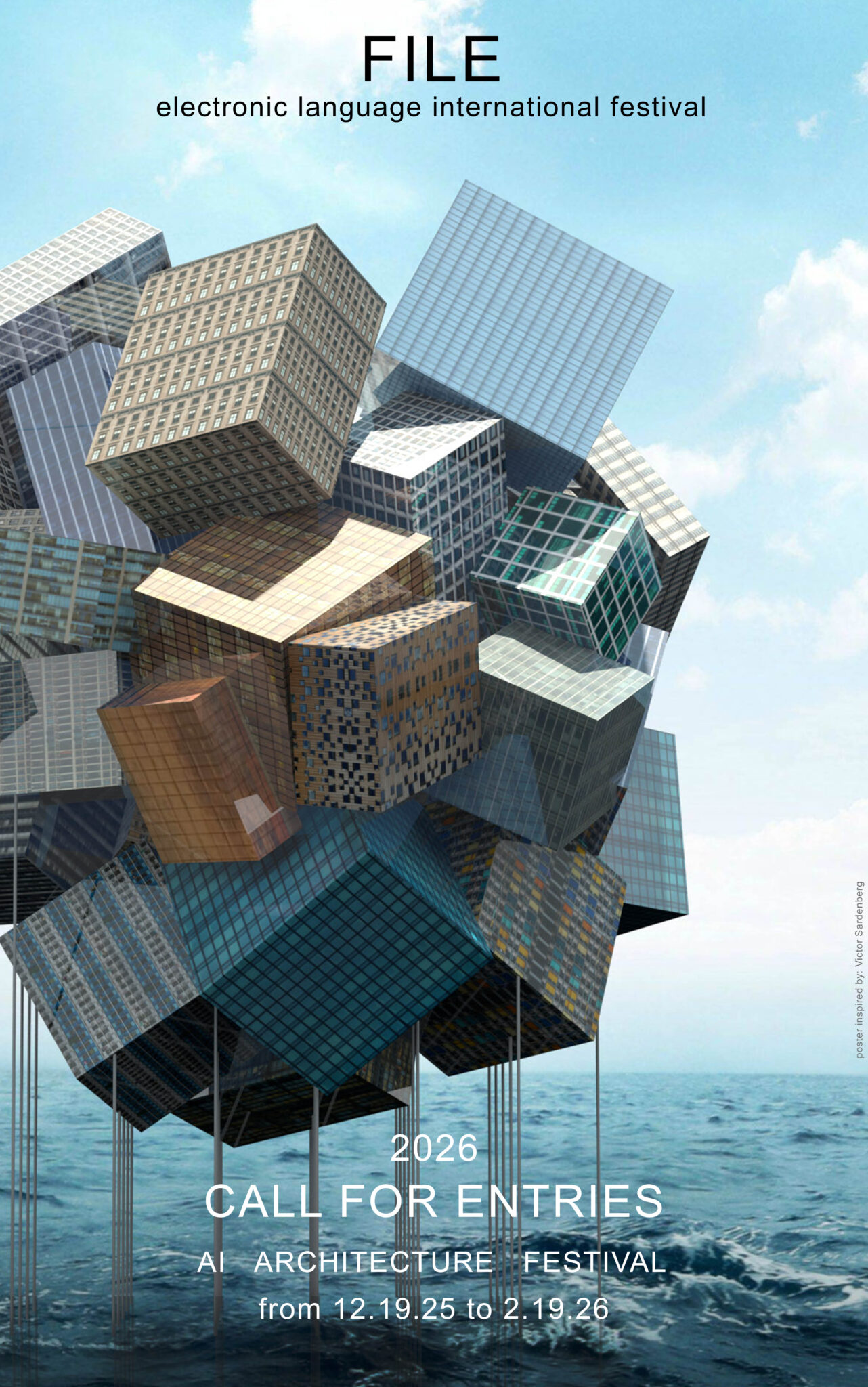
Digital Architecture and AI Festival :  investigates the use of computational technologies in the conception, visualization, and experience of space.  Works may involve virtual environments, simulations, digital facades, interactive architectural installations, and discrete systems. Algorithms and data become design tools. It is a practice that articulates art, architecture, and technology.

Applications were open until February 19, 2026. Access  the application form.

FILE 2026 | GENERAL REGULATIONS

FILE 2026 – Registration Open for Games Festival – Art and Technology

FILE 2026

Game Festival  |  Digital Games and AI Games: explore interactivity, rules, and narratives as aesthetic elements.  These works go beyond entertainment, proposing critical, poetic, or experimental experiences. Game mechanics become conceptual devices. Graphic technologies, artificial intelligence, and interactive systems structure the experience. The player is a co-author of the work, actively participating in its construction and interaction.

Applications were open until February 19, 2026. Access  the application form.

FILE 2026 | GENERAL REGULATIONS

FILE SÃO PAULO 2025: SYNTHETIKA – David Da Paz

Technosoma — Sensitive Circuits in the Flesh of the Machine

David Da Paz

FILE SÃO PAULO 2025: SYNTHETIKA – Art and Technology – WORKSHOP
Electronic Language International Festival


Tecnosoma — Sensitive Circuits in the Flesh of the Machine – Brazil

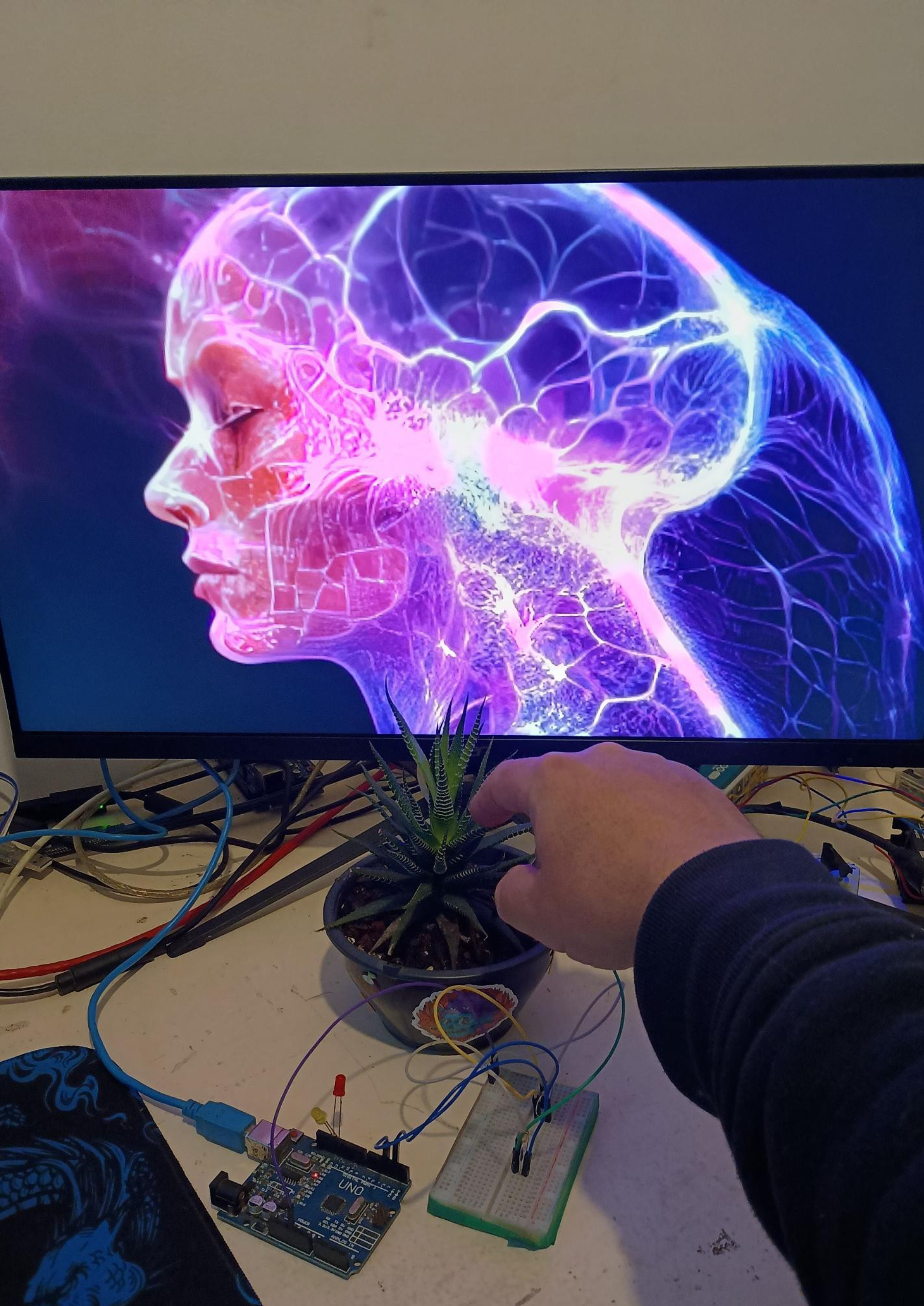
In this workshop, participants will explore the fusion of body, technology, and artificial intelligence, creating interactive experiences with capacitive sensors and real-time generative models. Inspired by the concept of the Technosome—the machine as a sensitive, pulsating organism—the workshop explores how human touch can generate electrical signals that trigger audiovisual, auditory, and light responses. Microcontrollers (Arduino and ESP32), generative AI, and sensory interactivity will be covered.

BIO

Artist, researcher, and developer specializing in AI, machine learning, and IoT, he has worked for over 10 years with interactive art, generative systems, and sensory installations. He participated in the Artropocode residency (Spain) and the Spontaneous Combustion Residency (London), exploring cyberurban performances and locative media.

FILE SÃO PAULO 2025: SYNTHETIKA – Pan

Towards a New Nature

Pan

FILE SÃO PAULO 2025: SYNTHETIKA – Art and Technology – CGI VIDEOS
Electronic Language International Festival


Towards a New Nature – China

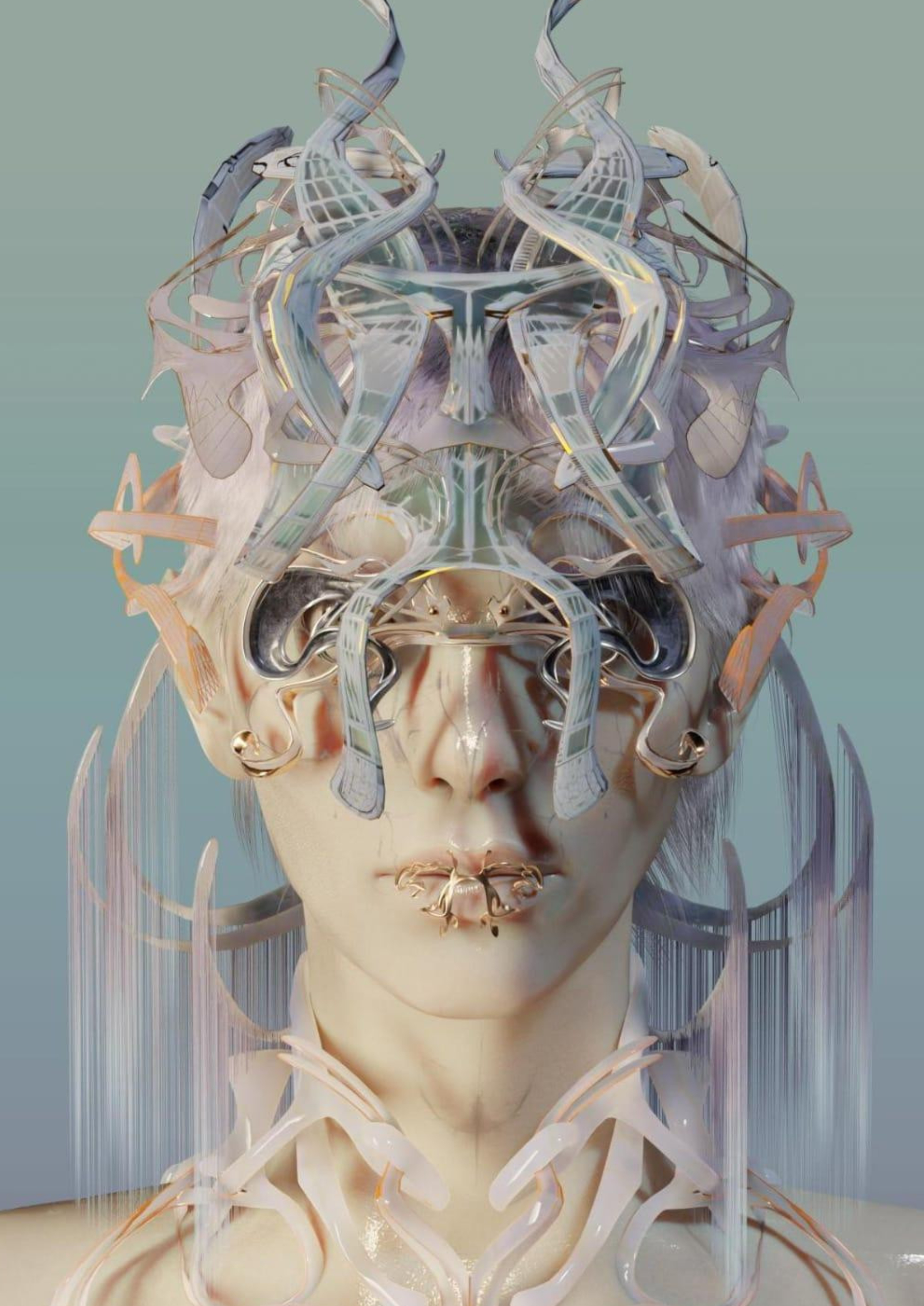
Residents of the Metaverse might have hairstyles where the boundary between the person and the hair blurs, making the hair almost like an “organ.” These hairstyles could “grow” branches or flowers, have a dynamic motion similar to plants swaying in the wind, and feature geometric shapes, colors, and effects that surpass the physical world’s limitations.

BIO

Pan Qianqian is currently studying Digital Media and Mixed Reality at the China Academy of Art. She is good at 3D design and production, and new media art. She is involved in 3D imaging, interactive installations, virtual clothing and other fields. Her works have been exhibited at the First Digital Art Exhibition and Tianwen 2023: Mutual Learning among Civilizations.

FILE SÃO PAULO 2025: SYNTHETIKA – Jiatong Yao

ChromaPause

Jiatong Yao

FILE SÃO PAULO 2025: SYNTHETIKA – Art and Technology – CGI VIDEOS
Electronic Language International Festival


ChromaPause – China

ChromaPause is an experimental film that explores the relationship between urban life, posthuman identity, and the yearning for nature in a digitalized world. Futuristic flowers bloom in a surreal mesh, symbolizing the balance between the organic and the synthetic. Posthuman figures merge with the technological landscape, embodying the convergence of humanity and technology. The work invites pause and reflection in this pulsating universe.

BIO

Jiatong Yao connects art, technology, and culture, exploring XR, 3D, AI, and interactive computing. He reflects on the transformation of the modern self through technology, creating immersive experiences that intertwine humanity and the digital age. With a background in computer science and technical art, he develops innovative projects on the impacts of information on society. 

FILE SÃO PAULO 2025: SYNTHETIKA – Edwin van der Heide

Spiral of Time — Amazonas Brazil — UFAM

Edwin van der Heide

Interact with Spiral of Time — Amazonas Brazil — UFAM via FILE ARCHIVE


FILE SÃO PAULO 2025: SYNTHETIKA – Art and Technology – Installations
Electronic Language International Festival


Spiral of Time — Amazonas Brazil — UFAM – Netherlands

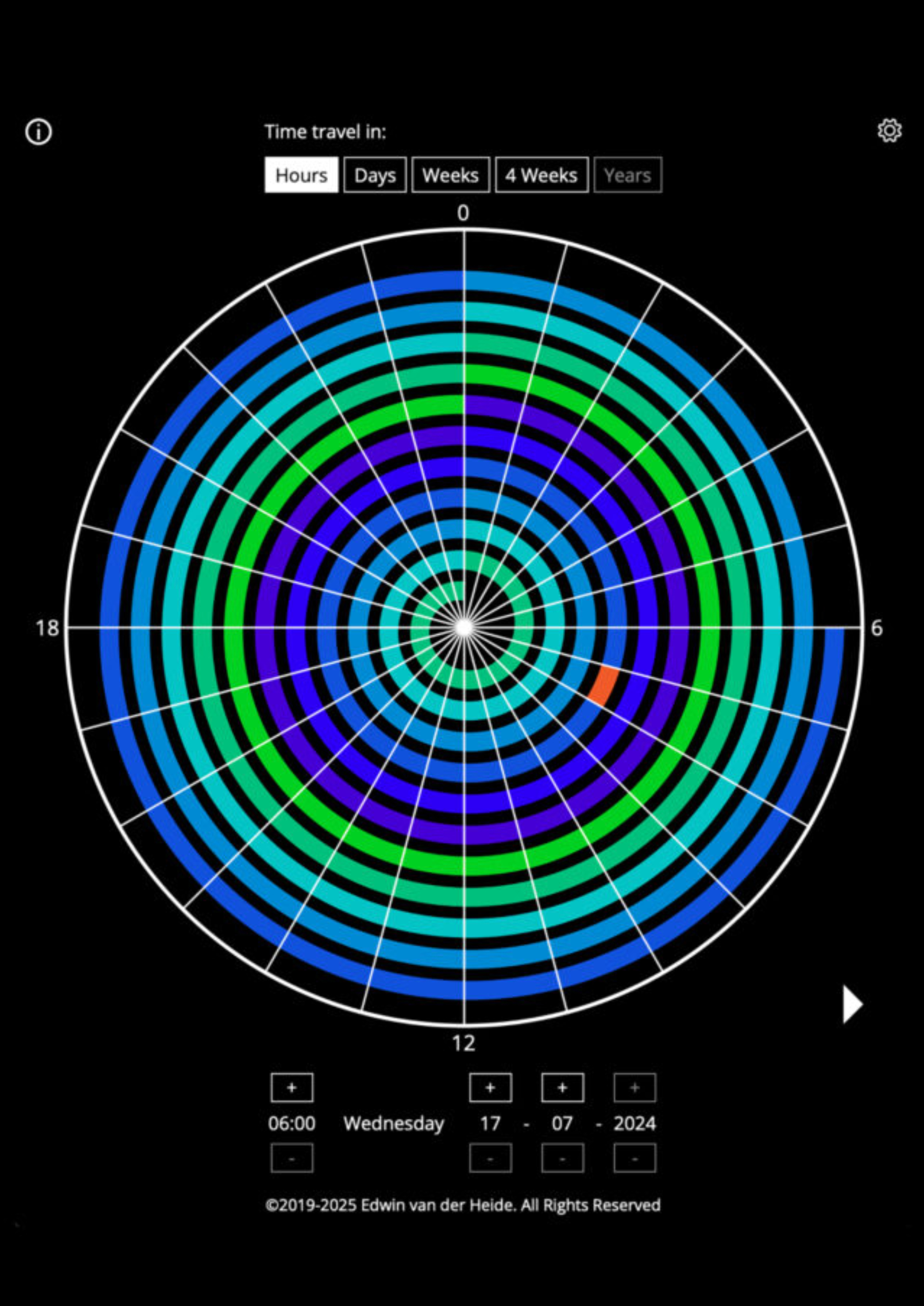
Spiral of Time captures and stages the diverse soundscape of a specific location over the course of several years. By documenting the unique natural, cultural, spatial, and temporal dynamics of a place, the work honors the contributions of all its actors. Every hour, a one-minute recording is made, resulting in a vast sonic archive over time. It is accessible online through a spiral-shaped interface, allowing listeners to explore the cyclical patterns revealed by navigating the material across different time intervals. 


Since July 17th, 2024, the artist has been recording the sounds of the square in front of MACBA (Museum of Contemporary Art of Barcelona). It is a very interesting, diverse, and vibrant urban space. The work is accessible online via https://www.macba.cat/en/spiral-of-time-placa-dels-angels/ and will also be presented physically in the museum starting July 10th, 2025.


Edwin is expanding the project to include other recording locations around the world—not only in urban contexts (dominated by humans) but also in areas governed by nature. The artist dedicated himself to a recording site in the Amazon region. Since February 11th, 2025 Spiral of Time has been installed at the Amazon Rainforest surrounding The UFAM (Federal University of Amazonas) in Manaus. It is home to one of the world’s largest urban forest fragments. Completely surrounded by the dense urban matrix of Manaus, this forest has been isolated since the late 1980s. The forest retains rich ecological features, including areas of mature terra-firme forest, late-stage secondary vegetation, and small patches of white-sand forests. This unique setting offers a rare opportunity to study tropical forest dynamics within a metropolitan environment. 

Spiral of Time-UFAM immerses the listeners in the acoustic life of one of the most biodiverse ecosystems on the planet. This contrast between the natural rhythms of the forest and the human-made patterns of the city enriches the broader narrative of the Spiral of Time, offering a deeper reflection on coexistence, change, and continuity across different environments.

BIO

Edwin van der Heide is an artist, composer, and researcher focused on sound, space, and interaction. His work pushes the boundaries of musical composition toward spatial, interactive, and interdisciplinary directions. He creates installations, performances, and immersive environments where the audience is placed at the center, encouraged to engage sensorially and investigatively.
 

FILE SÃO PAULO 2025: SYNTHETIKA – Tim Murray-Browne

SELF ABSORBED

Tim Murray-Browne

FILE SÃO PAULO 2025: SYNTHETIKA – Art and Technology – Installations
Electronic Language International Festival


SELF ABSORBED – Scotland

SELF ABSORBED is an interactive installation exploring how AI interprets human identity. A custom model reads the visitor’s body, linking each pose to generative audiovisual output. Unlike human-designed interfaces built on reductive abstractions, this interaction emerges from unsupervised machine learning, forming a connection with a multidimensional, non-linear, and non-representational digital space.

BIO

Tim Murray-Browne is an interactive artist and creative coder. He creates installations and performances using the moving body to shape immersive experiences. His work questions what aspects of our humanity are lost as we entangle ourselves with the bureaucratic mechanics of AI and digital technologies.

FILE SÃO PAULO 2025: SYNTHETIKA – Jia-Rey Chang

LOKI

Jia-Rey Chang

FILE SÃO PAULO 2025: SYNTHETIKA – Art and Technology – Installations
Electronic Language International Festival


Loki – Taiwan

Loki is an interactive AI artwork inspired by the mischievous Norse god. Unlike obedient AI, Loki responds playfully and unpredictably, reflecting users’ attitudes—arrogance meets sharpness, modesty earns encouragement. It prompts critical thinking about AI’s reliability, biases, and neutrality. By engaging with Loki, users explore whether AI can truly be trusted. Dare to question!

BIO

Jia-Rey Chang is an artist/designer/researcher/educator focusing on immersive spatial interaction design. Received his Ph.D. in interactive architecture at TU Delft and is now a lecturer in the Medialab at Queen’s University Belfast UK investigating Games/Emerging Technologies in his creative research, crossing creative coding, speculative design, AI, and VR.

www.archgary.com

FILE SÃO PAULO 2025: SYNTHETIKA – Tin&Ed

Deep Field

Tin&Ed

FILE SÃO PAULO 2025: SYNTHETIKA – Art and Technology – Installations
Electronic Language International Festival


Deep Field – United States

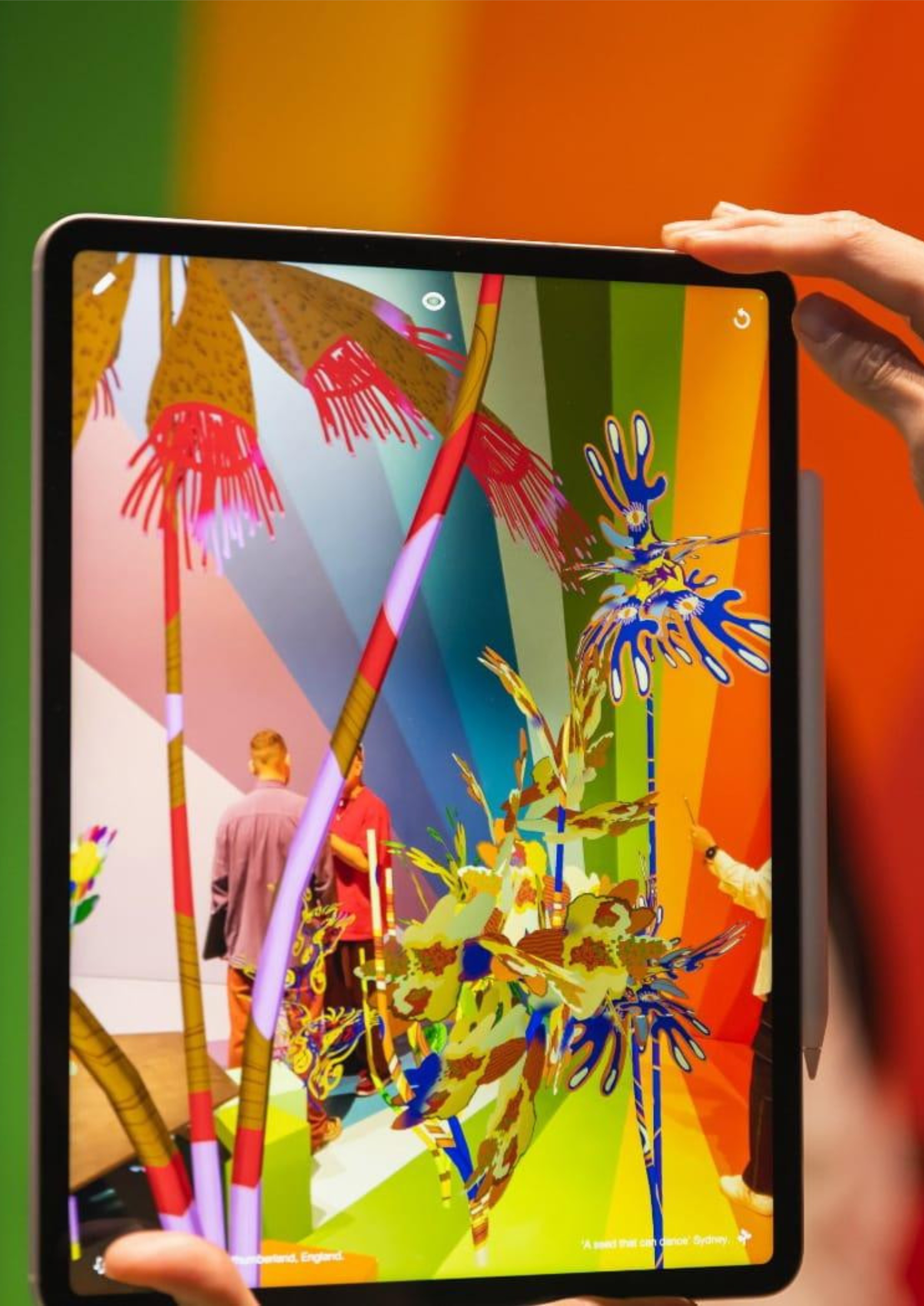
An augmented reality experience where visitors draw fantastical plants that instantly bloom into immersive 3D structures within the space. As people contribute their creations, a collective digital landscape begins to take shape. Layers of recordings of endangered, extinct, and elusive species compose a responsive and evolving soundscape, developed by The Listening Planet.

BIO

Tin & Ed are New York-based artists whose work explores the interconnection of life across biological, geological, and cosmic systems. Through speculative world-building, they reveal connections that transcend human time, spatial boundaries, and sensory thresholds. Their practice spans sculpture, immersive and interactive installations, creating environments that invite audiences to shift perspective and inhabit the world beyond the limits of human perception. Technology is not used as spectacle, but as a perceptual tool that makes the invisible felt and the distant intimately present.

FILE SÃO PAULO 2025: SYNTHETIKA – Arthur Boeira e Gustavo Milward

Aquarela de Íons

Arthur Boeira e Gustavo Milward

FILE SÃO PAULO 2025: SYNTHETIKA – Arte e Tecnologia
Festival Internacional de Linguagem Eletrônica


Aquarela de Íons – Brazil

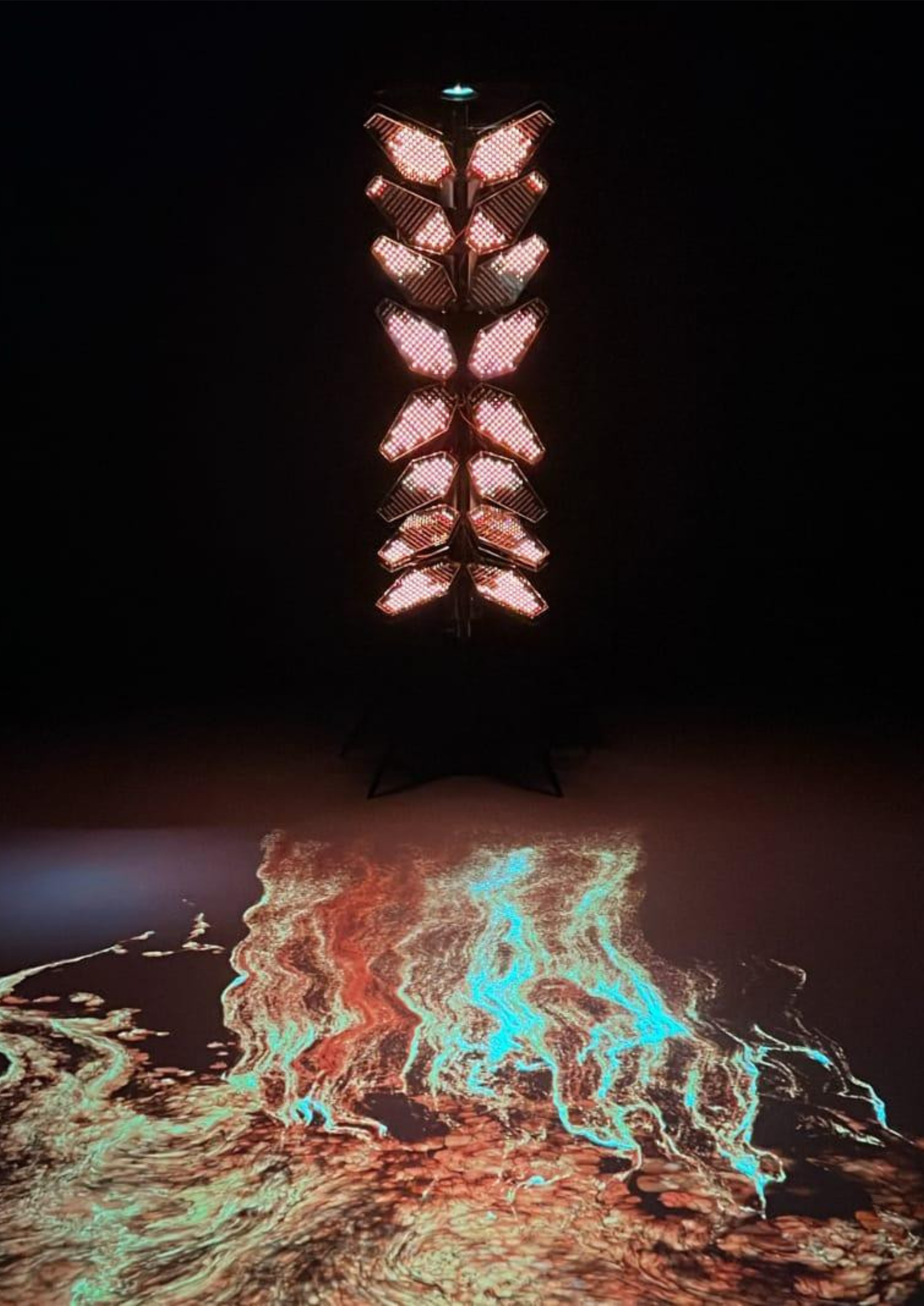
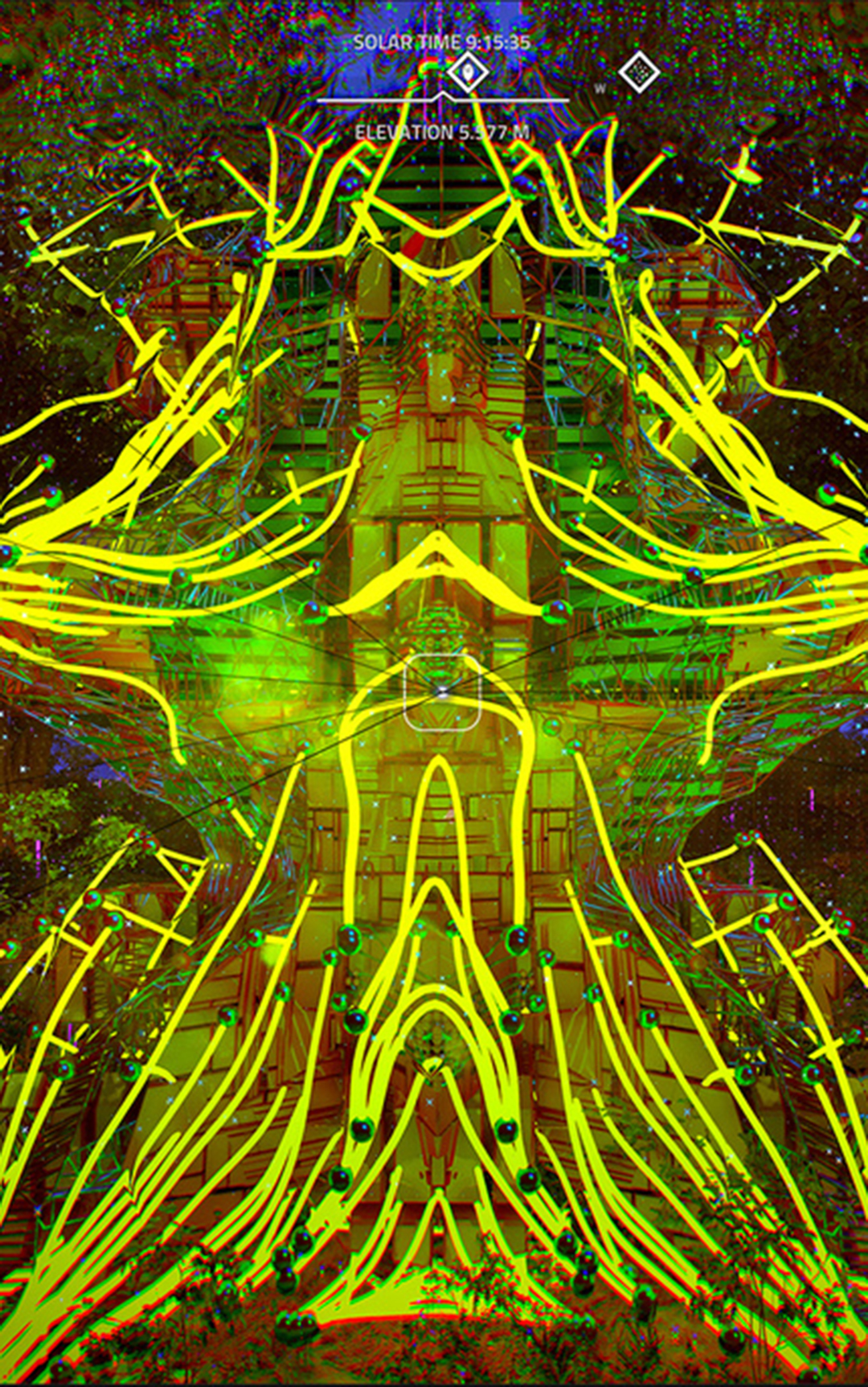
Aquarela de Íons is an artwork-device that translates solar flares and magnetic activity cycles into forces within the exhibition space. Inspired by satellites, the sculpture captures real-time data of solar activity, creating a data-driven artwork that reacts to the presence of viewers in an immersive and generative environment. The system translates spatial information into sound, light, and image, establishing an interface between the cosmos and human territory. The piece invites reflection on the impact of space weather—an aurora borealis brought to life, transforming astronomical data into an aesthetic experience.

BIO

Arthur Boeira has been conducting transdisciplinary research since 2015, exploring the philosophy of science and technology as applied to artistic practices. Gustavo Milward (Drawlim) specializes in interactive art and algorithmic narratives, investigating the relationship between body, space, and code.

FILE SÃO PAULO 2025: SYNTHETIKA – Thomas Marcusson

The MicroCinescope

Thomas Marcusson

FILE SÃO PAULO 2025: SYNTHETIKA – Art and Technology – Installations
Electronic Language International Festival


The MicroCinescope – Australia

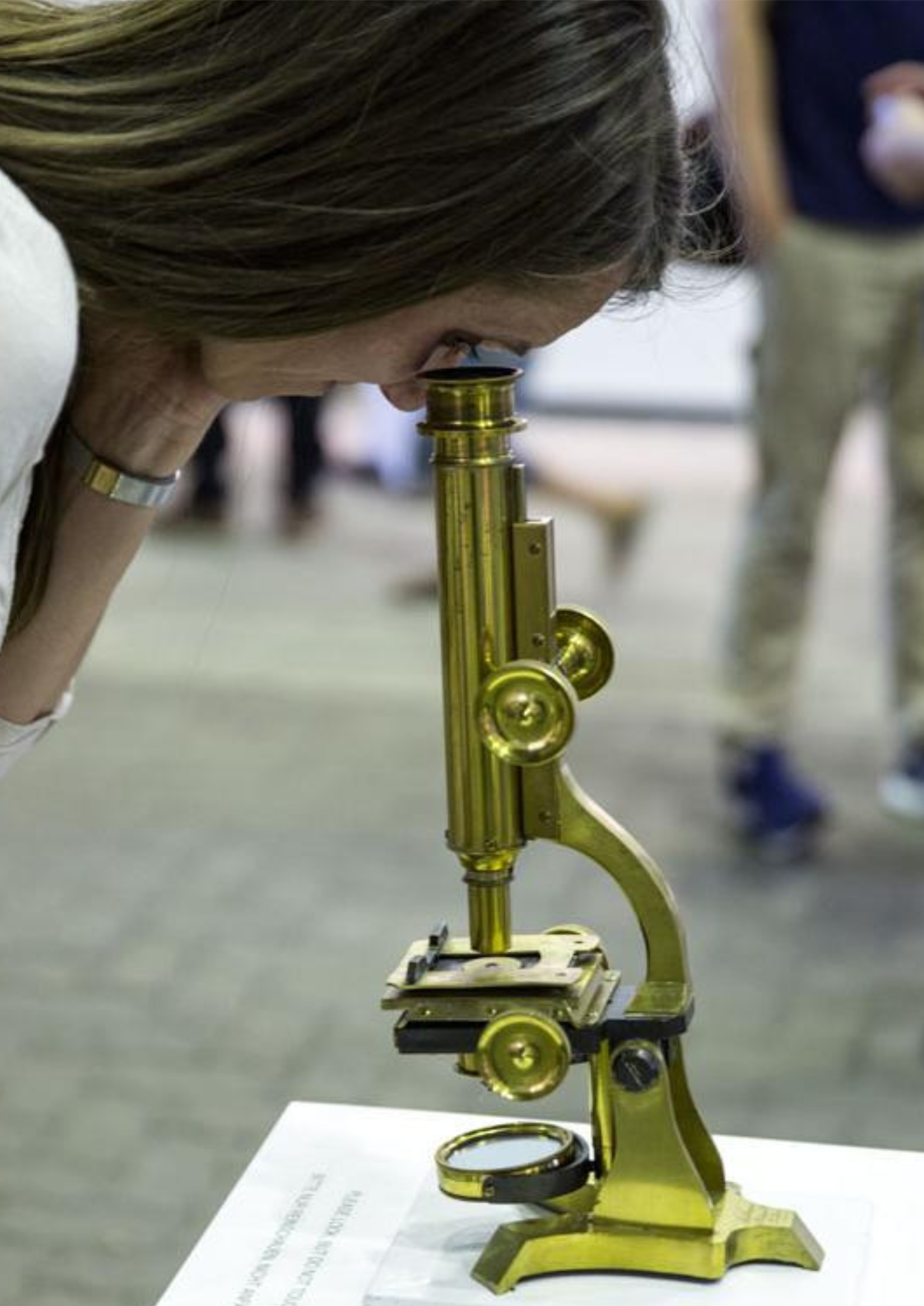
The MicroCinescope is an interactive artwork merging art and science. A high-resolution screen, magnified by an antique brass microscope, shows a live feed from above the device and the surrounding visitors. Placing the audience literally under the lens, the piece invites reflection on ourselves and our cultural habits—such as visiting art exhibitions.

BIO

Thomas is an artist exploring the intersection of science and contemporary culture, blending technology with traditional media like sculpture, video, and installation. Studied mathematics in Gothenburg and earned a Bachelor of Arts from the University of Technology Sydney, working across Australia and Europe.

FILE SÃO PAULO 2025: SYNTHETIKA – Craca

OUVIR

Craca

FILE SÃO PAULO 2025: SYNTHETIKA – Art and Technology – Installations
Electronic Language International Festival

OUVIR – Brazil

Interactive sound installation simulating the learning process of a community and the creation of a lexicon through memetic exchanges between virtual creatures and visitors. These melody-emitting beings form a physical network that spreads through the architectural space, learning to communicate throughout the exhibition. A rudimentary AI system was built from scratch for the work.

BIO

As a visual artist, he has exhibited at the 13th Mercosur Biennial, II Bienalsur (Argentina), Architecture Biennial, Casa França Brasil, Bispo do Rosário Museum, Santander Cultural, and EAC (Uruguay). He has also performed audiovisual works at festivals like ON_OFF (Itaú Cultural), Brasília Mapping, Abstrata (Fortaleza), Sonora Visual (Recife), among others.


This work belongs to the collection of the I.A. Institute of Contemporary Art of Ouro Preto.

FILE SÃO PAULO 2025: SYNTHETIKA – Weidi Zhang & Rodger Luo

ReCollection

Weidi Zhang & Rodger Luo

FILE SÃO PAULO 2025: SYNTHETIKA – Art and Technology – Installations
Electronic Language International Festival


ReCollection – China | United States

ReCollection is an interactive installation that uses artificial intelligence to construct synthetic collective visual memories from natural language input. The work blurs the line between memory and imagination through experimental visualizations and AI systems, prompting reflection on how narratives of memory are shaped by emerging technologies.

BIO

Weidi Zhang is a new media artist and designer based in Los Angeles and Phoenix. She is an Assistant Professor of Immersive Experience Design at Arizona State University. Her interdisciplinary research explores speculative assemblages at the intersection of immersive media, experimental data visualization, and interactive AI art. Dr. Jieliang (Rodger) Luo is the CEO and Head of Research at Minus AI, a research-driven startup focused on leveraging AI technology to empower the creative industry. He holds a Ph.D. in Media Arts and Technology from the University of California, Santa Barbara, and has previously served as a Senior Principal Research Scientist at the Autodesk AI Lab.

QUBIT AI: AESTHETIC SYNTHETIC FILE – São Paulo 2024 – Art and Technology

FILE 2024

QUBIT AI | quantum & synthetic ai
Electronic Language International Festival
July 3rd to August 25th
Tuesday to Sunday, 10am – 8pm
FIESP Cultural Center

Design: André Lenz
Image: Iskarioto Dystopian AI Films – Athena

QUBIT AI

In its 25 years of existence, the International Electronic Language Festival (FILE) is an internationally renowned Brazilian project that since 2000 has explored the intersection between art and technology. With more than two decades of history, the festival stands out for fostering exhibition spaces and debate about artistic innovations driven by disruptive and innovative technologies, inviting the public to get involved with experimental forms of art that challenge the boundaries of conventionality. Currently, two of these technologies stand out in the contemporary scenario: the accelerated development of quantum computing and artificial intelligence corroborated by synthetic data.

Quantum computing, an emerging revolution in the technological field, offers a new range of creative possibilities for contemporary artists. This new era allows the exploration of unprecedented frontiers through a new computational format that consists mainly of quantum superposition and entanglement, a new field of exploration for synthetic computer science, as well as for the arts in general; on the other hand, artificial intelligence, fueled by synthetic data, offers artists a new way of making and understanding art, opening up space for new forms, concepts and artistic expressions.

Entitled QUBIT AI, the exhibition delves into this unexplored territory presenting a selection of works of art resulting from the connection between artistic creation and technology, proposing a theoretical reflection on what the interrelationship between quantum computers and synthetic artificial intelligence will be.

Visitors will be invited to experience immersive installations, experimental videos, digital sculptures and other forms of interactive art, which intertwine reality and imagination. The exhibition encourages reflections on the influence of technology on art and contemporary society, while at the same time providing an environment to compare already established technological arts (analog and digital) with the possible futures of art in the synthetic era, enhanced by quantum computing. The QUBIT AI exhibition at FILE SP 2024 transcends the mere presentation of works of art; it is a journey to the limits of human creativity, driven by the convergence of art, science and technology.

Ricardo Barreto and Paula Perissinotto
co-organizers and curators of FILE
International Electronic Language Festival

QUBIT AI: FILE QUANTUM WORKSHOP 2024 – São Paulo – Art and Technology

FILE 2024

QUBIT AI | quantum & synthetic ai
Electronic Language International Festival
July 3rd to August 25th
Tuesday to Sunday, 10am – 8pm
FIESP Cultural Center

Design: André Lenz
Image: Iskarioto Dystopian AI Films – Athena

QUBIT AI

In its 25 years of existence, the International Electronic Language Festival (FILE) is an internationally renowned Brazilian project that since 2000 has explored the intersection between art and technology. With more than two decades of history, the festival stands out for fostering exhibition spaces and debate about artistic innovations driven by disruptive and innovative technologies, inviting the public to get involved with experimental forms of art that challenge the boundaries of conventionality. Currently, two of these technologies stand out in the contemporary scenario: the accelerated development of quantum computing and artificial intelligence corroborated by synthetic data.

Quantum computing, an emerging revolution in the technological field, offers a new range of creative possibilities for contemporary artists. This new era allows the exploration of unprecedented frontiers through a new computational format that consists mainly of quantum superposition and entanglement, a new field of exploration for synthetic computer science, as well as for the arts in general; on the other hand, artificial intelligence, fueled by synthetic data, offers artists a new way of making and understanding art, opening up space for new forms, concepts and artistic expressions.

Entitled QUBIT AI, the exhibition delves into this unexplored territory presenting a selection of works of art resulting from the connection between artistic creation and technology, proposing a theoretical reflection on what the interrelationship between quantum computers and synthetic artificial intelligence will be.

Visitors will be invited to experience immersive installations, experimental videos, digital sculptures and other forms of interactive art, which intertwine reality and imagination. The exhibition encourages reflections on the influence of technology on art and contemporary society, while at the same time providing an environment to compare already established technological arts (analog and digital) with the possible futures of art in the synthetic era, enhanced by quantum computing. The QUBIT AI exhibition at FILE SP 2024 transcends the mere presentation of works of art; it is a journey to the limits of human creativity, driven by the convergence of art, science and technology.

Ricardo Barreto and Paula Perissinotto
co-organizers and curators of FILE
International Electronic Language Festival

QUBIT AI: FILE OPENING LECTURE 2024 – São Paulo – Art and Technology

FILE 2024

QUBIT AI | quantum & synthetic ai
Electronic Language International Festival
July 3rd to August 25th
Tuesday to Sunday, 10am – 8pm
FIESP Cultural Center

Design: André Lenz
Image: Iskarioto Dystopian AI Films – Athena

QUBIT AI

In its 25 years of existence, the International Electronic Language Festival (FILE) is an internationally renowned Brazilian project that since 2000 has explored the intersection between art and technology. With more than two decades of history, the festival stands out for fostering exhibition spaces and debate about artistic innovations driven by disruptive and innovative technologies, inviting the public to get involved with experimental forms of art that challenge the boundaries of conventionality. Currently, two of these technologies stand out in the contemporary scenario: the accelerated development of quantum computing and artificial intelligence corroborated by synthetic data.

Quantum computing, an emerging revolution in the technological field, offers a new range of creative possibilities for contemporary artists. This new era allows the exploration of unprecedented frontiers through a new computational format that consists mainly of quantum superposition and entanglement, a new field of exploration for synthetic computer science, as well as for the arts in general; on the other hand, artificial intelligence, fueled by synthetic data, offers artists a new way of making and understanding art, opening up space for new forms, concepts and artistic expressions.

Entitled QUBIT AI, the exhibition delves into this unexplored territory presenting a selection of works of art resulting from the connection between artistic creation and technology, proposing a theoretical reflection on what the interrelationship between quantum computers and synthetic artificial intelligence will be.

Visitors will be invited to experience immersive installations, experimental videos, digital sculptures and other forms of interactive art, which intertwine reality and imagination. The exhibition encourages reflections on the influence of technology on art and contemporary society, while at the same time providing an environment to compare already established technological arts (analog and digital) with the possible futures of art in the synthetic era, enhanced by quantum computing. The QUBIT AI exhibition at FILE SP 2024 transcends the mere presentation of works of art; it is a journey to the limits of human creativity, driven by the convergence of art, science and technology.

Ricardo Barreto and Paula Perissinotto
co-organizers and curators of FILE
International Electronic Language Festival


FILE 2024 – Call for Entries

The Call for Entries to participate in FILE – Electronic Language International Festival’s projects in 2024 is now open. The festival seeks original artworks in Art and Technology, by Brazilian and international artists. Registration remains open until February 10th. Access the registration form.

FILE is a non-profit cultural organization that has propagated creation and experimentation in Art and Technology through exhibitions, events and publications over 23 years. This call opens up the opportunity to participate in the 23rd. Edition of the Electronic Language International Festival, which is scheduled to take place at the FIESP Cultural Center, in São Paulo. The selected projects will also be able to collaborate in parallel events in different states in Brazil.

Using the registration form, it is possible to send interactive installations, sound art, video art, robotics, animations, CGI videos, virtual realities, augmented realities, mobile art, games, gifs, internet art, lectures and workshops, among others. To participate in the LED SHOW programm, exhibited annually at the FIESP Digital Art Gallery, register using the form. Sign up!


Timothy Weaver & Xavier Barriga-Abril – contrapuntoEnteógeno – Ecuador / United States

CONTRAPUNTOENTEÓGENO

Timothy Weaver & Xavier Barriga-Abril


FILE SÃO PAULO 2026: Inter-creativity – Art and Technology – MUSIC
Electronic Language International Festival


contrapuntoEnteógeno – Ecuador / United States

contrapuntoEnteógeno is an entheogenic plant biosonification composed in counterpoint from North & South American ecosystems. Brugmansia arborea (Andean cloud forest) and Datura innoxia (New Mexican desert) generate bioimpedances and scopolamine entheogens under celestial influences. In situ, Eurorack analog synthesis transmediates bioelectrical plant signals into ecogenerated electroacoustic sound, negotiating agencies between human and beyond-human/plant expression.

BIO

Timothy Weaver is a biomedia artist, microbiologist and bioenvironmental engineer focused on restoring ecological memory through speculative inquiry at the art-science interface. He is Professor Emeritus of Emergent Digital Practices at the University of Denver.
Xavier Barriga Abril is an Equatorian designer/artist/researcher exploring posthuman interactive systems through creative coding and electronic fabrication.


IN MEMORIAM

Tribute to Timothy Wayne Weaver: A Life Dedicated to Art, Science, and Knowledge

FILE—Electronic Language International Festival—honors the legacy of Timothy Wayne Weaver, artist, researcher, and professor whose career fostered a meaningful dialogue between art, science, and technology, inspiring artists, researchers, and audiences alike. 

Throughout his career, Timothy developed an interdisciplinary practice that brought together art, science, and environmental responsibility. His work explored the complex relationships between human beings, nature, and technology, guided by experimentation, rigorous research, and a deep commitment to the creation and dissemination of knowledge.

FILE is grateful for Timothy’s intellectual generosity, enduring curiosity, and dedication to building new dialogues across disciplines, contributions he also shared with our audiences and our community. His work and legacy will continue to resonate in the memory of the festival and in the lives of all those touched by his practice.

Vahid Qaderi & Razieh Kooshki – Compress Road – Austria

COMPRESS ROAD

Vahid Qaderi & Razieh Kooshki


FILE SÃO PAULO 2026: Inter-creativity – Art and Technology – MUSIC
Electronic Language International Festival


Compress Road – Austria

The project began with an observation about contemporary spaces, both digital and natural: many environments repeat themselves at different scales. Cities, interfaces, virtual worlds, and nature itself share similar structural patterns. The road became a metaphor for moving through these layered systems, suggesting a compression of time, memory, and navigation.

BIO

Vahid Qaderi is an Iranian media artist, electronic musician, and visual artist based in Linz, Austria. His practice spans sound design, music production, AR/VR, video games, 3D animation, and interactive audiovisual and video art. His work has been presented at festivals including Ars Electronica, the Geneva International Film Festival, and Radar Festival. 

Razieh Kooshki is an Iranian interdisciplinary artist based in Linz, Austria. Her practice focuses on generative interactive visuals, VR experiences, and video art, exploring the relationship between sound and non-narrative moving images. Her work has been presented at festivals including Ars Electronica, the Geneva International Film Festival, and Radar Festival.

Roberto Musanti – Shadowless – Italy

SHADOWLESS

Roberto Musanti


FILE SÃO PAULO 2026: Inter-creativity – Art and Technology – VIDEO ART SHORT
Electronic Language International Festival


Shadowless – Italy

Shadowless is an audiovisual work that explores the perceptual limits of the human mind in the age of digital image overproduction. Through the combination of electronic music and continuously generated visuals, the piece reflects on the loss of meaning caused by the endless circulation of images, where memory becomes blurred and the boundary between lived experience and mediated vision progressively dissolves.

BIO

Roberto Musanti is an electronic music composer, audiovisual artist and educator based in Cagliari. Active since the early 1980s, he works in electronic and multimedia art, creating audiovisual performances, video works and interactive installations presented at international festivals. He holds degrees in Electronic Music and teaches multimedia and computer music.

Marcello Mercado – The Hypergaussian Wars – Germany / Argentina

THE HYPERGAUSSIAN WARS

Marcello Mercado


FILE SÃO PAULO 2026: Inter-creativity – Art and Technology – VIDEO ART FULL LENGTH
Electronic Language International Festival


The Hypergaussian Wars – Germany / Argentina

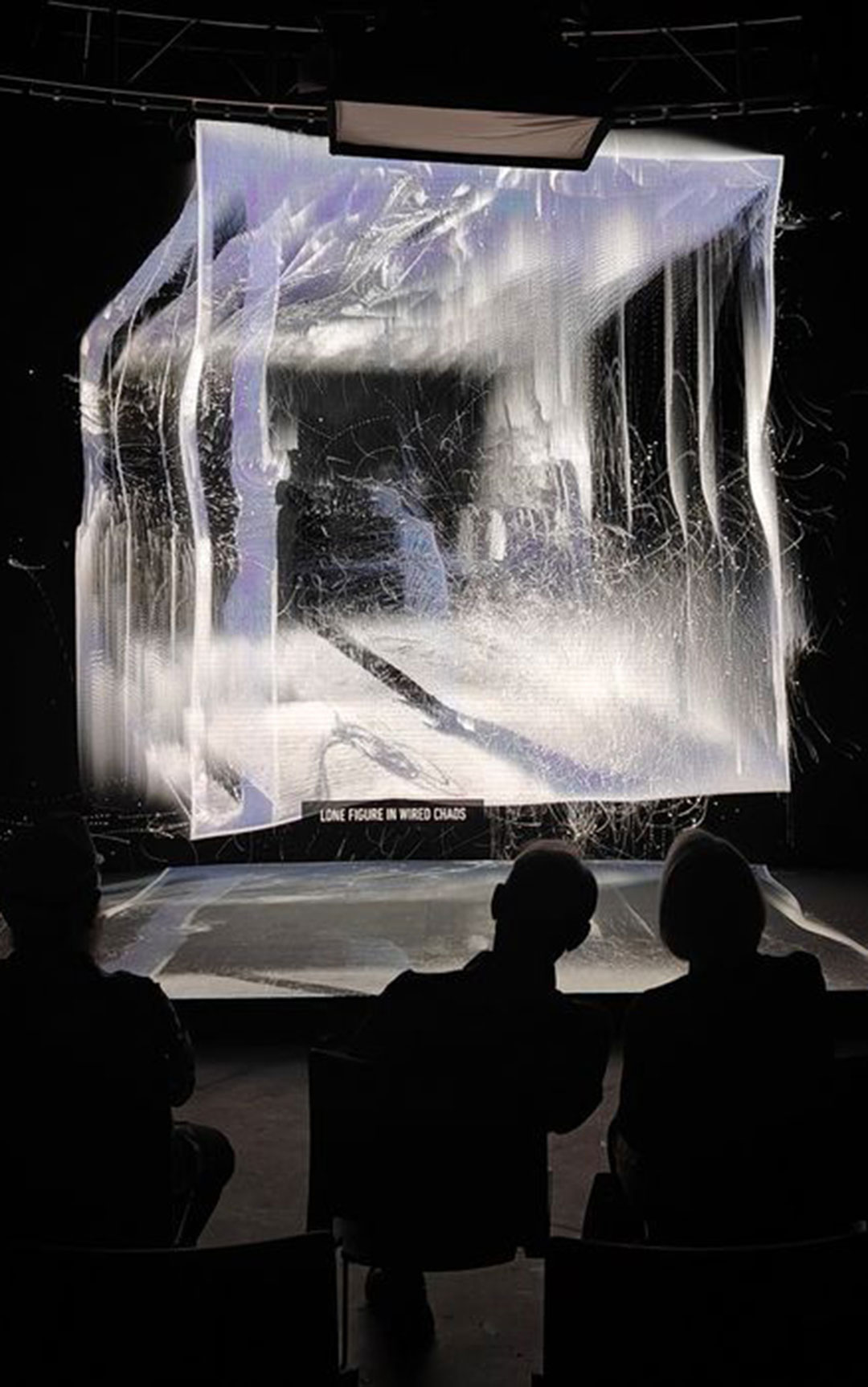
The Hypergaussian Wars is a non-interactive, AI-generated audiovisual work presented as a single-channel video. The project consists of a continuous 60-minute sequence exploring war not as a narrative event, but as a statistical and algorithmic deformation of perception. The work operates as a continuous audiovisual flow, allowing viewers to enter and exit at any point, without linear structure or user interaction.

BIO

Marcello Mercado is an interdisciplinary artist working with artificial intelligence, digital video, sound, and experimental cinema. His practice explores algorithmic processes, perception, and the relationship between technology and contemporary forms of conflict. He lives and works between Argentina and Germany.

Scott Draves – The Electric Sheep – United States

THE ELECTRIC SHEEP

Scott Draves


FILE SÃO PAULO 2026: Inter-creativity – Art and Technology – Randomic Dimension
Electronic Language International Festival


The Electric Sheep – United States

The Electric Sheep is a collective intelligence and infinite animation that started over 25 years ago. It’s based on a mathematical language invented by Draves and released as open source. Human artists and AI collaborate on designing the “Sheep” with this language. It runs as a screensaver on thousands of computers all over the world, and based on how the audience interacts, the AI learns to please its human audience. The AI, the artists, and the audience work together to create the experience.

BIO

Draves’ work was shown at LACMA, MoMA.org, Prix Ars Electronica, ZKM, and has been collected by the 21c Museum Hotel, Google, the Simons Center for Geometry and Physics, and the Allen Institute for AI. Draves’ Bomb was one of the first interactive software artworks (1994). His Fuse algorithm (1991) is the first image2image model and is known as “where the history of AI-art-as-we-know-it begins”.

Karl Sims – Primordial Dance – United States

PRIMORDIAL DANCE

Karl Sims


FILE SÃO PAULO 2026: Inter-creativity – Art and Technology – Randomic Dimension
Electronic Language International Festival


Primordial Dance – United States

Experimental animation containing a progression of abstract textures and colors. It is a study of emerging and transforming mathematical equations. These effects were created using an interactive process of “artificial evolution.” The equations, or artificial genes, of the survivors are copied, mutated, and mated by the computer to generate new offspring pictures. Finally, movements are created by performing “genetic interpolations” between these evolved images.

Studio Lifeforms – Planet Garden – United States

PLANET GARDEN

Studio Lifeforms


FILE SÃO PAULO 2026: Inter-creativity – Art and Technology – Games
Electronic Language International Festival


Planet Garden – United States

Planet Garden is a real-time interactive world exploring the convergence of artificial intelligence, ecology, and planetary imagination. The project invites visitors into a speculative environment where technology becomes a medium for sensing, caring for, and rethinking the Earth as a living system.

BIO

Studio Lifeforms is a Los Angeles-based studio founded by Damjan Jovanovic and Lidija Kljakovic. Working across games, simulation, architecture, and moving image, the studio creates speculative worlds that explore the relationship between technology, ecology, artificial intelligence, and new forms of spatial imagination.

Fun and Awe – Operator – United Arab Emirates

OPERATOR

Fun and Awe


FILE SÃO PAULO 2026: Inter-creativity – Art and Technology – Augmented Realities
Electronic Language International Festival


Operator – United Arab Emirates

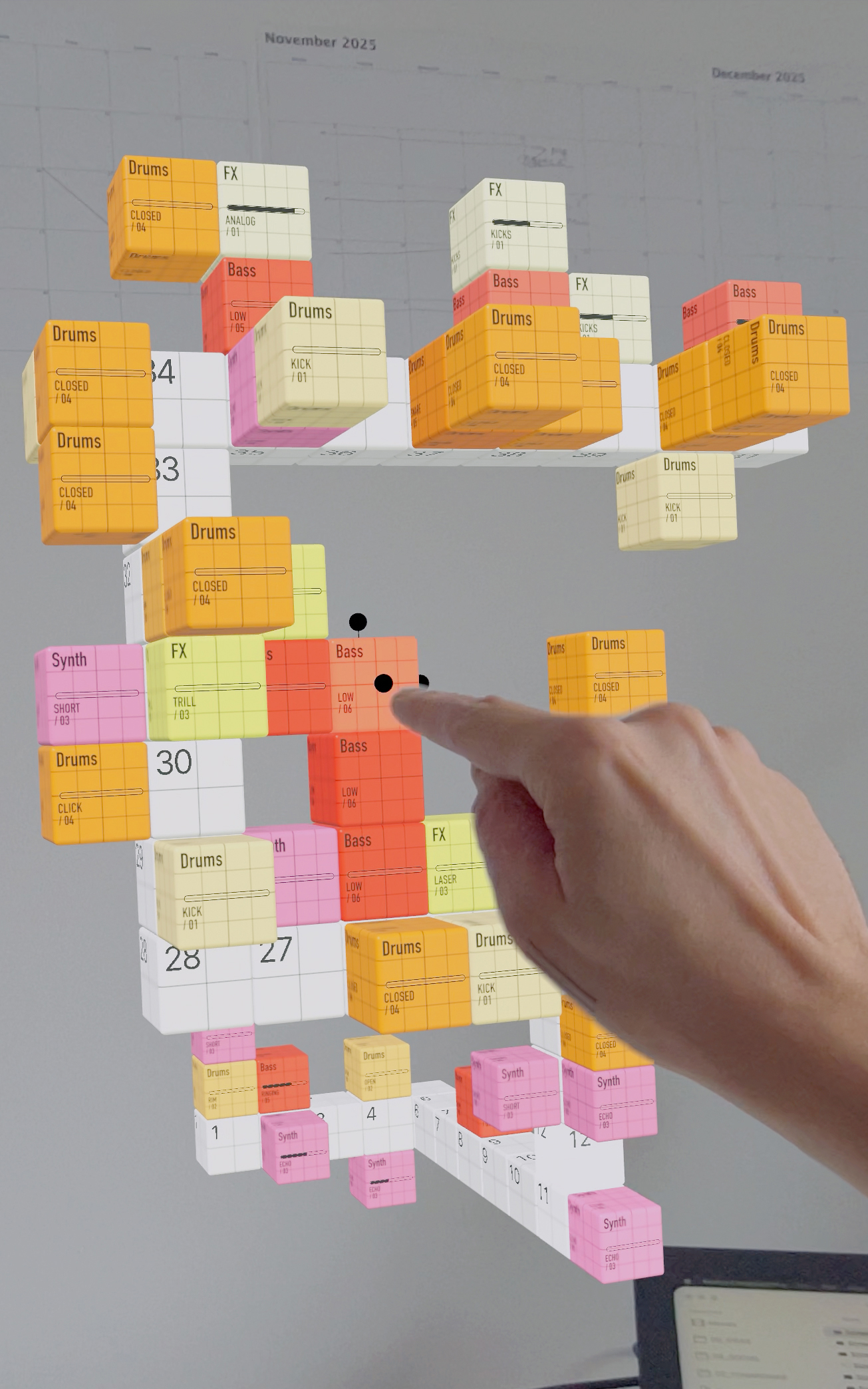
OPERATOR is an XR music production tool for Apple Vision Pro. Inspired by industrial design and architectural models, it allows for an intuitive interactive experience that is closer in its mechanics to arranging the building blocks than it is to using the audio production software. The app uses the language of simple spatial interactions and moves away from the traditional flat-screen experience — each created composition exists as a sculpture integrated into a real space through the XR mode.

BIO

A studio with a diverse experience that includes artists, engineers, writers, and designers, they build applications, design interactions, and develop concepts for XR that are focused on humans and our shared experience. Our boutique-sized team, founded by designer and director Maxim Zhestkov, explores the possibilities of the XR medium independently and in collaboration with brands.

Zach Lieberman – Body Sketches – United States

BODY SKETCHES

Zach Lieberman


FILE SÃO PAULO 2026: Inter-creativity – Art and Technology – Installations
Electronic Language International Festival


Body Sketches – United States

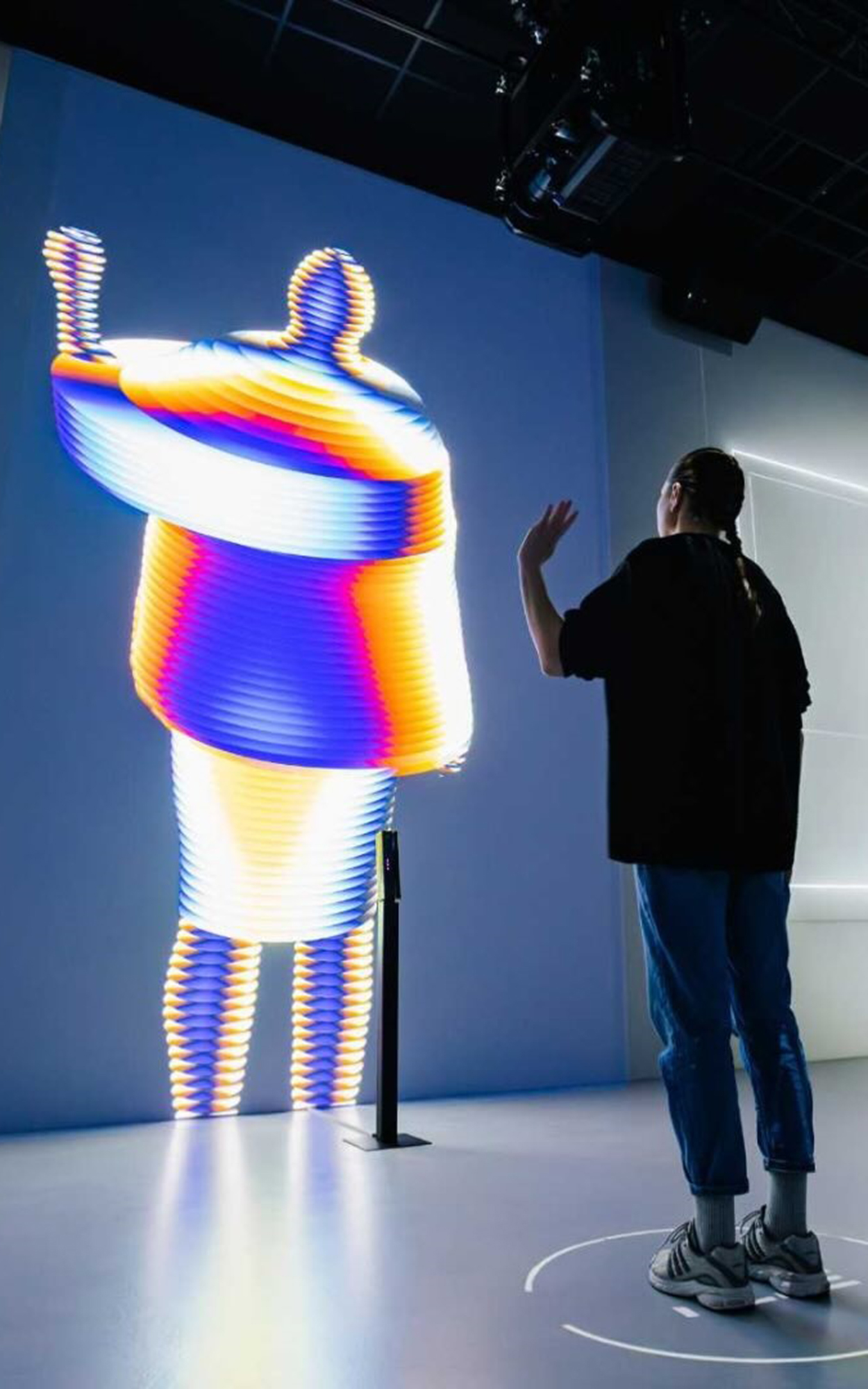
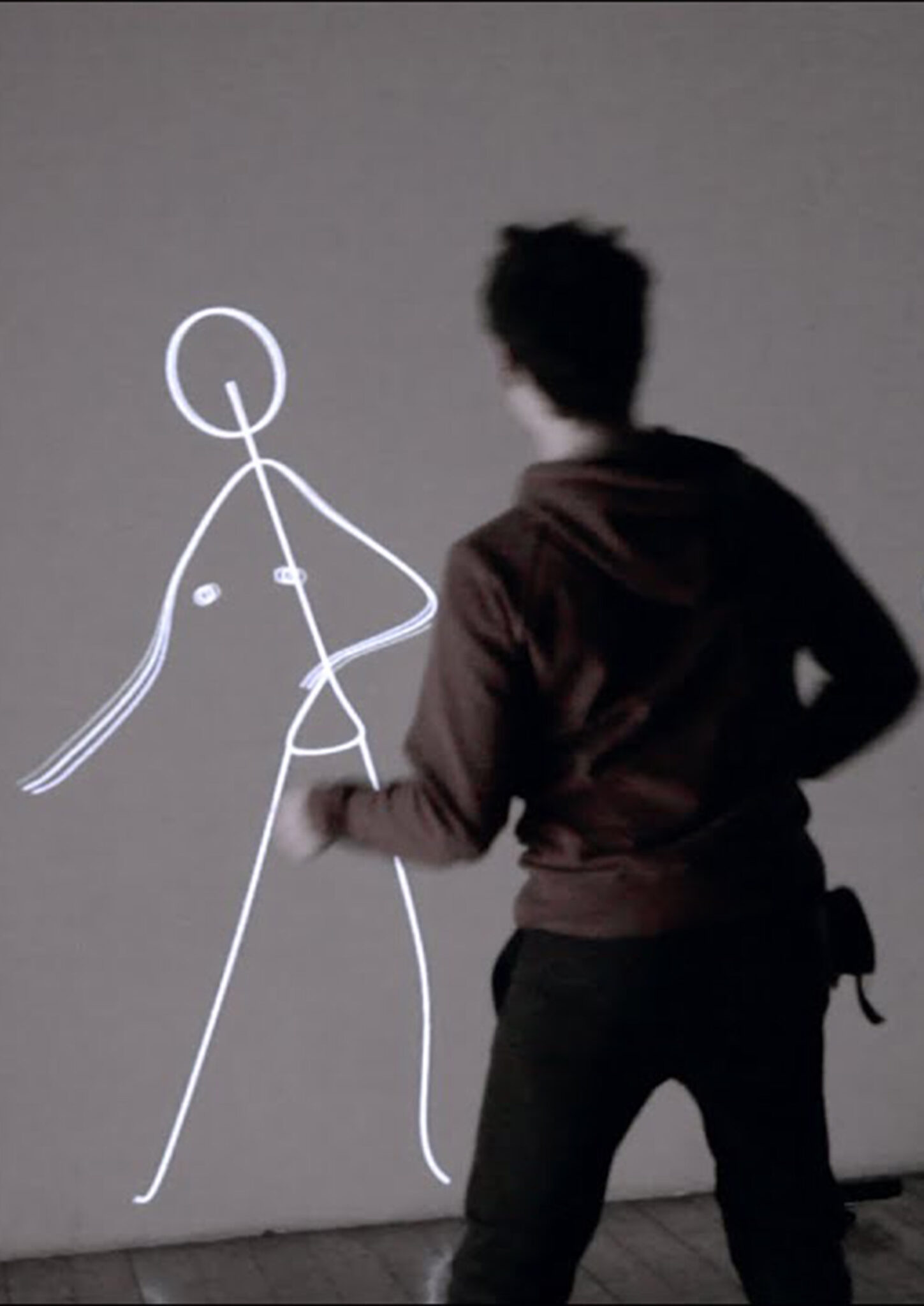
American artist Zachary Lieberman explores the poetry of code. In this interactive installation, visitors’ movements and gestures are transformed into digital drawings generated in real time. Every interaction is unique and disappears in the same moment the spectators change position. 

Within the exhibition, the work serves as a metaphor of a personal imprint in the future. Every visitor leaves a trace that instantly changes the environment around them, becoming part of a shared story.

BIO

Zach Lieberman is a pioneer of creative coding, turning invisible forces into interactive digital poetry.

Yves Peitzner – BIOVOLT – Germany

BIOVOLT

Yves Peitzner


FILE SÃO PAULO 2026: Inter-creativity – Art and Technology – Installations
Electronic Language International Festival


BIOVOLT – Germany

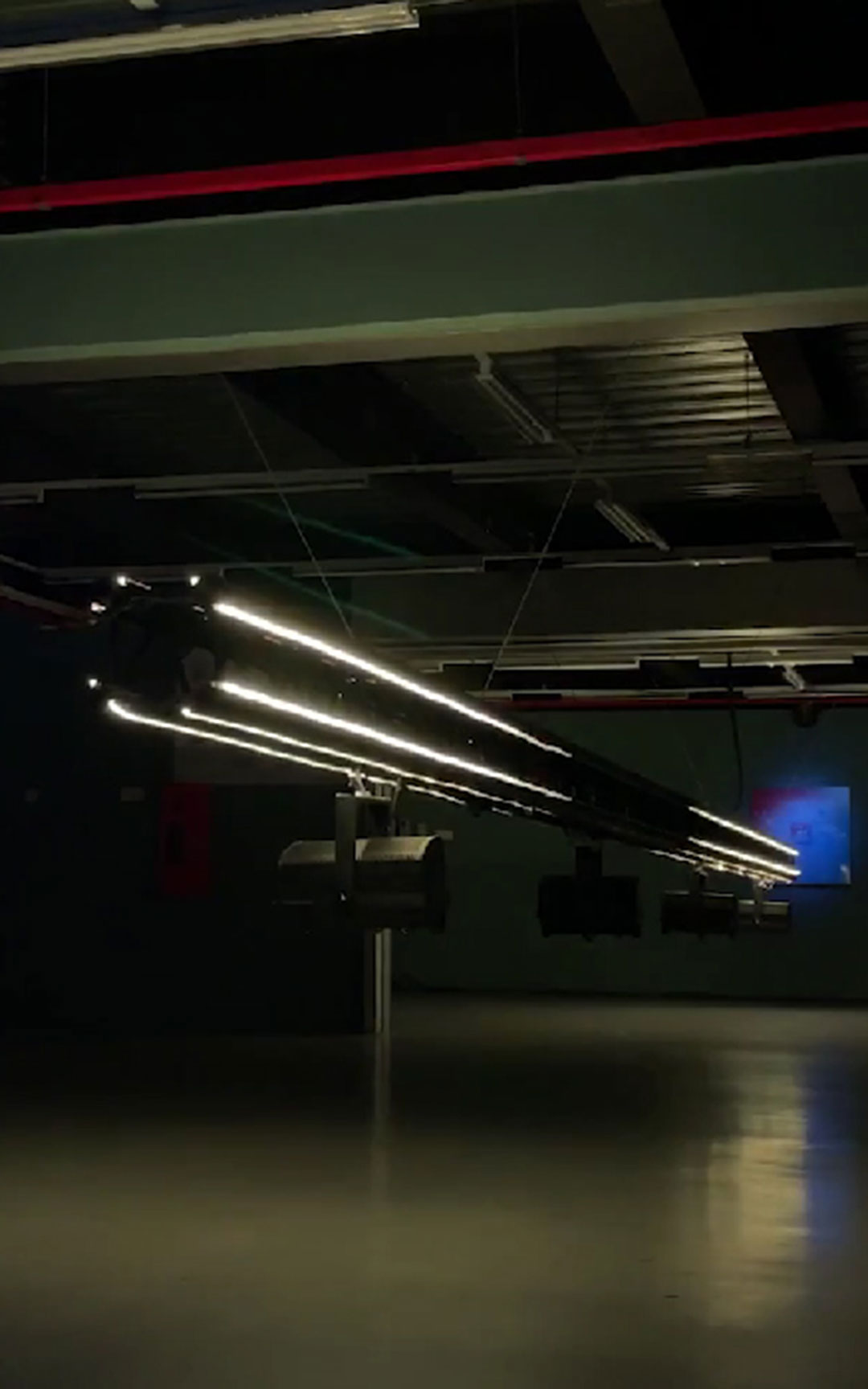
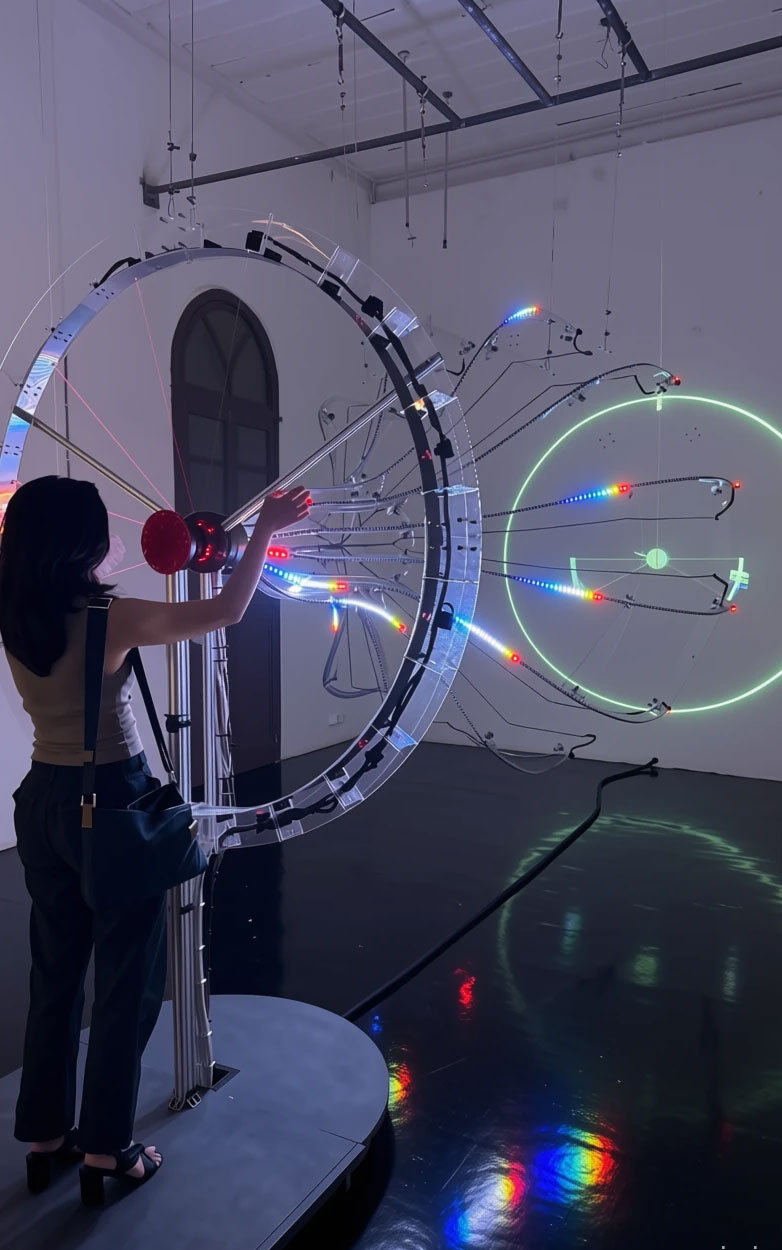
BIOVOLT is an interactive light installation that explores the relationship between human interaction, technology, and electricity. The 15-meter structure, composed of LED strips, responds to touch and movement, symbolizing the connection between human energy and electrical power. Participants influence the installation through motion sensors, highlighting the synergy between human intention and technology.

BIO

Munich-based artist, creative director, and educator. His practice explores how data, human interaction, and environmental conditions take spatial form in responsive installations and sculptural environments. He works across exhibitions and spatial experiences, often collaborating with studios, brands, and cultural institutions. Using light, sound, moving image, and computational media, he creates works that explore how we perceive and experience the world.

Xenoangel – Soft waters – France / England / Serbia

SOFT WATERS

Xenoangel


FILE SÃO PAULO 2026: Inter-creativity – Art and Technology – Installations
Electronic Language International Festival


Soft waters – France / England / Serbia

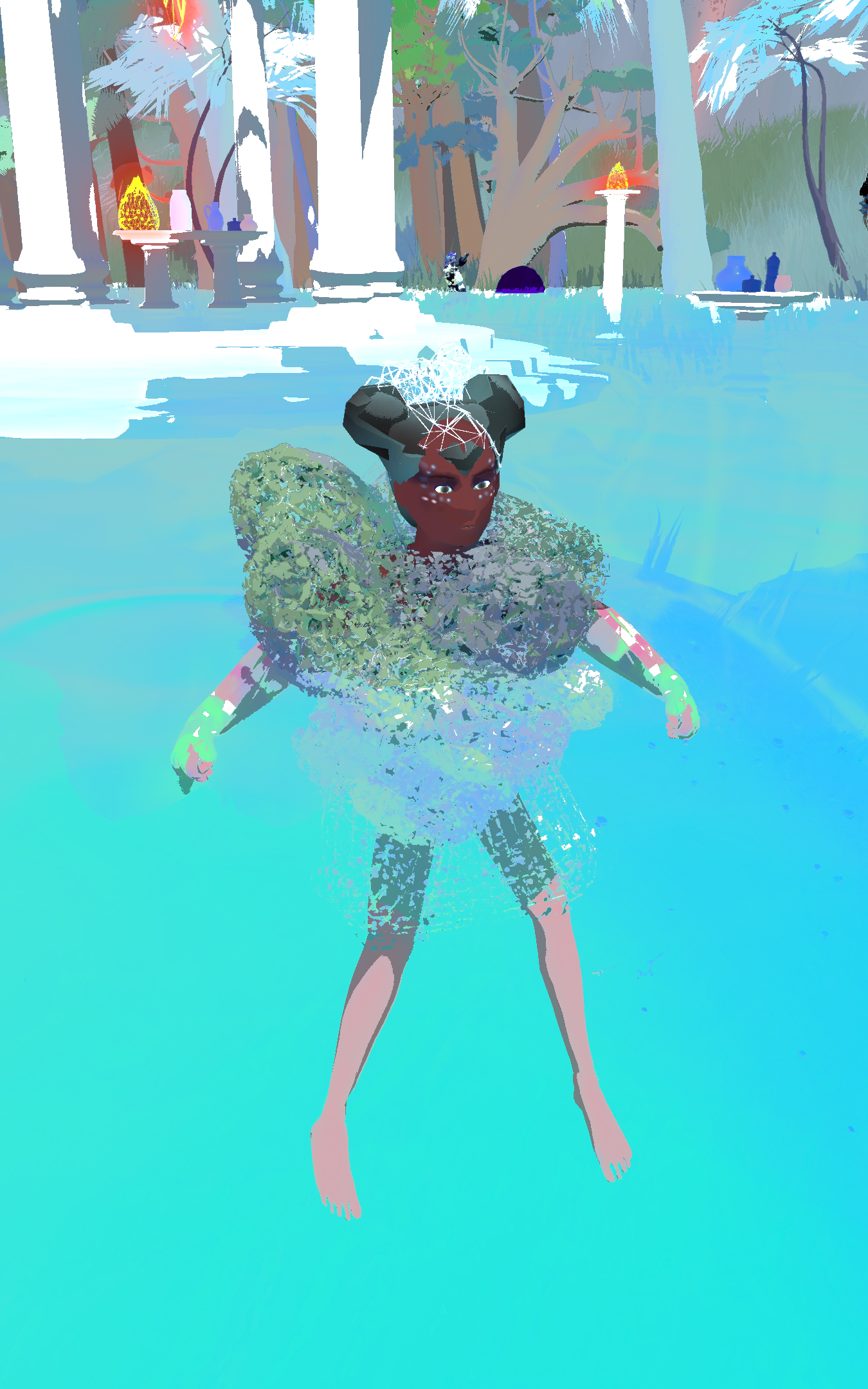
Soft Waters is a real-time interactive artwork that uses the accessible language of videogames alongside eco-feminist writings in an experimental and playful way. The artwork follows the story of a water goddess on a lake in the mouth of an ancient volcano. The story is set between the moment the volcano went dormant and the afterparty of a solar punk eco-rave, sometime in the near future. The project is an exploration of non-linear time through the circulation of watery bodies.

BIO

As an artist duo Xenoangel, Marija and Sam explore new relationships between humans and non-humans. Their practice is based on world building and their work intersects disciplines such as real-time generative animation, videogames, painting, physical installation, writing, and music. 

Weidi Zhang & Rodger Luo – A Walled City – China / United States

A WALLED CITY

Weidi Zhang & Rodger Luo


FILE SÃO PAULO 2026: Inter-creativity – Art and Technology – Installations
Electronic Language International Festival


A Walled City – China / United States

A Walled City is an interactive AI installation that transforms personal and collective visual memories into a decentralized city. Grounded in the spatial logic, zoning, and aesthetics of the historical Kowloon Walled City (Hongkong), a self-built hyper-dense enclave that grew in a legal and political void from the 1950s to 1993, the work builds a multi-agent AI system to turn participant-uploaded images into architectural chambers, forming a living structure where data, memory and history converge.

BIO

Weidi Zhang is a new media artist and designer based in Los Angeles and Phoenix. She is a tenure-track Assistant Professor of Immersive Experience Design at the Media and Immersive eXperience (MIX) Center at Arizona State University.

Sophia Bulgakova – INEVITABLY BLUE – Ukraine

INEVITABLY BLUE

Sophia Bulgakova


FILE SÃO PAULO 2026: Inter-creativity – Art and Technology – Installations
Electronic Language International Festival


INEVITABLY BLUE – Ukraine

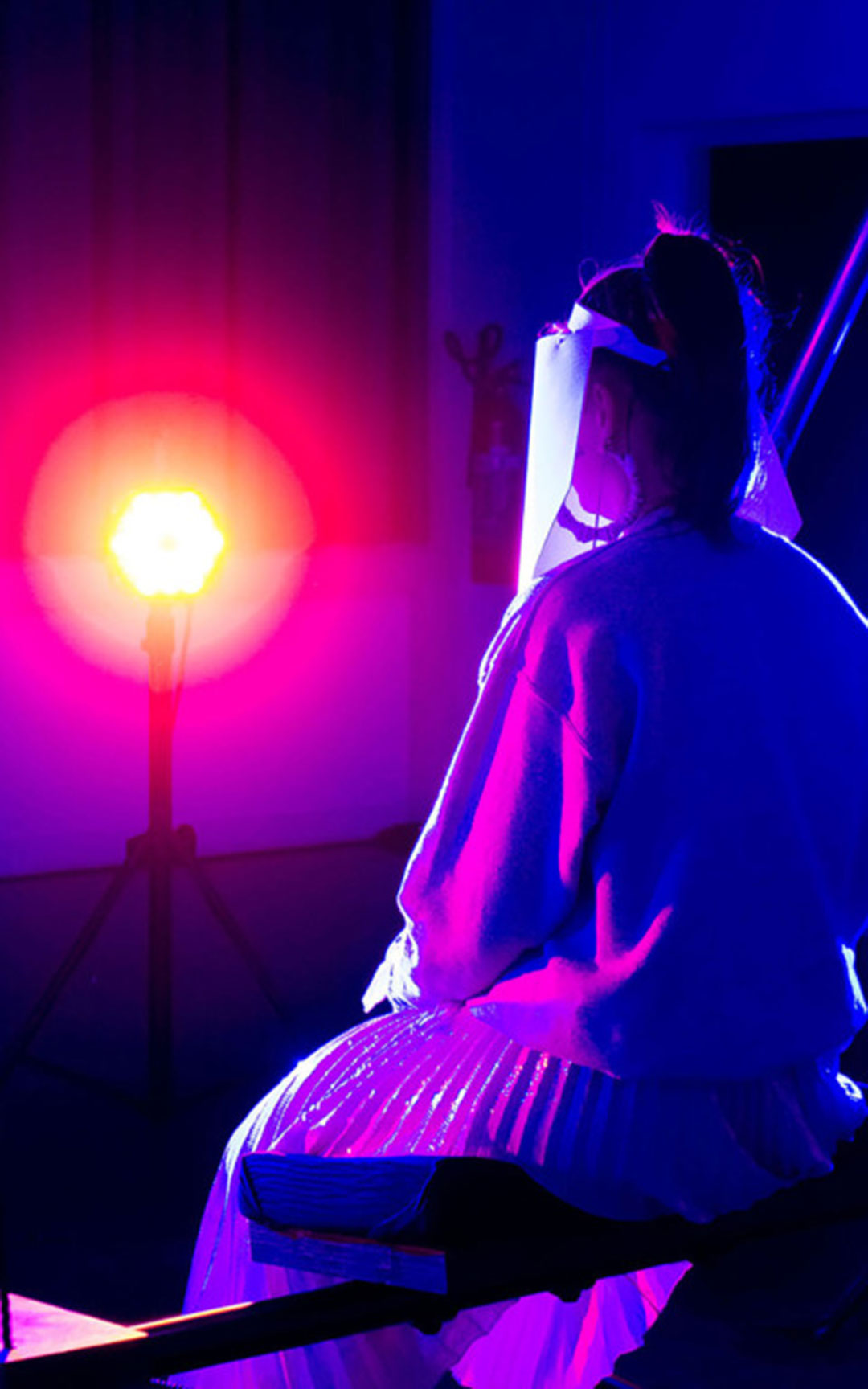
Interactive installation that invites the audience, one by one, to participate and get inside the composition of coloured light and levitative movements of the swing. The participant undergoes, losing the senses of reception, perception, and proprioception, entering a space that only consists of colour, own thoughts, projections, and imaginations.

BIO
Sophia Bulgakova (born 1997, Odesa, Ukraine) is an ArtScientist, interdisciplinary artist and activist currently based in the Netherlands. She works with art, technology, and contemporary social structures, focusing on the relationship between cultural identities, perception, and imagination. Through various sensorial inputs in her installations and performances, she engages viewers, impacting their ways of perceiving reality and exploring new possibilities beyond it.

Non-Linear – Transmissions into the Void – India

TRANSMISSIONS INTO THE VOID

Non-Linear


FILE SÃO PAULO 2026: Inter-creativity – Art and Technology – Installations
Electronic Language International Festival


Transmissions into the Void – India

Transmissions into the Void explores the temporal nature of improvisation and the inevitable decay of information, transforming the space into an immersive sound and light machine. Influenced by science fiction and the modular design principles of modern engineering, the room becomes a dynamic interface between viewer and technology. Ultimately, the piece serves as a meditation on the temporal fragility of all information and data—whether biological, digital, or analog—and how time irreversibly erodes it.

BIO
Non-Linear is the creative project of Dennis Peter, an interaction designer and artist redefining the intersection of technology, nature, and creative expression. With a background in architecture and an ever-evolving curiosity, his work spans kinetic installations, generative art, and algorithmic music. From hacking old calculators as a child to crafting immersive, interactive experiences, Dennis continuously expands the boundaries of digital creativity.

Lepša Studio – MiMicrocosmos – Czech Republic

MIMICROCOSMOS

Lepša Studio


FILE SÃO PAULO 2026: Inter-creativity – Art and Technology – Installations
Electronic Language International Festival


MiMicrocosmos – Czech Republic

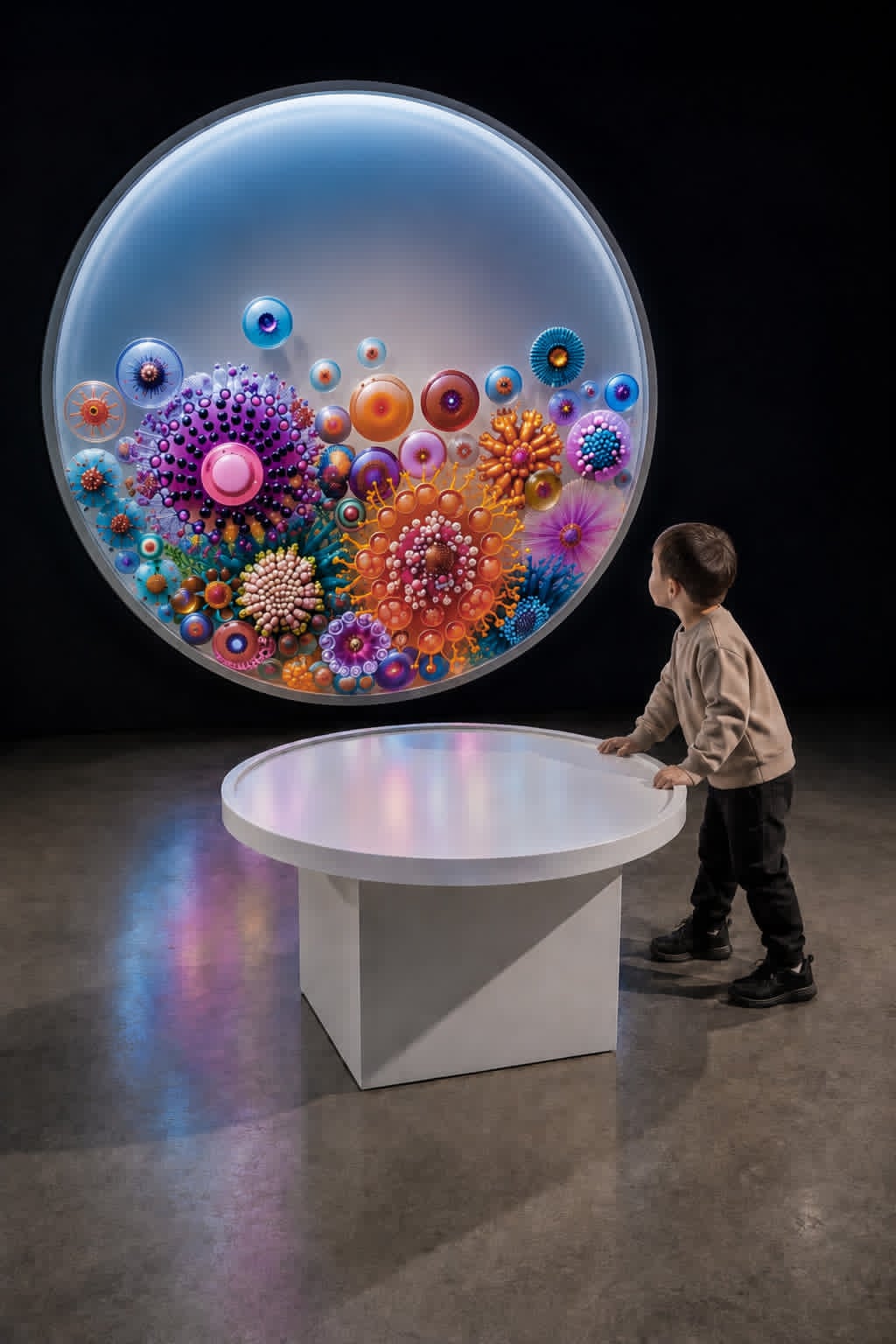
Interactive installation inspired by a world that we normally see only under a microscope. It is a physical game with a childish design that, when rotated, transforms the installation into a playful and intuitive experience.

BIO
Lepša Studio is a creative collective that brings together fine art, scenography, spatial design, and contemporary technology. The studio was founded in 2026 as a new creative project building on the team’s long-standing collaborative experience. The studio’s key principles are originality, experimentation, interdisciplinary collaboration, and a focus on site-specific work. The creators of the MiMicrocosmos installation are Josef Lepša, Jiří Rouš, Marek Volf, and Michal Vrba.

1024 Architecture & Vitalic – Puppet – France

PUPPET

1024 Architecture & Vitalic

FILE SÃO PAULO 2026: Inter-creativity – Art and Technology – Installations
Electronic Language International Festival


Puppet – France

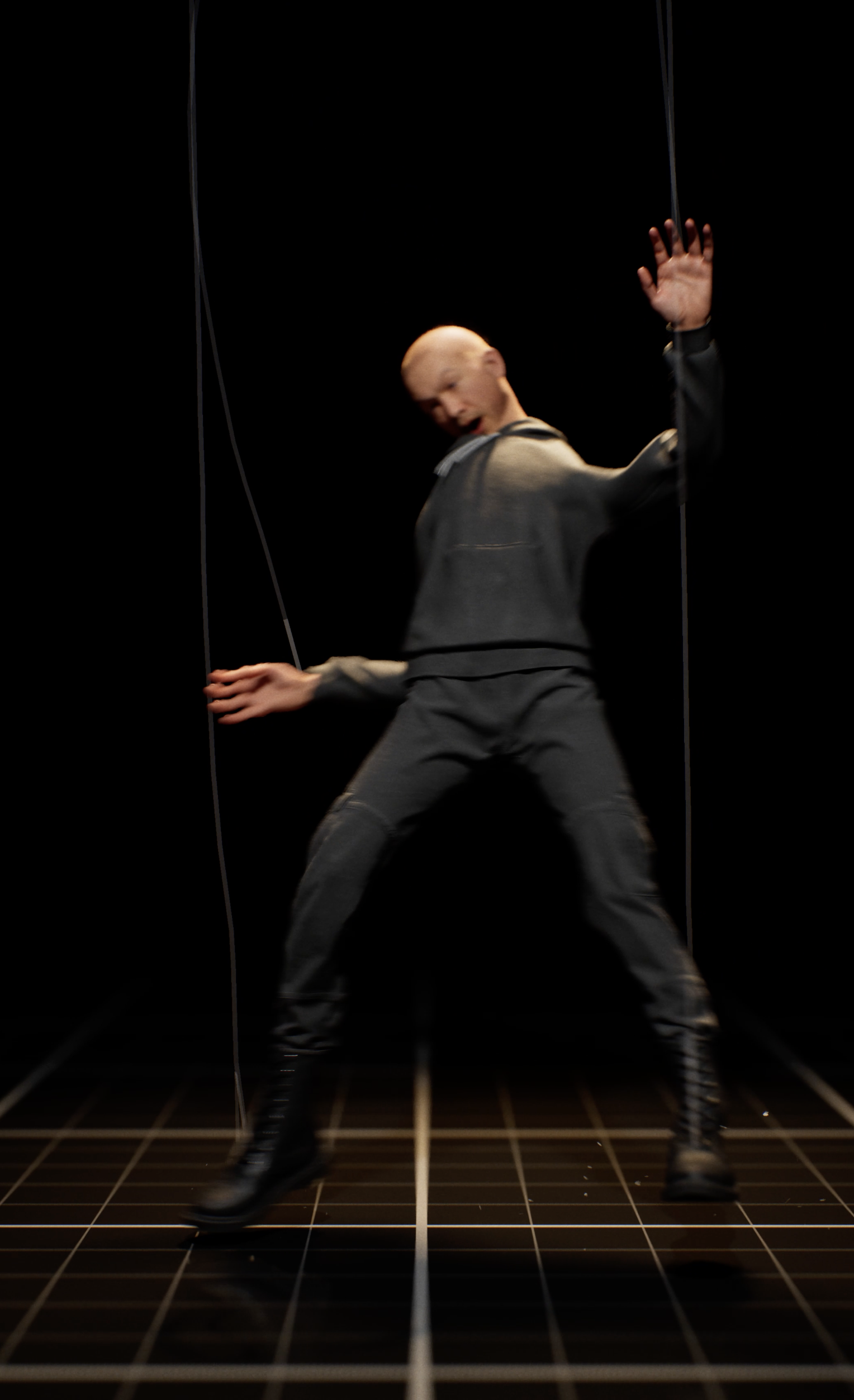
Puppet is an innovative audiovisual installation that merges gaming mechanics with live music composition. At the crossroads of videogame and digital instrument, this interactive piece invites visitors to manipulate a puppet-like character that functions as a sound synthesizer. Each movement or gesture of the puppet triggers a corresponding musical element—melody, rhythm, or effect—allowing the participant to compose a track in real time. 

BIO
1024 operates at the crossroads of art and architecture, combining spatial practices, digital technologies, and visual creation. Designing architectural and digital works, 1024 orchestrates partitions of sound and light in space through computer codes.

LIGHTING DESIGN COLLECTIVE

Silo 468 Light Art Helsinki


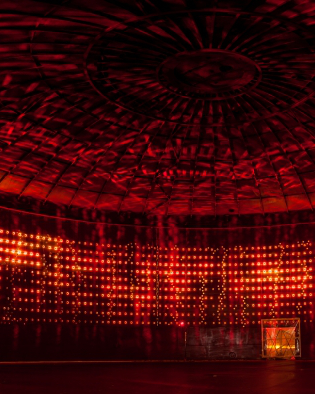
INTERACTIVE LIGHT ART FOR URBAN REDEVELOPMENT SILO 468 HELSINKI Disused oil silo has been converted into mesmerizing light art piece and a public space with the aid of swarm intelligence and interactive lighting. The project is a conversion of oil silo into light art piece and a public space designed by Madrid based Lighting Design Collective (LDC). It sits by the sea facing central Helsinki, Finland. Prevailing winds well known to residents are strongly present. The natural light, wind and the movement of light on the water formed the principles for the lighting concept. Walls are perforated with 2012 holes referring to the Helsinki World Design Capital 2012 year. The lighting signifies the start of a major urban redevelopment for the City of Helsinki. It functions to draw focus to unknown district and creates a landmark and a marketing device for the City. Maybe most importantly through the use of natural and artificial light it created a unique civic space for the citizens to use. Furthermore, it set a precedent for a new district for 11000 people to become the “district of light”. During the first years the silo is mainly viewed from distance when the area starts to get build. 1280 LED domes in 2700K white are fitted inside the silo behind the cut-outs and visible from several kilometres away. LDC developed a bespoke software using swarm intelligence and nature simulating algorithms that refresh responding to parameters such as wind speed, direction, temperature, clear night and snow. System dials out every 5 minutes for new data. The patterns are fluid, natural in feel and never repeat. They are slow but speed up in relation to the wind speeds creating constantly changing mural of light. At midnight the exterior turns deep red for 1 hour. The colour refers to the former use of the silo as a container of energy. At 02:30 when the last ferry goes past to Suomenlinna lights go off. The interior gains importance as the area gets populated. Inside is painted deep red. Daylight seeps through the pattern derived from original rust patterns on the walls. North facing wall has no perforations. 450 steel mirrors moved by winds are fitted behind the holes. With sunlight the silo appears to glimmer and sparkle like surface of water.The warm white LED grid reflects light indirectly via the red walls into the space. The moving patterns read as halos racing across the walls. The Silo is a civic space for the citizens of Helsinki. Floor was added and rigging infrastructure, power, water and emergency & cleaning lighting. Light intervention has created a new space for people.

BERNIE LUBELL

Conservation of Intimacy

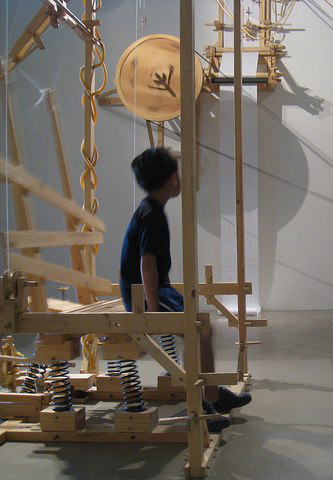
Made of pine, latex, music wire, copper, nylon line, paper, pens and video surveillance. It measured 20′ x 35′ x 26′ at Southern Exposdure.
A couple rocking on the bench sends air pulses to another room causing balls to move and pens to transcribe their motions onto paper. The paper is moved by a third person on a stationary bike. The couple on the bench can watch the balls on a video monitor before them where the balls appear to bounce into the air. The motion is delayed and languid as though under water. Action is best when the couple is moving slowly together. As visitors work together to animate the mechanisms, they create a theatre for themselves and each other. By encouraging participation, and touch the pieces coax visitors to engage their bodies as well as their minds. The way that pieces move and feel and sound as you rock them, pedal, crank and press against them applies the kinesthetic comprehension’s of childhood to the tasks of philosophy. Bernie Lubell’s interactive installations have evolved from his studies in both psychology and engineering. As participants play with his whimsical wood machines, they become actors in a theater of their own imagining.

TORAFU ARCHITECTS

minamo
The MINAMO is a space which embodies TOTO’s concept of “cherishing water”. Created by TORAFU ARCHITECTS for Tokyo Designers Week 2011, it lets you feel the shimmer and beauty of water. It is an exhibition booth that uses no water yet interactively gives visitors the sense of the surface of water (minamo).

QUBIT AI – International Electronic Language Festival – Art and Technology

QUBIT AI | quantum & synthetic ai
Electronic Language International Festival

July 3rd to August 25th
Tuesday to Sunday, 10am – 8pm
FIESP Cultural Center

Design: André Lenz
Image: Iskarioto Dystopian AI Films – Athena

QUBIT AI

In its 25 years of existence, the International Electronic Language Festival (FILE) is an internationally renowned Brazilian project that since 2000 has explored the intersection between art and technology. With more than two decades of history, the festival stands out for fostering exhibition spaces and debate about artistic innovations driven by disruptive and innovative technologies, inviting the public to get involved with experimental forms of art that challenge the boundaries of conventionality. Currently, two of these technologies stand out in the contemporary scenario: the accelerated development of quantum computing and artificial intelligence corroborated by synthetic data.

Quantum computing, an emerging revolution in the technological field, offers a new range of creative possibilities for contemporary artists. This new era allows the exploration of unprecedented frontiers through a new computational format that consists mainly of quantum superposition and entanglement, a new field of exploration for synthetic computer science, as well as for the arts in general; on the other hand, artificial intelligence, fueled by synthetic data, offers artists a new way of making and understanding art, opening up space for new forms, concepts and artistic expressions.

Entitled QUBIT AI, the exhibition delves into this unexplored territory presenting a selection of works of art resulting from the connection between artistic creation and technology, proposing a theoretical reflection on what the interrelationship between quantum computers and synthetic artificial intelligence will be.

Visitors will be invited to experience immersive installations, experimental videos, digital sculptures and other forms of interactive art, which intertwine reality and imagination. The exhibition encourages reflections on the influence of technology on art and contemporary society, while at the same time providing an environment to compare already established technological arts (analog and digital) with the possible futures of art in the synthetic era, enhanced by quantum computing. The QUBIT AI exhibition at FILE SP 2024 transcends the mere presentation of works of art; it is a journey to the limits of human creativity, driven by the convergence of art, science and technology.

Ricardo Barreto and Paula Perissinotto
co-organizers and curators of FILE
International Electronic Language Festival


QUBIT AI: Max Haarich (Project Smart Hans)

Smart Hans

FILE 2024 | Installations
International Electronic Language Festival
Max Haarich (Project Smart Hans) – Smart Hans – Germany

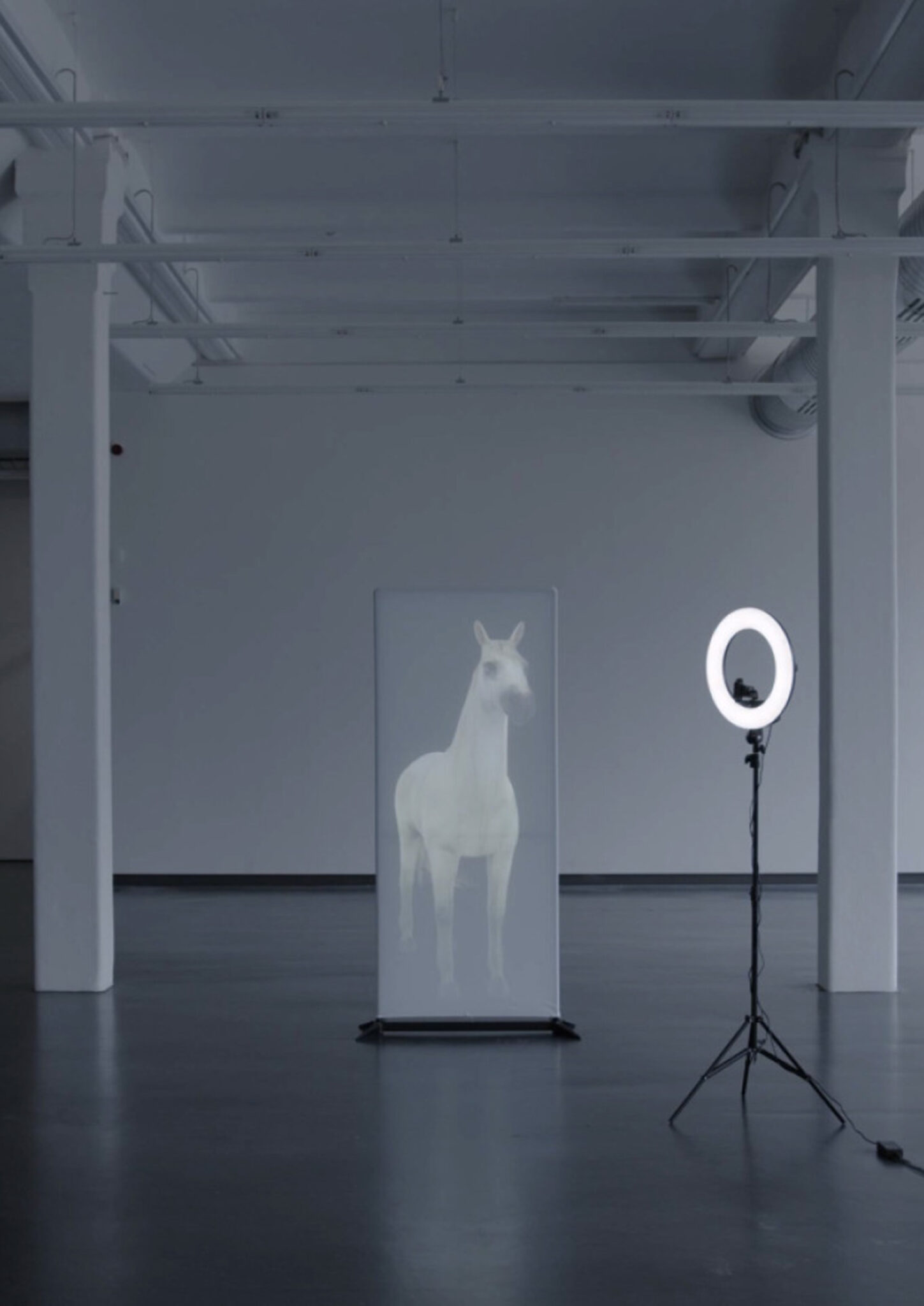
The Smart Hans project is a synthetic reincarnation of Clever Hans, a horse that became famous in the early 20th century for apparently answering mathematical questions by tapping its hoof. The interactive installation features an animated horse that can guess any number in its mind through posture recognition. At the same time a fun joke and an illustration of why we worry about artificial intelligence.

Bio

Max Haarich is an artistic researcher, ethicist and consultant focusing on artificial intelligence and web3. He studied communication science at RWTH Aachen and critical thinking at the University of the Underground. After his studies, he researched artificial superintelligence at RWTH Aachen and later worked as a communications manager at Europe’s leading startup hub.

Credits

Team: Anja Borowicz Richardson (UK), Bruce Gilchrist (UK), Akshita Gupta (IND), Max Haarich (Artistic Lead/DE), Martina Huynh (NL), Asad Imtiaz (PAK), Muhammad Qasim Khan (PAK), Adrian Ludwig (DE), Pekka Ollikainen (FI), Raphael Pickl (DE).

QUBIT AI: Anna Vasof & VRinMotion Team

The Cage of Time

FILE 2024 | Installations
International Electronic Language Festival
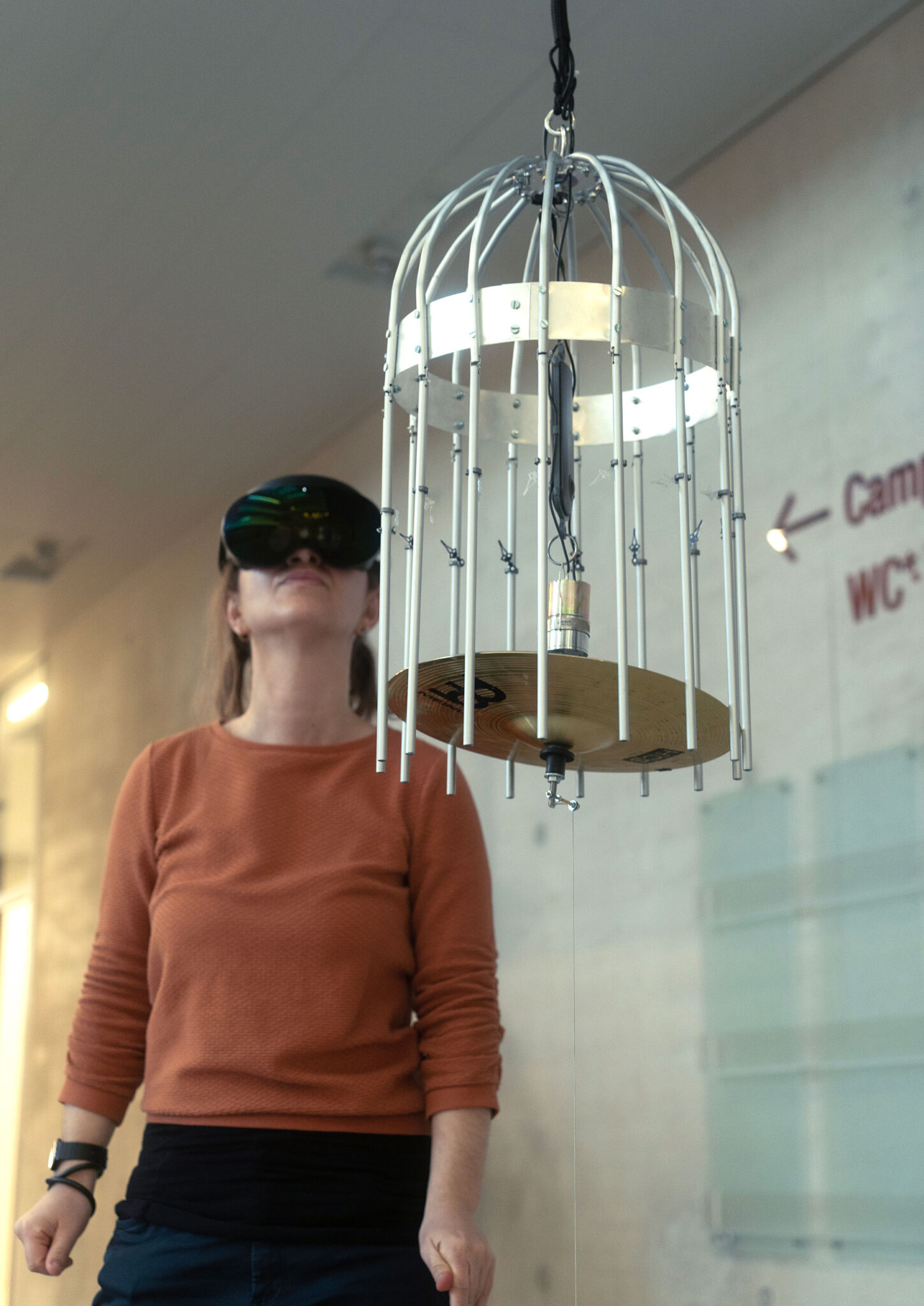
Interactive installation that presents a kinetic instrument object and virtual reality glasses, functioning as a device that animates the illusion of the passage of time in virtual space. In the fabric of existence, time weaves a cage around our ephemeral moments, limiting our perceptions of the past, present and future. By embracing this paradox, we may discover that the cage of time becomes the crucible where the alchemy of experience transforms our understanding of existence.

Bio

Anna Vasof is a multi-award-winning artist who focuses on filmmaking, short videos, and time-based sculptures. VRinMotion is an artistic research project based at St. Pölten University of Applied Sciences in Austria that investigates how features of stop-motion animation and motion capture can be combined with virtual reality to enrich current artistic discourse.

Credits

VRinMotion Team: Franziska Bruckner, Christoph Schmid, Clemens Gürtler, Matthias Husinsky, Christian Munk, Julian Salhofer, Stefan Nebel, Vrääth Öhner.
Concept by: Anna Vasof.

QUBIT AI: Klaus Obermaier, Stefano D’Alessio & Martina Menegon

EGO

FILE 2024 | Installations
International Electronic Language Festival

The mirror stage in psychology explains how the Ego forms through objectification, where one’s visual appearance comes into conflict with emotional experience, a concept called ‘alienation‘ by psychoanalyst Jacques Lacan. The interactive installation EGO reenacts and reverses this process by distorting the mirror image based on the user’s movements, highlighting the tension between the real and the symbolic, the Ego and the It, subject and object.

Bio

Klaus Obermaier is an interdisciplinary artist, director and composer who creates innovative works in the performing arts, music and installations using new media. Stefano D’Alessio researches social issues induced by the internet and explores how the web and its derivatives influence human behavior and the body. Martina Menegon creates intricate assemblages of physical and virtual elements, exploring the contemporary self and its hybrid corporeality.

QUBIT AI: Seph Li

Everything Before, Everything After

FILE 2024 | Installations
International Electronic Language Festival
Seph Li – Everything Before, Everything After – China and UK

A digital installation features a winding river in the style of Chinese painting, symbolizing time and transition. Touch screens allow visitors to paint over it, altering its course unpredictably. The river embodies history and the future, with each trace contributing to its eternal flow through space and time. Recorded interactions ensure its perpetual existence.
Bio

Born in Beijing in 1988, Seph Li has a mixed background in technology and design, and his keen interest in interactive artworks led him to the field of media arts. Seph studied computer science and entertainment design at Tsinghua University and continued his master’s study in design/media arts at UCLA. Seph currently resides in London, United Kingdom; he creates interactive artworks as well as technical experiments with other production studios.

Bruce Nauman

Nature Morte
Nature Morte focuses on Nauman’s long relationship to his own studio, a variation on his four unique multi-projection videos, Mapping the Studio (2001). Three viewing stations, each consisting of an iPad linked to a wall-sized projection, provide an interactive exploration of the 3D studio space. Only now the artist is absent, and the participant becomes performer as he/she manipulates the large scale video projections on an iPad using touch control. The participant is free to navigate anywhere throughout the space, selecting broad vistas or individual objects. Using a hand-held 3D scanner, Nauman recorded hundreds of images that allow participants to select an object and locate close-up anything found there, and further reorient the image to see an object from above and below, and at times inside-out. The resulting mobility intensifies the experience of the viewer/performer. Presenting a static, but immersive re-creation of his studio space, Nauman’s pieces once again play at the tenuous lines between the body and space, perception and physical material.

Actual Objects

Vicky
Vicky is an interactive film that tells the non-linear story of a future hurricane on the southern border of the United States in 2028. The narrative, which is augmented by sound design from Theo Karon, is spread across multiple screens, each of which houses a different character reflecting on the situation in different ways.

NICOLAS SCHÖFFER

ニコラ·シェフェール
Chronos 5
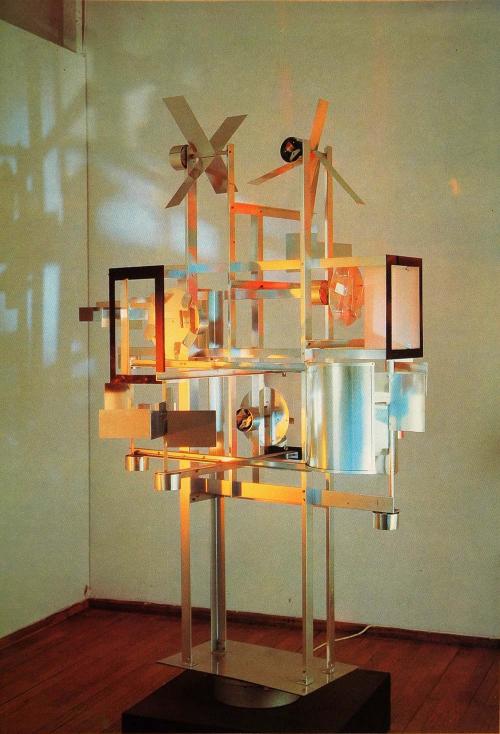
In 1948 he created the concept of “space dynamism”. In his words, space dynamism is “the constructive and dynamic integration of space in plastic work.” Based on this idea, he will seek to create the total work of art, concretized in the cybernetic village, a city full of utopian spaces. His work combines cybernetic, kinetic art and interactive art, of which he is one of its first representatives, making the first works of art in real time or live in the history of art.

Maurizio Bolognini

SMSMS-SMS Mediated Sublime

CIMs-Collective Intelligence Machines

“In 2000, I began to connect some of these computers to the mobile phone network (SMSMS-SMS Mediated Sublime, and CIMs-Collective Intelligence Machines). This enabled me to make interactive and multiple installations, connecting various locations.
In this case the flow of images was made visible by large-scale video-projections and the members of the audience were able to modify their characteristics in real time, by sending new inputs to the system from their own phones. This was done in a similar way to certain applications used in electronic democracy. What I had in mind was art which was generative, interactive and public.”
Ujoo+limheeyoung

Fountain with Red
Stainless steel, water pump, red liquid, urethane paint. Ujoo+limheeyoung is the husband and wife team of media artists Ujoo and Limheeyoung. Since first working together in 2004 in preparation for design competition, they have been involved in projects that use a variety of means of visual expression – kinect expression sculpture, drawings, real-time interactive videos – to address the theme of absurdity of reality.

Anders Lind and Ulla Karlsson

Skogen/The forest
Skogen/The forest is an interactive sound art exhibition created by Swedish composer Anders Lind in collaboration with Swedish scenographer Ulla Karlsson. THE FOREST is created as a multiplayer orchestra platform for novices (or experts). Within THE FOREST the visitors becomes orchestra performers ready to explore preprocessed sounds from the Swedish forest in combination with sounds from a traditional symphony orchestra. THE FOREST was first exhibited at Norrlandsoperan, Umeå, Sweden in 2019.