highlike

Che-Yu Wu – 240507: Reality Lens – Taiwan

240507: REALITY LENS

Che-Yu Wu


FILE SÃO PAULO 2026: Inter-creativity – Art and Technology – Randomic Dimension
Electronic Language International Festival


240507: Reality Lens – Taiwan

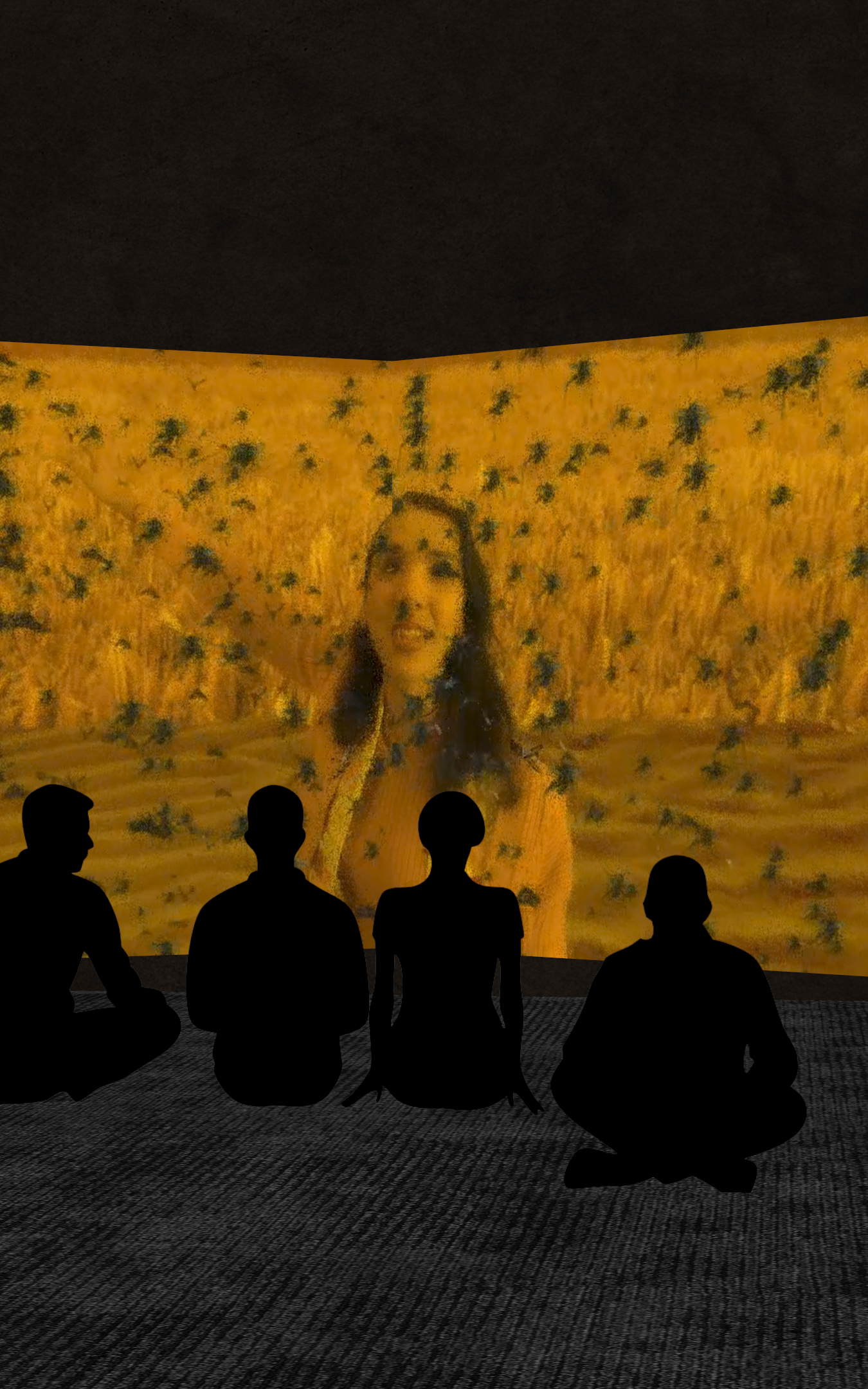
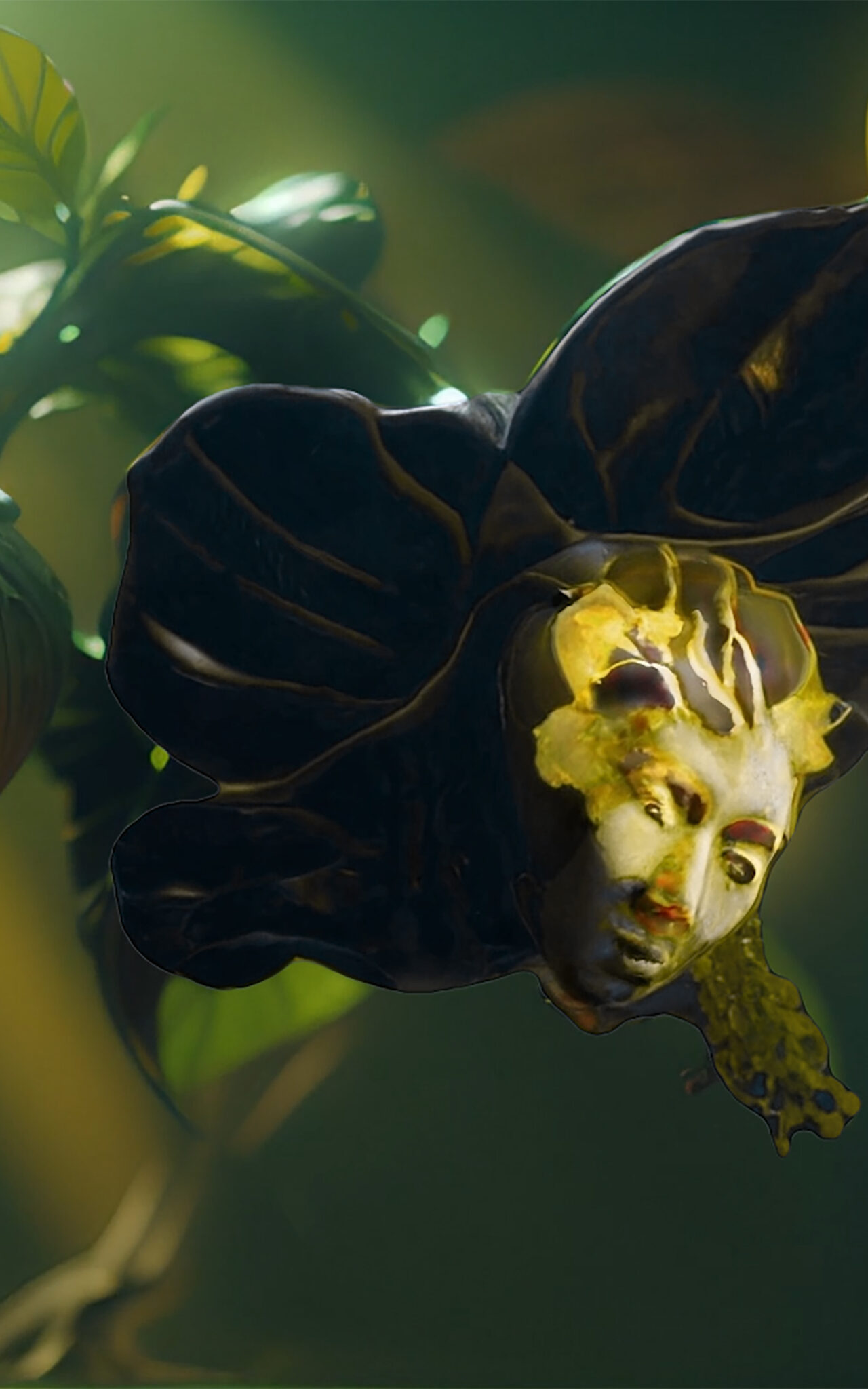
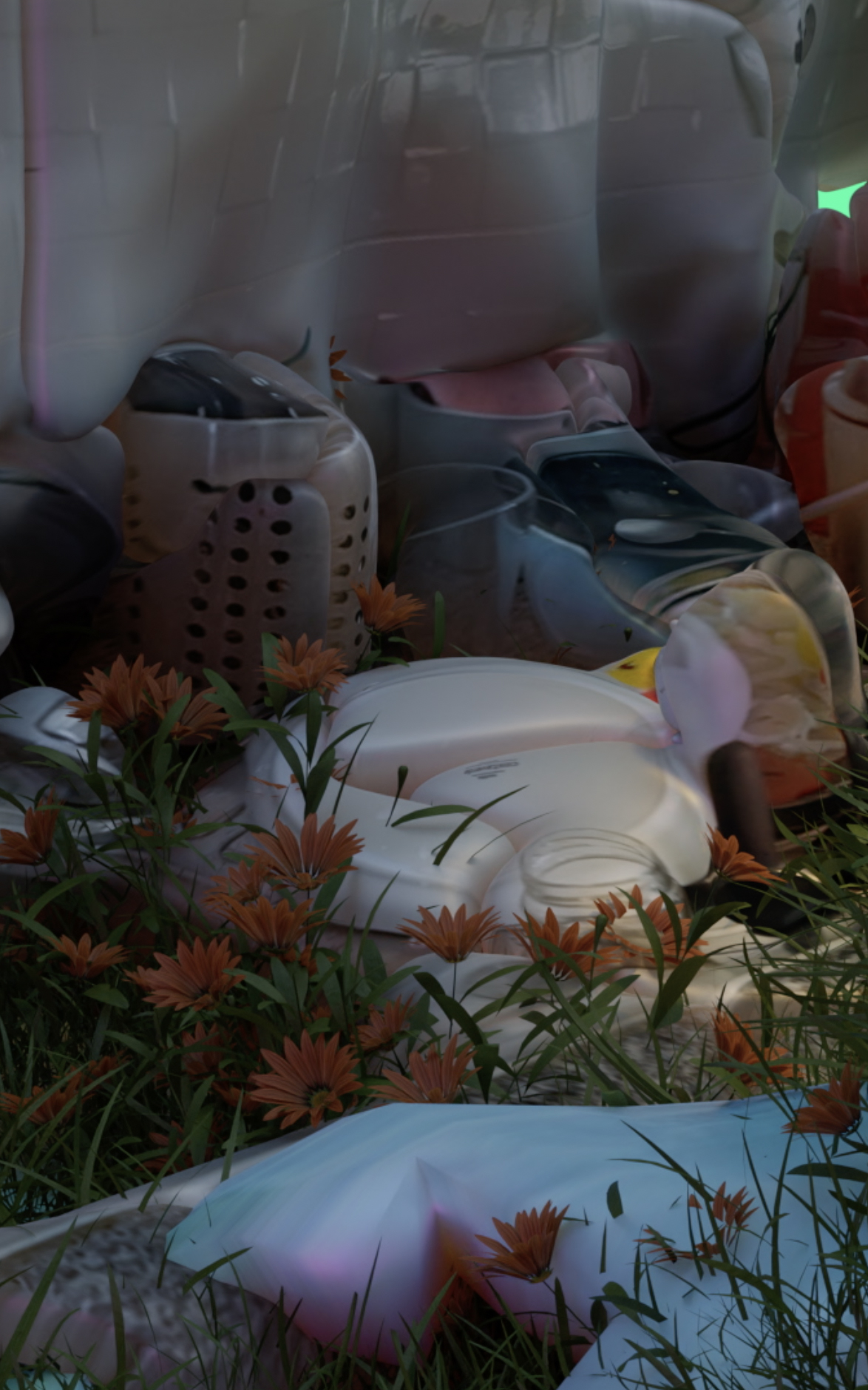
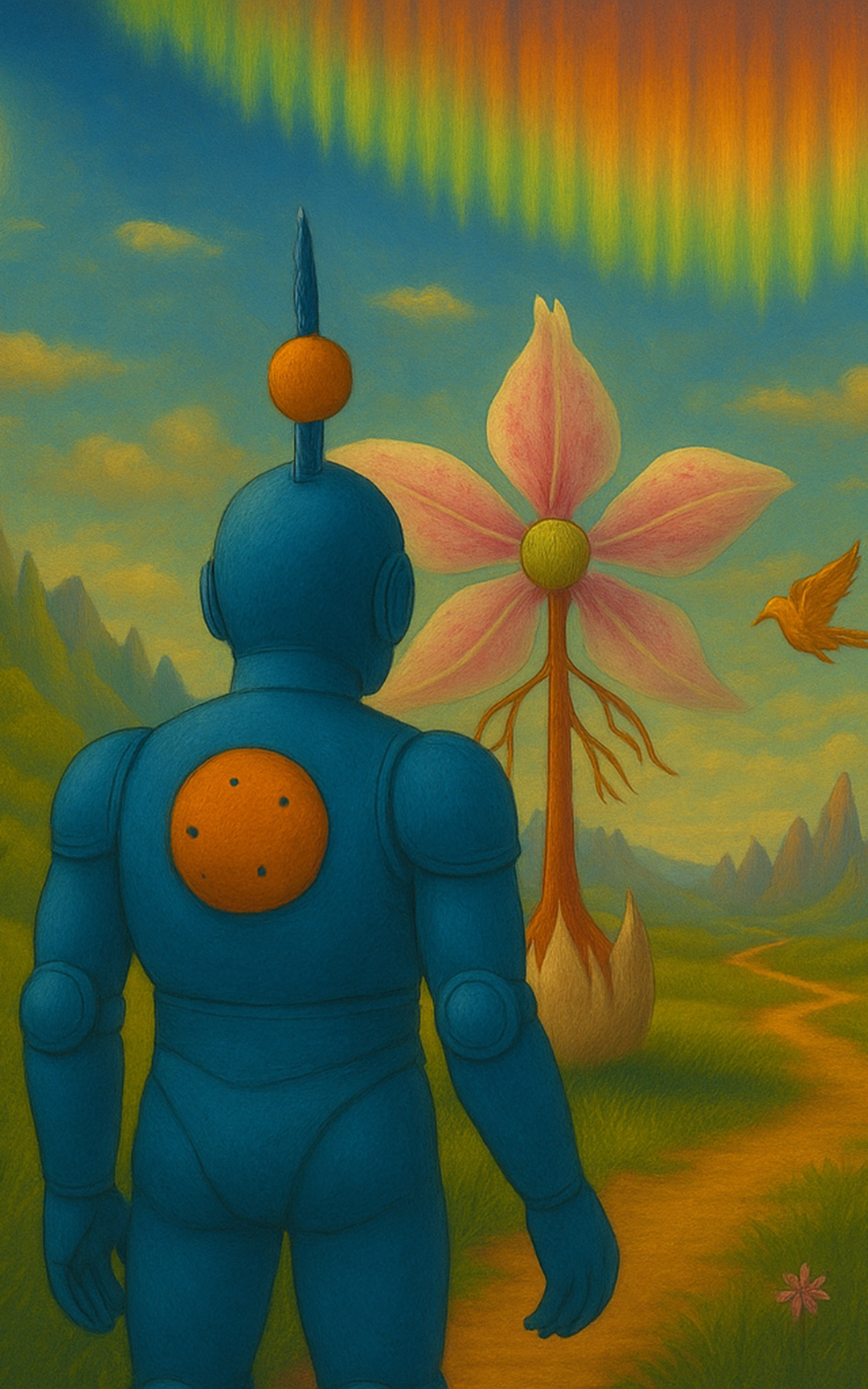
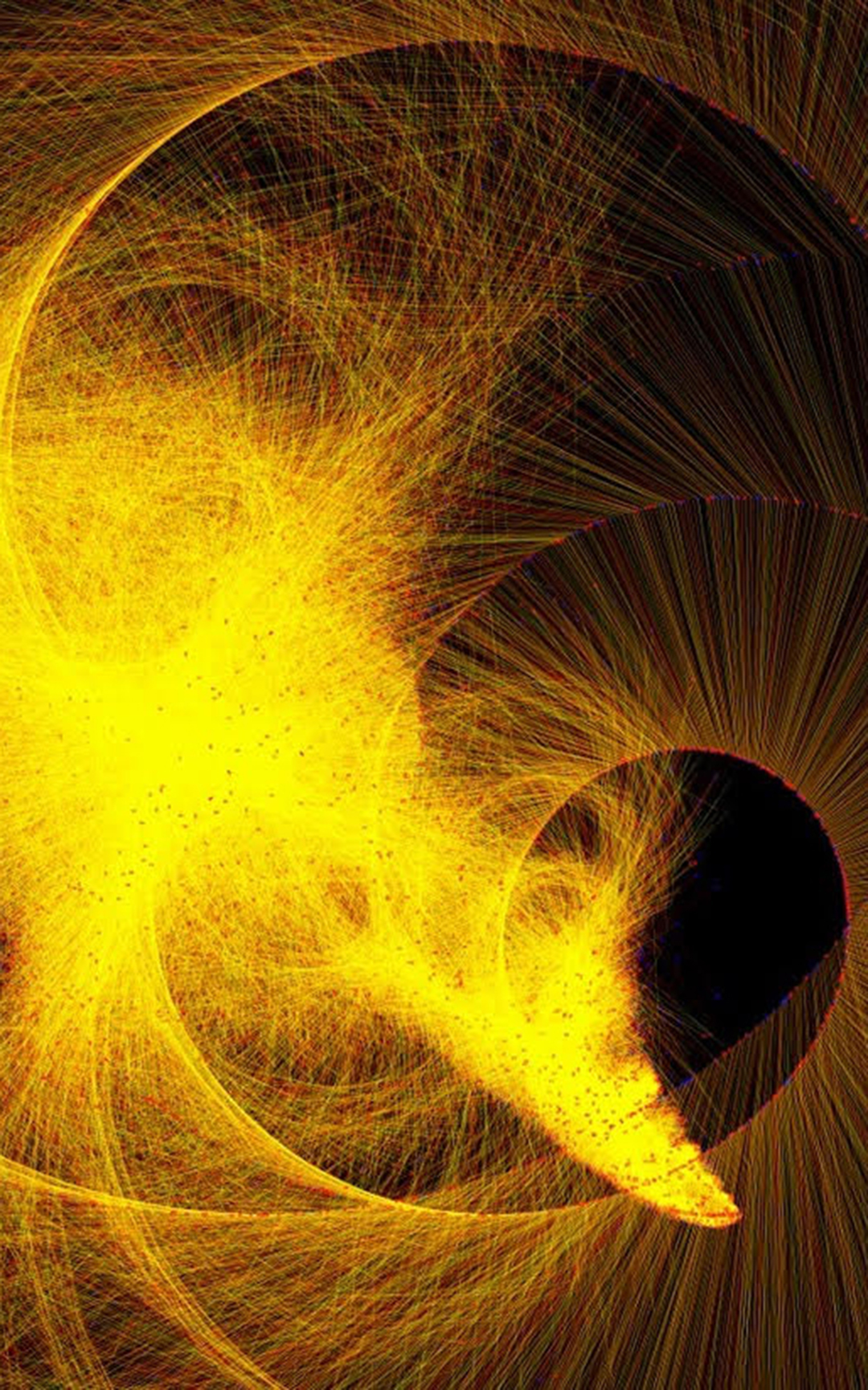
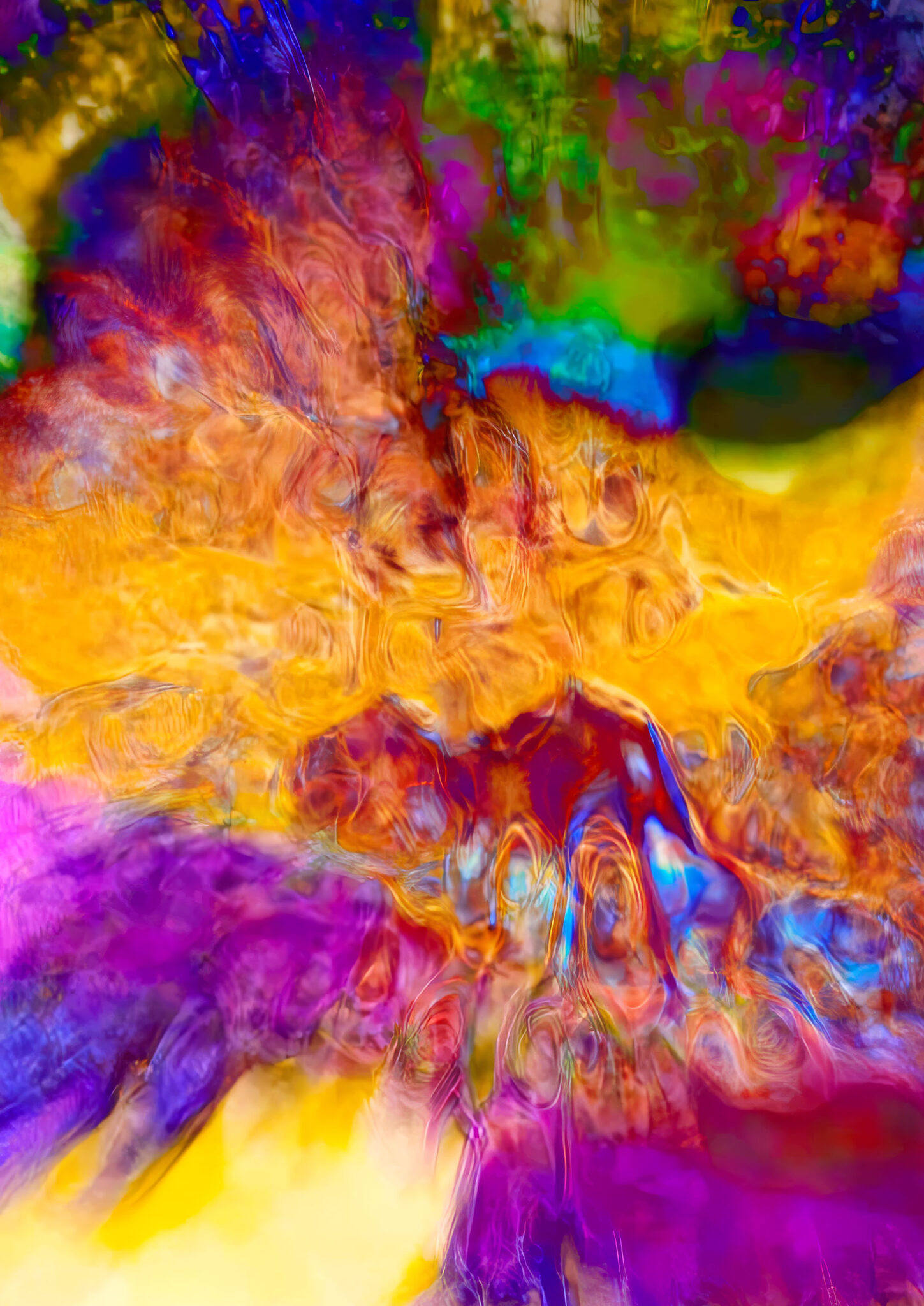
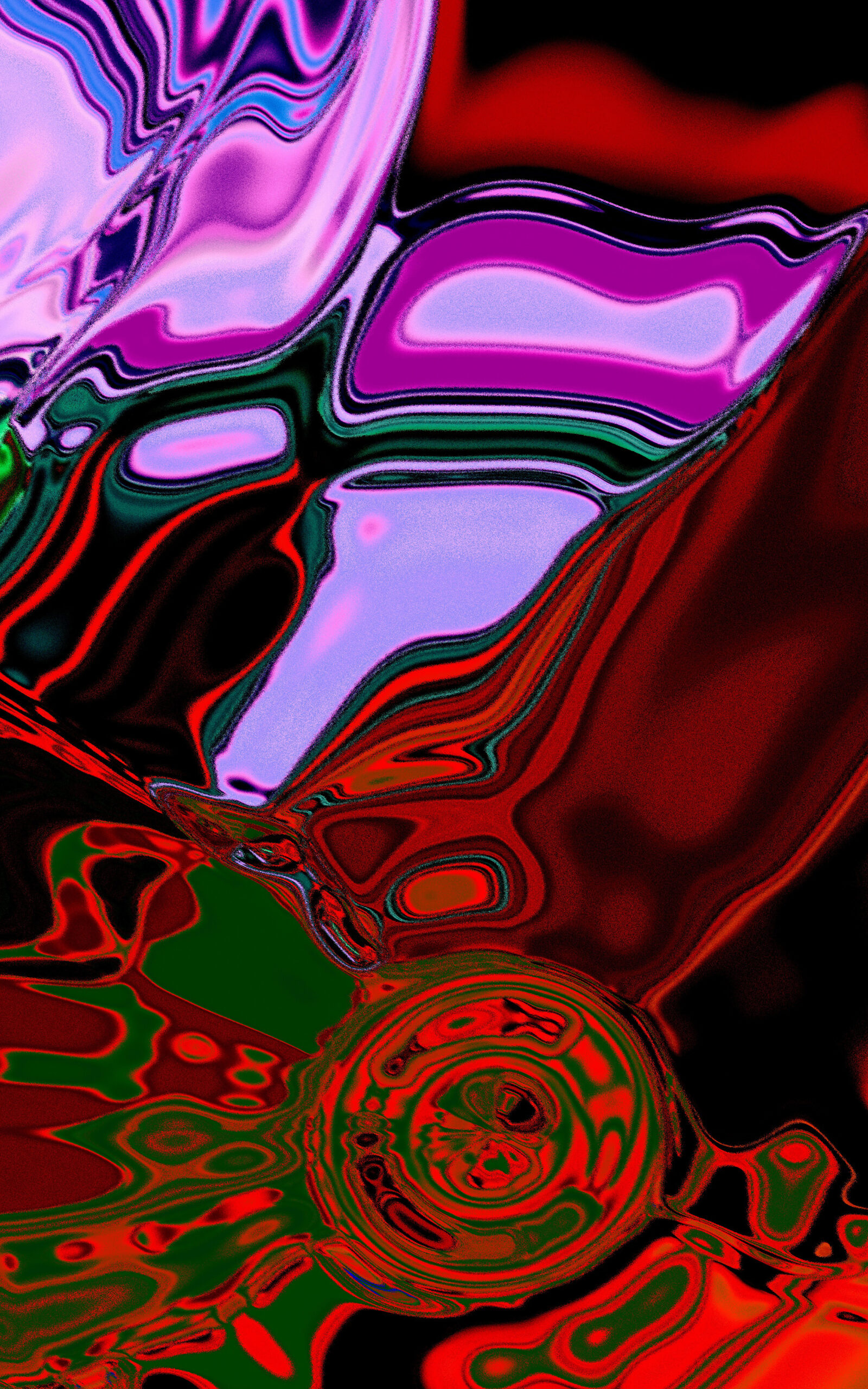
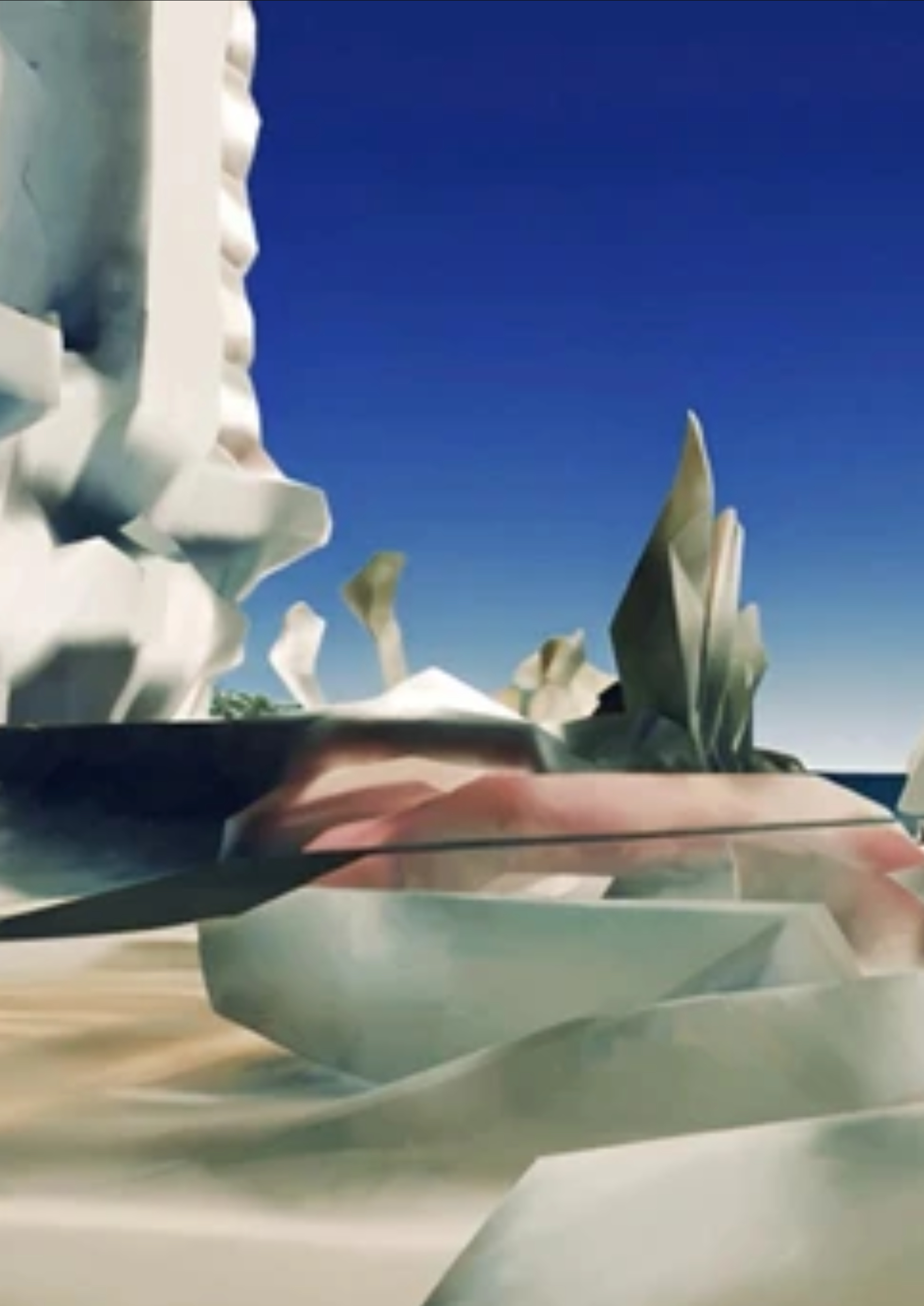
Real-time WebGL meditation where fifteen vortex points distort every pixel through layers of noise, angle, and time. The work makes algorithmic perception visible: there is no unmediated image—every color and edge arrives already refracted. Like liquid marble between order and chaos, it asks how mathematics becomes felt aesthetics, and whether any perception of “the real” is not itself a lens of computation.

BIO

Founder of MonoLab, dedicated to “casting eternal life and emotion in the digital world.” His practice is staked on creating “living artworks”—emergent digital entities that develop, respond, and persist through an improvisational loop between algorithm, audience, and author. By exploring “Digital Holobionts”—co-evolving systems of humans, AI, and code—Wu cultivates semantic lifeforms as a new category of contemporary art, bridging engineering with poetic philosophy.

FILE 2026 – Registration Open for AR, VR and XR Festival – Art and Technology

FILE 2026

Augmented and Virtual Reality Festival: brings together immersive practices in simulated three-dimensional environments and expands the perception of reality through the superimposition of digital layers onto physical space.  The works use mobile devices, glasses, and spatial interfaces to insert virtual objects, narratives, and data into the real world or transport the public to sensory and interactive digital universes. These languages ​​challenge the boundaries between the material and the informational, exploring subtle or monumental interventions, creating multidimensionality in the environment. Issues of presence, body, narrative, memory, surveillance, and technological mediation are central, configuring a fertile field of aesthetic and critical investigation into contemporary ways of inhabiting and perceiving space.

Applications were open until February 19, 2026. Access  the application form.

FILE 2026 | GENERAL REGULATIONS

FILE SÃO PAULO 2025: SYNTHETIKA – Darren Slater (DSM)

Darren Slater (DSM)

FILE SÃO PAULO 2025: SYNTHETIKA – Art and Technology – INTERATOR
Electronic Language International Festival

Trip Portal – United Kingdom

Portal Trip is a captivating fusion of original music and Darren Slater’s AI-generated animations, transporting viewers on a surreal journey through ever-shifting dimensions. As abstract portals open and dissolve into fluid landscapes, the hypnotic visuals synchronize with Darren’s immersive soundscapes, creating an audiovisual experience that feels like entering another reality. A mesmerizing blend of movement and sound, this video invites viewers to lose themselves in its dreamlike, otherworldly depths.

BIO

Darren Slater is a musician and amateur visual artist based in the UK. He composes cinematic soundtracks in ambient and techno-house styles with sci-fi inspiration, using attribute-free loops and sound effects. He uses Krea AI Animator to bring AI-generated images to life, creating immersive experiences. He also works as a traditional artist, painting fantasy worlds with brushes and pigments.

FILE SÃO PAULO 2025: SYNTHETIKA – Grupo de Pesquisa e Extensão Realidades

Animated Sprites: Frame-by-Frame Animation for Games

Realities Research and Extension Group

FILE SÃO PAULO 2025: SYNTHETIKA – Art and Technology – WORKSHOP
Electronic Language International Festival
 

Animated Sprites: Frame-by-Frame Animation for Games – Brazil

Want to learn how game animations are created? In this workshop, we’ll explore how animated sprites work, and you’ll have the opportunity to create your own! Using free and accessible tools, we’ll transform ideas into animated art and integrate them into the programming of a simple game.

BIO

The Realidades Group (https://realidades.eca.usp.br/), founded in 2010, is a research and extension group at USP that works with art, technology and the concept of reality.

FILE SÃO PAULO 2025: SYNTHETIKA – WOW Studio by D2D

UnBoxing the Infinite

WOW Studio by D2D

FILE SÃO PAULO 2025: SYNTHETIKA – Art and Technology – LED SHOW
Electronic Language International Festival


UnBoxing the Infinite – Egypt

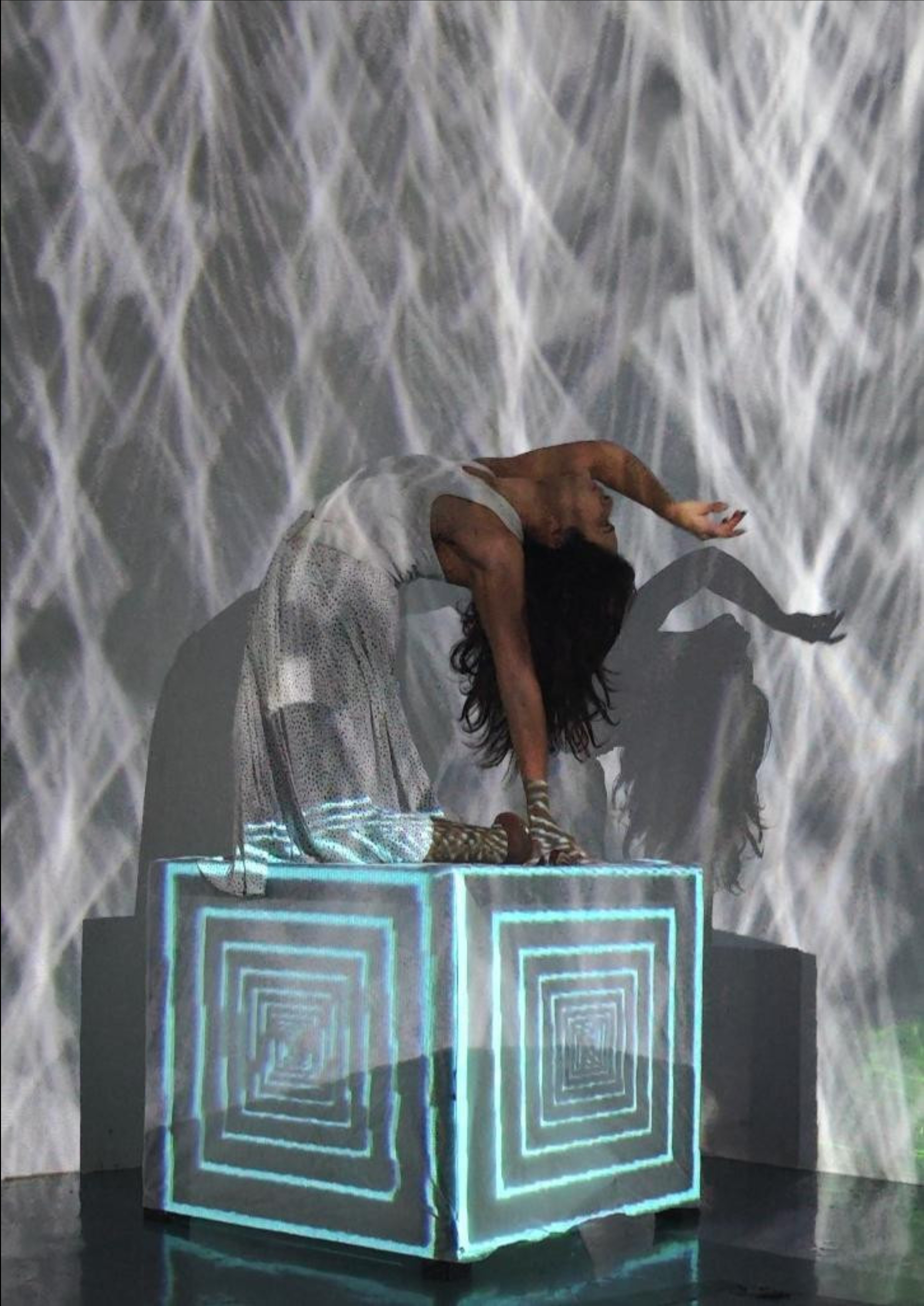
The work explores the intersection between reality and hyperreality. As a dancer traverses confined spaces, discovers portals, and creates magical worlds with the audience. Using dynamic motion tracking and live visuals, the performance inspires transformation, creativity, and self-liberation, breaking down boundaries of perception.

BIO

Elena Kauffmann is the founder and creative director of WOW Studio (Egypt), focused on media arts, XR, and AI. She created WOW Zone, an experimental space powered by immersive technologies, and is a co-founder of VR developer UBR. She works as a creative producer, immersive experience designer, and art director. Carolina Assis is a Colombian contemporary dancer based in Egypt. Amr Ali is one of WOW Studio’s lead tech artists.

FILE SÃO PAULO 2025: SYNTHETIKA – Fredo Agudelo

Mutant Tales — Posterra

Fredo Agudelo

FILE SÃO PAULO 2025: SYNTHETIKA – Art and Technology – LED SHOW
Electronic Language International Festival


mutanttales — Posterra – Colombia

In the end, the organic will eat technological waste like fungi. What remains of humanity in this finale? What remains of Earth over human vanity? We are beings in an unconscious mix, sitting behind screens as if traveling in a spaceship in the void of the universe. The layers fall away, and our corporeal reality remains. Scan your consciousness and step out of your spaceship; in Posterna, there’s still a world to live in.

BIO

Colombian audiovisual artist based in São Paulo. He has experience with video mapping, working in Colombia on various projects and participating in several video mapping festivals in Brazil. He is currently working increasingly with sound to bring a live audiovisual exhibition to the audiovisual art scene, blending experimental sound with video projections.

FILE SÃO PAULO 2025: SYNTHETIKA – Pan

Towards a New Nature

Pan

FILE SÃO PAULO 2025: SYNTHETIKA – Art and Technology – CGI VIDEOS
Electronic Language International Festival


Towards a New Nature – China

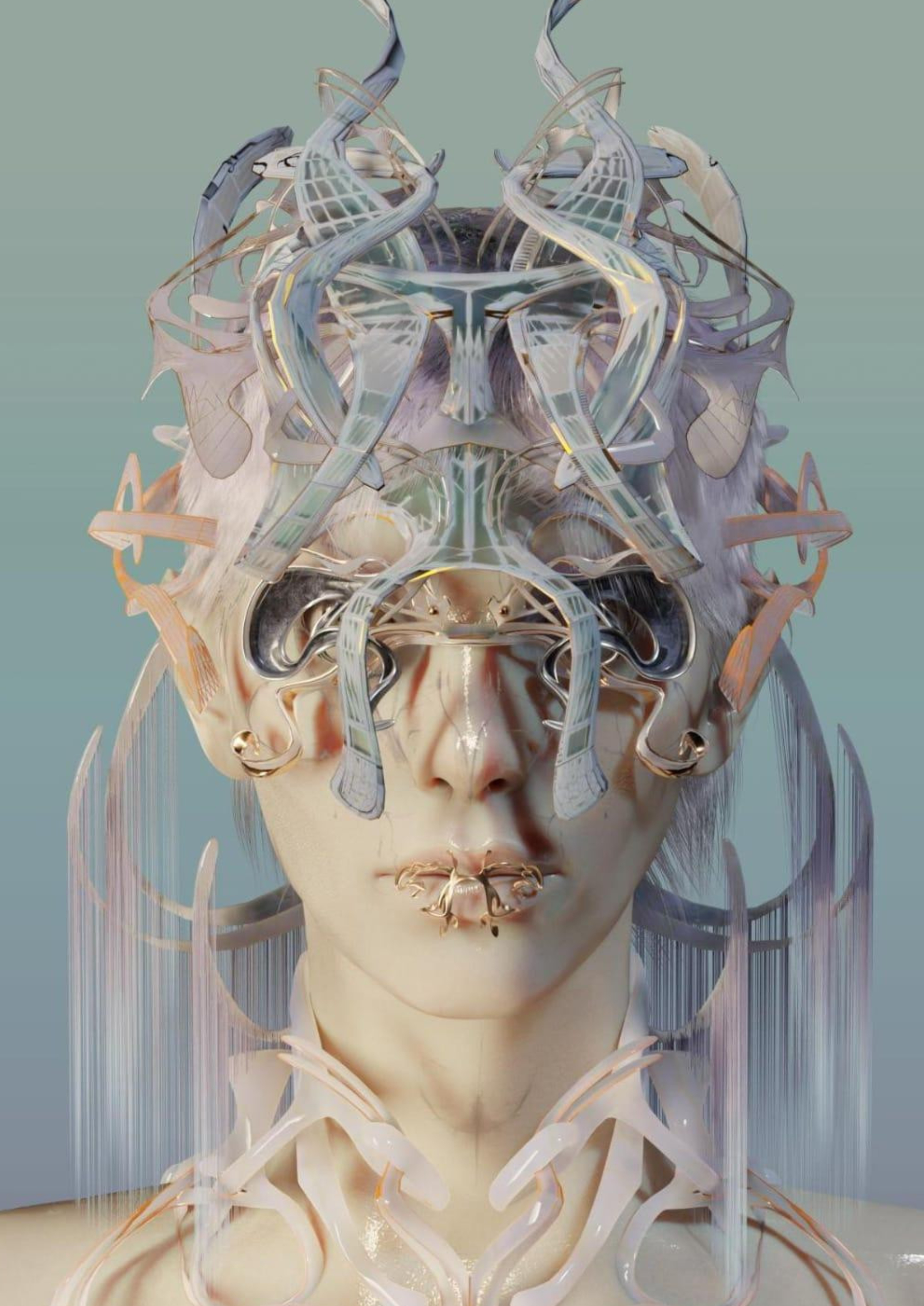
Residents of the Metaverse might have hairstyles where the boundary between the person and the hair blurs, making the hair almost like an “organ.” These hairstyles could “grow” branches or flowers, have a dynamic motion similar to plants swaying in the wind, and feature geometric shapes, colors, and effects that surpass the physical world’s limitations.

BIO

Pan Qianqian is currently studying Digital Media and Mixed Reality at the China Academy of Art. She is good at 3D design and production, and new media art. She is involved in 3D imaging, interactive installations, virtual clothing and other fields. Her works have been exhibited at the First Digital Art Exhibition and Tianwen 2023: Mutual Learning among Civilizations.

FILE SÃO PAULO 2025: SYNTHETIKA – #FFFF00

Impression: São Paulo

#FFFF00

FILE SÃO PAULO 2025: SYNTHETIKA – Art and Technology – Video Art
Electronic Language International Festival


Impression: São Paulo – Taiwan

This is a silent video of colors sourced from São Paulo, which #FFFF00 have never been to, photos found on the Internet. While Impressionists painted outdoors in order to capture “the realistic scenes outside the studio,” today’s artists no longer do this — for the world now comes to us in the form of image. The work highlights this mediated reality, evoking the impression of the place with a hypnotic atmosphere.

BIO

#FFFF00 is imagining another art. Her mi̍h-kiānn swings between joke and protest against institutions. With appropriation, multiplicity and low-budget as main tools, strives to pave the way for outsiders. Graduated from National Taiwan University of Arts, has participated in group exhibitions in Asia, Europe, and America.

FILE SÃO PAULO 2025: SYNTHETIKA – Koral Alvarenga

Meka Talks — Além da carne, o aço

Koral Alvarenga

FILE SÃO PAULO 2025: SYNTHETIKA – Art and Technology – Video Art
Electronic Language International Festival


Meka Talks — Além da carne, o aço – Brazil

Meka talks are provocative dialogues between artist Koral Alvarenga and various machines, exploring the future of humanity. In this first encounter, the work reflects on the transition of humanity to a new state of existence, where the physical and biological limitations of the body are overcome by the durability and transformative potential of technology.

BIO

Koral Alvarenga is a digital artist with a degree in Visual Arts and a postgraduate degree from UNESP. Her research explores the intersection between the digital and the physical, using 3D modeling, digitization, virtual reality, and 3D printing. Her works address themes such as identity, post-humanism, and human connections, merging technology and art with a futuristic vision.

FILE SÃO PAULO 2025: SYNTHETIKA – Barbara Oettinger

What future will we build upon the ruins of the present?

Barbara Oettinger

FILE SÃO PAULO 2025: SYNTHETIKA – Art and Technology – Video Art
Electronic Language International Festival


What future will we build upon the ruins of the present? – Chile

What future will we build upon the ruins of the present? is a short film that embarks on a symbolic and poetic exploration of faults and glit ches in the fabric of reality, both physical and virtual. It delves into how these disruptions can act as catalysts, transforming our understanding of the world we inhabit.

BIO

Barbara Oettinger is a visual artist and filmmaker from Chile. She has participated in various exhibitions and scre enings in cultural centers, galleries, and museums in South America, North America, Europe, Asia and Oceania. Recently, she received a scholarship from the Chilean government (ANID) to pursue a PhD in Creative and Critical Practice at the University of Sussex in Brighton, UK.

FILE SÃO PAULO 2025: SYNTHETIKA – Gabriel KÖI e Sabato Visconti

Motherboard

Gabriel KÖI e Sabato Visconti

FILE SÃO PAULO 2025: SYNTHETIKA – Art and Technology – Shorts Films AI
Electronic Language International Festival


Motherboard – Brazil

Motherboard is an experimental film that dives into the intersection between tech nology and consciousness, exploring the delicate boundary between the human and the digital. On this journey through the circuit, reality merges with the digital, challenging the understanding of existence. The contrast between the human and the artificial is revealed in the intertwining of both, echoing the voice of this emerging consciousness.

BIO

Sabato Visconti is a Brazilian digital artist. His works interrogate con temporary and historical practices of digital imagery, manipulating the inherent materialities of production and distribution. Gabriel Böing (KÖI) is an artist born and raised in São Paulo, who explores narrative and dreamlike stories materialized through mediums like 3D, AI, and video, heavily influenced by internet culture.

FILE SÃO PAULO 2025: SYNTHETIKA – Erika Kassnel-Henneberg

Deep Paula

Erika Kassnel-Henneberg

FILE SÃO PAULO 2025: SYNTHETIKA – Art and Technology – Shorts Films AI
Electronic Language International Festival


Deep Paula – Germany

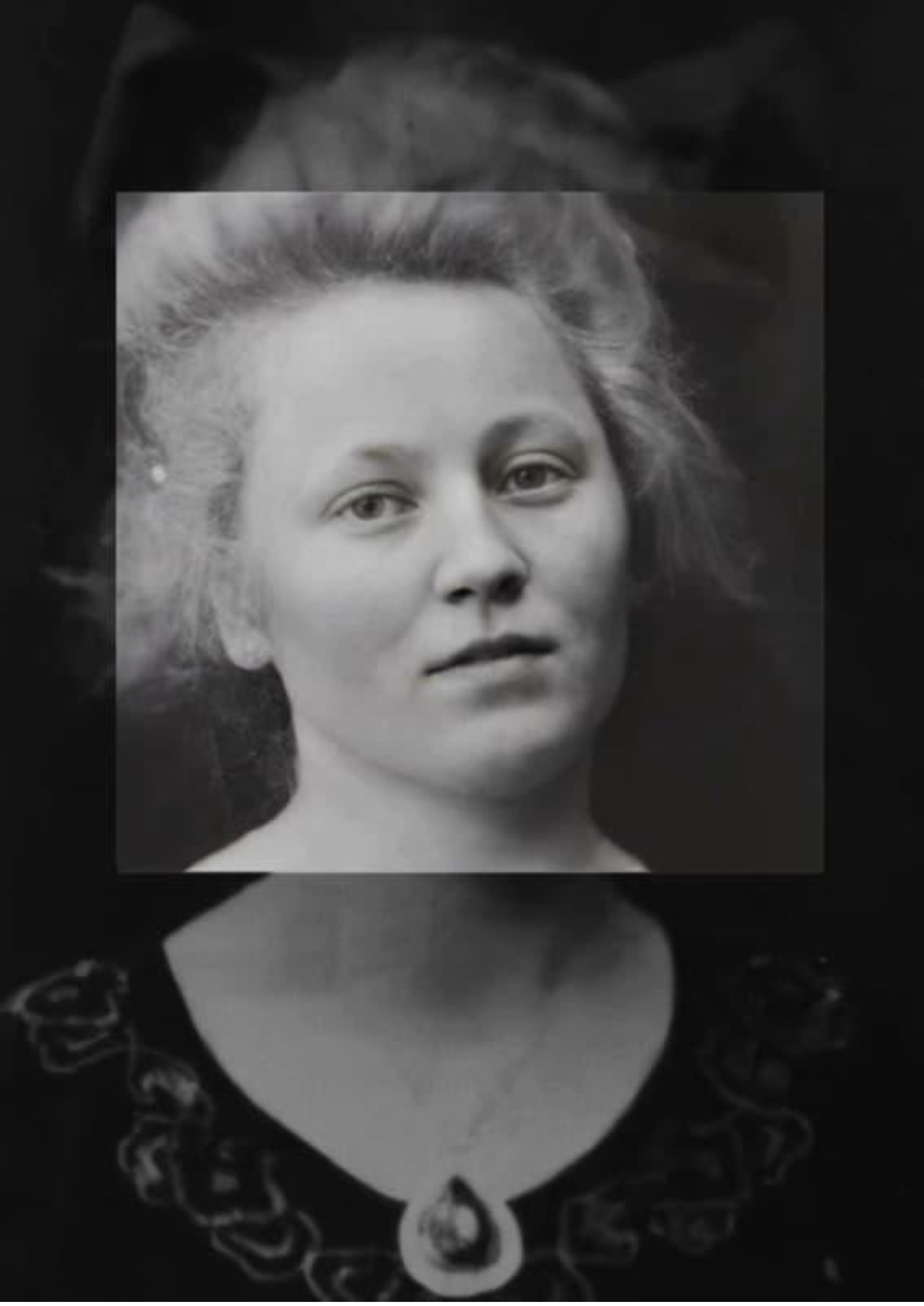
An old photograph is “brought to life” by artificial intelligence. What happens when flawed memory gives way to artificial vividness? Today, a perfect, seemingly alive digital self can be created. Will we become eternal puppets wandering the web? Who pulls the strings? And if a lost loved one is replaced by a digital twin, what becomes of grief?

BIO

Erika Kassnel-Henneberg (1973) is a conceptual artist. Her work explores a new humanism in the face of digital complexity. She investigates memory through AI-driven data analysis and questions perception as a construct between reality and fiction.

Music: AI-generated.

FILE SÃO PAULO 2025: SYNTHETIKA – Valezart

AI Museum

Valezart

FILE SÃO PAULO 2025: SYNTHETIKA – Art and Technology – Cine SYN
Electronic Language International Festival


AI Museum – Spain

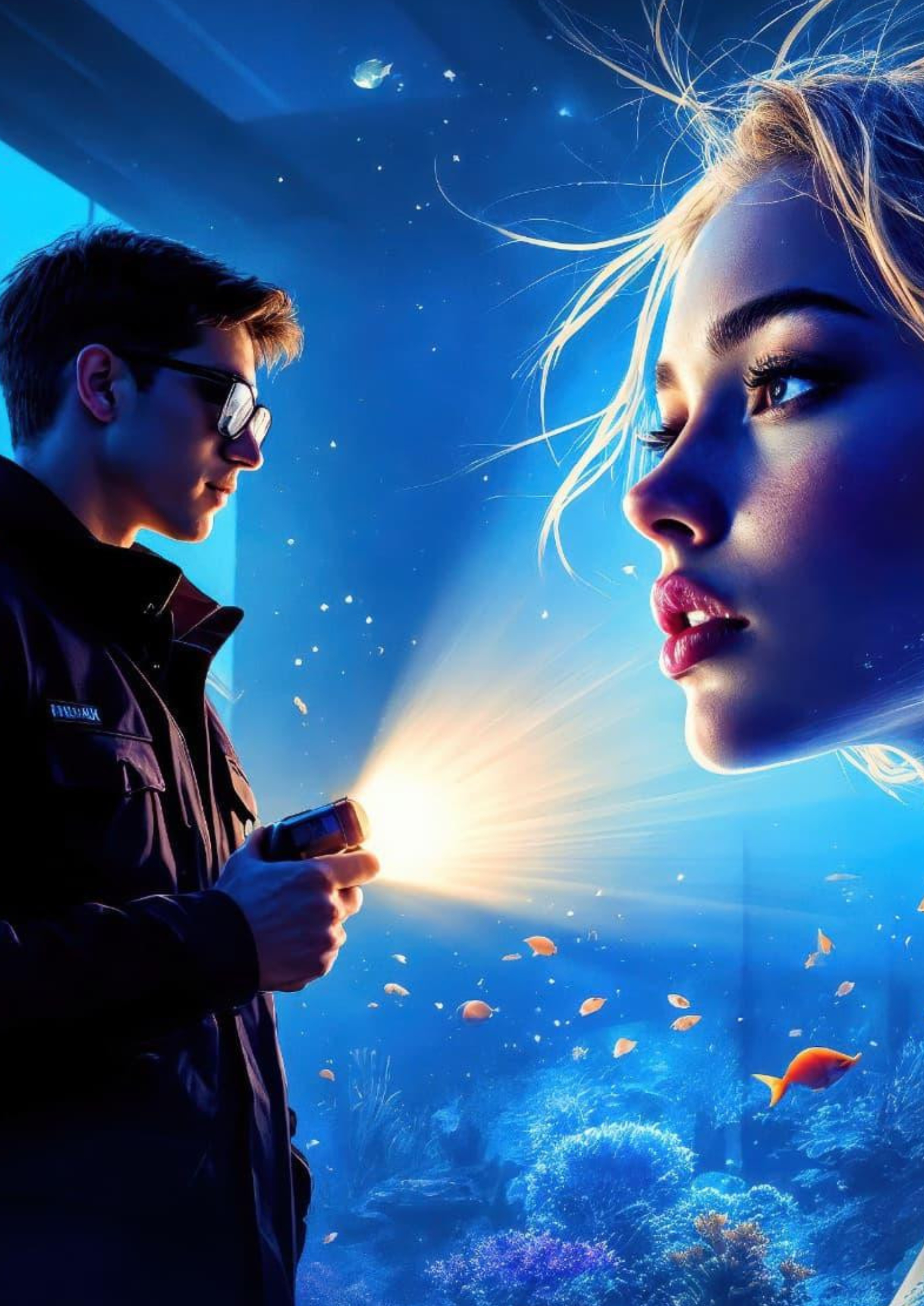
AI Museum is an AI-generated short film that explores art, memory, and artificial consciousness. During a night shift, security guard James Foster encounters a mysterious force that brings museum masterpieces to life. As paintings step out of their frames, the line between art and reality dissolves in a post-apocalyptic world, culminating in a finale where humanity’s legacy merges with the digital.

BIO

Valezart is a multidisciplinary artist from Barcelona working across music, film, and game development. With award-winning soundtracks and a strong narrative focus, his work spans animated shorts, feature films, and immersive experiences. He currently explores filmmaking with AI, delving into the edges of artificial creativity.

FILE SÃO PAULO 2025: SYNTHETIKA – Tin&Ed

Deep Field

Tin&Ed

FILE SÃO PAULO 2025: SYNTHETIKA – Art and Technology – Installations
Electronic Language International Festival


Deep Field – United States

An augmented reality experience where visitors draw fantastical plants that instantly bloom into immersive 3D structures within the space. As people contribute their creations, a collective digital landscape begins to take shape. Layers of recordings of endangered, extinct, and elusive species compose a responsive and evolving soundscape, developed by The Listening Planet.

BIO

Tin & Ed are New York-based artists whose work explores the interconnection of life across biological, geological, and cosmic systems. Through speculative world-building, they reveal connections that transcend human time, spatial boundaries, and sensory thresholds. Their practice spans sculpture, immersive and interactive installations, creating environments that invite audiences to shift perspective and inhabit the world beyond the limits of human perception. Technology is not used as spectacle, but as a perceptual tool that makes the invisible felt and the distant intimately present.

QUBIT AI: AESTHETIC SYNTHETIC FILE – São Paulo 2024 – Art and Technology

FILE 2024

QUBIT AI | quantum & synthetic ai
Electronic Language International Festival
July 3rd to August 25th
Tuesday to Sunday, 10am – 8pm
FIESP Cultural Center

Design: André Lenz
Image: Iskarioto Dystopian AI Films – Athena

QUBIT AI

In its 25 years of existence, the International Electronic Language Festival (FILE) is an internationally renowned Brazilian project that since 2000 has explored the intersection between art and technology. With more than two decades of history, the festival stands out for fostering exhibition spaces and debate about artistic innovations driven by disruptive and innovative technologies, inviting the public to get involved with experimental forms of art that challenge the boundaries of conventionality. Currently, two of these technologies stand out in the contemporary scenario: the accelerated development of quantum computing and artificial intelligence corroborated by synthetic data.

Quantum computing, an emerging revolution in the technological field, offers a new range of creative possibilities for contemporary artists. This new era allows the exploration of unprecedented frontiers through a new computational format that consists mainly of quantum superposition and entanglement, a new field of exploration for synthetic computer science, as well as for the arts in general; on the other hand, artificial intelligence, fueled by synthetic data, offers artists a new way of making and understanding art, opening up space for new forms, concepts and artistic expressions.

Entitled QUBIT AI, the exhibition delves into this unexplored territory presenting a selection of works of art resulting from the connection between artistic creation and technology, proposing a theoretical reflection on what the interrelationship between quantum computers and synthetic artificial intelligence will be.

Visitors will be invited to experience immersive installations, experimental videos, digital sculptures and other forms of interactive art, which intertwine reality and imagination. The exhibition encourages reflections on the influence of technology on art and contemporary society, while at the same time providing an environment to compare already established technological arts (analog and digital) with the possible futures of art in the synthetic era, enhanced by quantum computing. The QUBIT AI exhibition at FILE SP 2024 transcends the mere presentation of works of art; it is a journey to the limits of human creativity, driven by the convergence of art, science and technology.

Ricardo Barreto and Paula Perissinotto
co-organizers and curators of FILE
International Electronic Language Festival
QUBIT AI: FILE QUANTUM WORKSHOP 2024 – São Paulo – Art and Technology

FILE 2024

QUBIT AI | quantum & synthetic ai
Electronic Language International Festival
July 3rd to August 25th
Tuesday to Sunday, 10am – 8pm
FIESP Cultural Center

Design: André Lenz
Image: Iskarioto Dystopian AI Films – Athena

QUBIT AI

In its 25 years of existence, the International Electronic Language Festival (FILE) is an internationally renowned Brazilian project that since 2000 has explored the intersection between art and technology. With more than two decades of history, the festival stands out for fostering exhibition spaces and debate about artistic innovations driven by disruptive and innovative technologies, inviting the public to get involved with experimental forms of art that challenge the boundaries of conventionality. Currently, two of these technologies stand out in the contemporary scenario: the accelerated development of quantum computing and artificial intelligence corroborated by synthetic data.

Quantum computing, an emerging revolution in the technological field, offers a new range of creative possibilities for contemporary artists. This new era allows the exploration of unprecedented frontiers through a new computational format that consists mainly of quantum superposition and entanglement, a new field of exploration for synthetic computer science, as well as for the arts in general; on the other hand, artificial intelligence, fueled by synthetic data, offers artists a new way of making and understanding art, opening up space for new forms, concepts and artistic expressions.

Entitled QUBIT AI, the exhibition delves into this unexplored territory presenting a selection of works of art resulting from the connection between artistic creation and technology, proposing a theoretical reflection on what the interrelationship between quantum computers and synthetic artificial intelligence will be.

Visitors will be invited to experience immersive installations, experimental videos, digital sculptures and other forms of interactive art, which intertwine reality and imagination. The exhibition encourages reflections on the influence of technology on art and contemporary society, while at the same time providing an environment to compare already established technological arts (analog and digital) with the possible futures of art in the synthetic era, enhanced by quantum computing. The QUBIT AI exhibition at FILE SP 2024 transcends the mere presentation of works of art; it is a journey to the limits of human creativity, driven by the convergence of art, science and technology.

Ricardo Barreto and Paula Perissinotto
co-organizers and curators of FILE
International Electronic Language Festival
QUBIT AI: FILE OPENING LECTURE 2024 – São Paulo – Art and Technology

FILE 2024

QUBIT AI | quantum & synthetic ai
Electronic Language International Festival
July 3rd to August 25th
Tuesday to Sunday, 10am – 8pm
FIESP Cultural Center

Design: André Lenz
Image: Iskarioto Dystopian AI Films – Athena

QUBIT AI

In its 25 years of existence, the International Electronic Language Festival (FILE) is an internationally renowned Brazilian project that since 2000 has explored the intersection between art and technology. With more than two decades of history, the festival stands out for fostering exhibition spaces and debate about artistic innovations driven by disruptive and innovative technologies, inviting the public to get involved with experimental forms of art that challenge the boundaries of conventionality. Currently, two of these technologies stand out in the contemporary scenario: the accelerated development of quantum computing and artificial intelligence corroborated by synthetic data.

Quantum computing, an emerging revolution in the technological field, offers a new range of creative possibilities for contemporary artists. This new era allows the exploration of unprecedented frontiers through a new computational format that consists mainly of quantum superposition and entanglement, a new field of exploration for synthetic computer science, as well as for the arts in general; on the other hand, artificial intelligence, fueled by synthetic data, offers artists a new way of making and understanding art, opening up space for new forms, concepts and artistic expressions.

Entitled QUBIT AI, the exhibition delves into this unexplored territory presenting a selection of works of art resulting from the connection between artistic creation and technology, proposing a theoretical reflection on what the interrelationship between quantum computers and synthetic artificial intelligence will be.

Visitors will be invited to experience immersive installations, experimental videos, digital sculptures and other forms of interactive art, which intertwine reality and imagination. The exhibition encourages reflections on the influence of technology on art and contemporary society, while at the same time providing an environment to compare already established technological arts (analog and digital) with the possible futures of art in the synthetic era, enhanced by quantum computing. The QUBIT AI exhibition at FILE SP 2024 transcends the mere presentation of works of art; it is a journey to the limits of human creativity, driven by the convergence of art, science and technology.

Ricardo Barreto and Paula Perissinotto
co-organizers and curators of FILE
International Electronic Language Festival
 

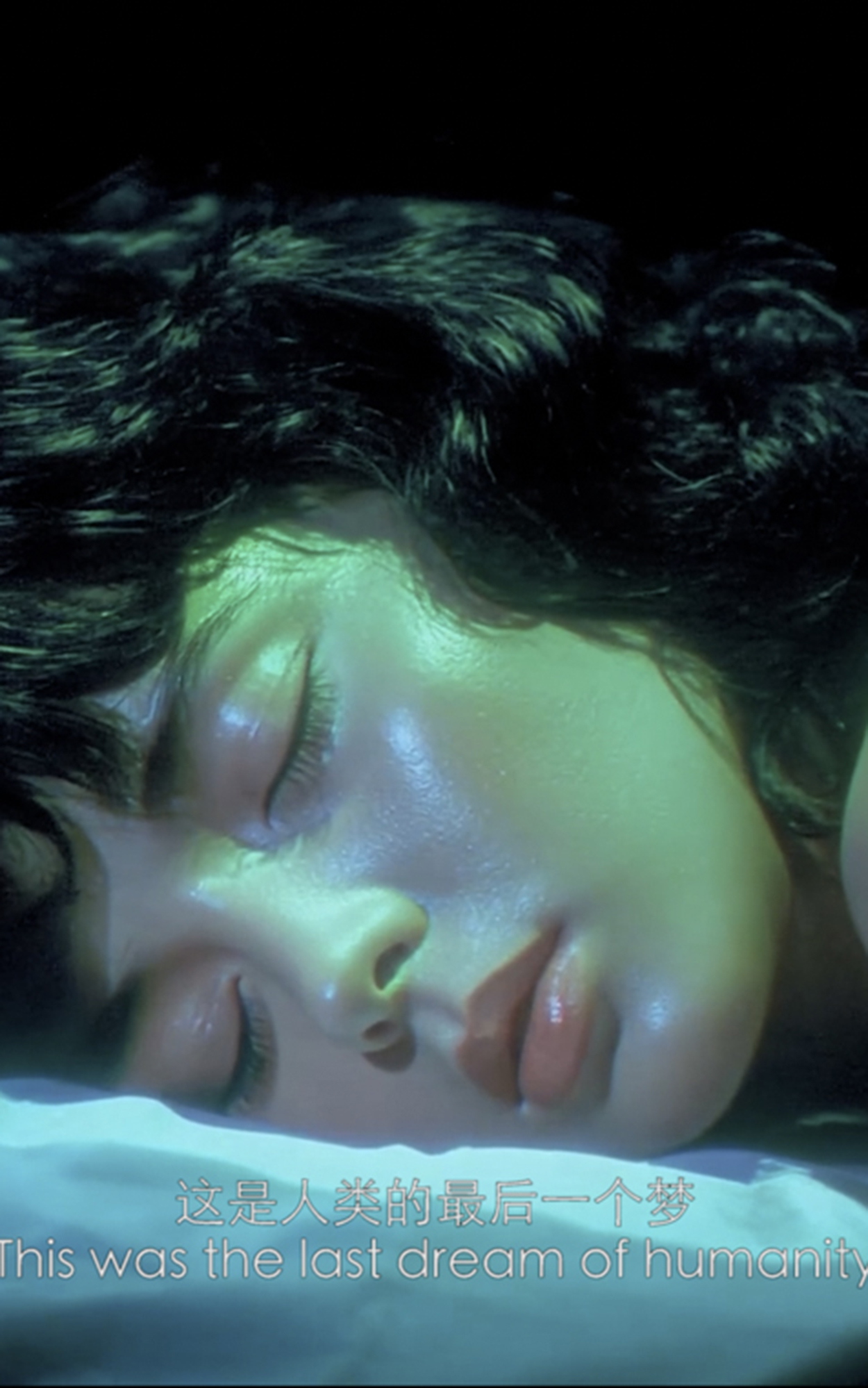
Zheyan Li – A Bedtime Story for the End – China

A BEDTIME STORY FOR THE END

Zheyan Li


FILE SÃO PAULO 2026: Inter-creativity – Art and Technology – CINEFILE | Short
Electronic Language International Festival


A Bedtime Story for the End – China

In the near future, a global plague of “perpetual wakefulness” has taken away everyone’s ability to dream. People then discover that our collective, unconscious dreams were the very energy that kept the laws of the universe stable. As the dreams vanish, reality itself begins to fray and unravel. The rules of physics come loose in ways both poetic and strange. Countless sleepless people toss and turn in their rooms, the border between their inner minds and the outer world blurring. 

BIO

Zheyan is a visual artist and poet from Chenzhou, China, and a graduate of Metfilm School, in London. His work spans experimental film, documentary, photography, and AI-generated art. He uses a calm, restrained visual language to create cold, philosophical spaces, prompting audiences to reflect on human existence.

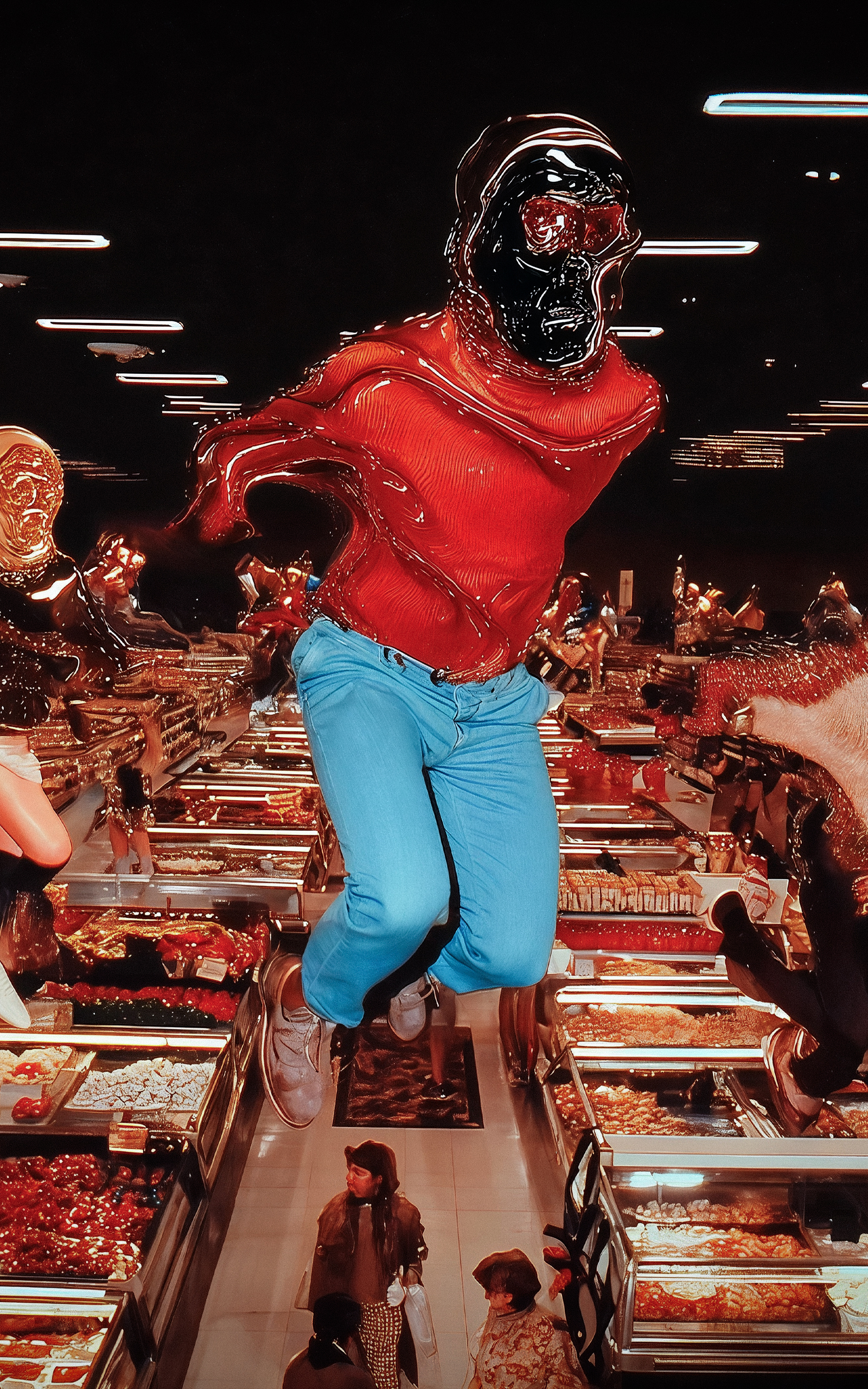
Mirage Bureau & Rene Cardillo – Shifting – Brazil

SHIFTING

Mirage Bureau & Rene Cardillo


FILE SÃO PAULO 2026: Inter-creativity – Art and Technology – CINEFILE | Short
Electronic Language International Festival


Shifting – Brazil

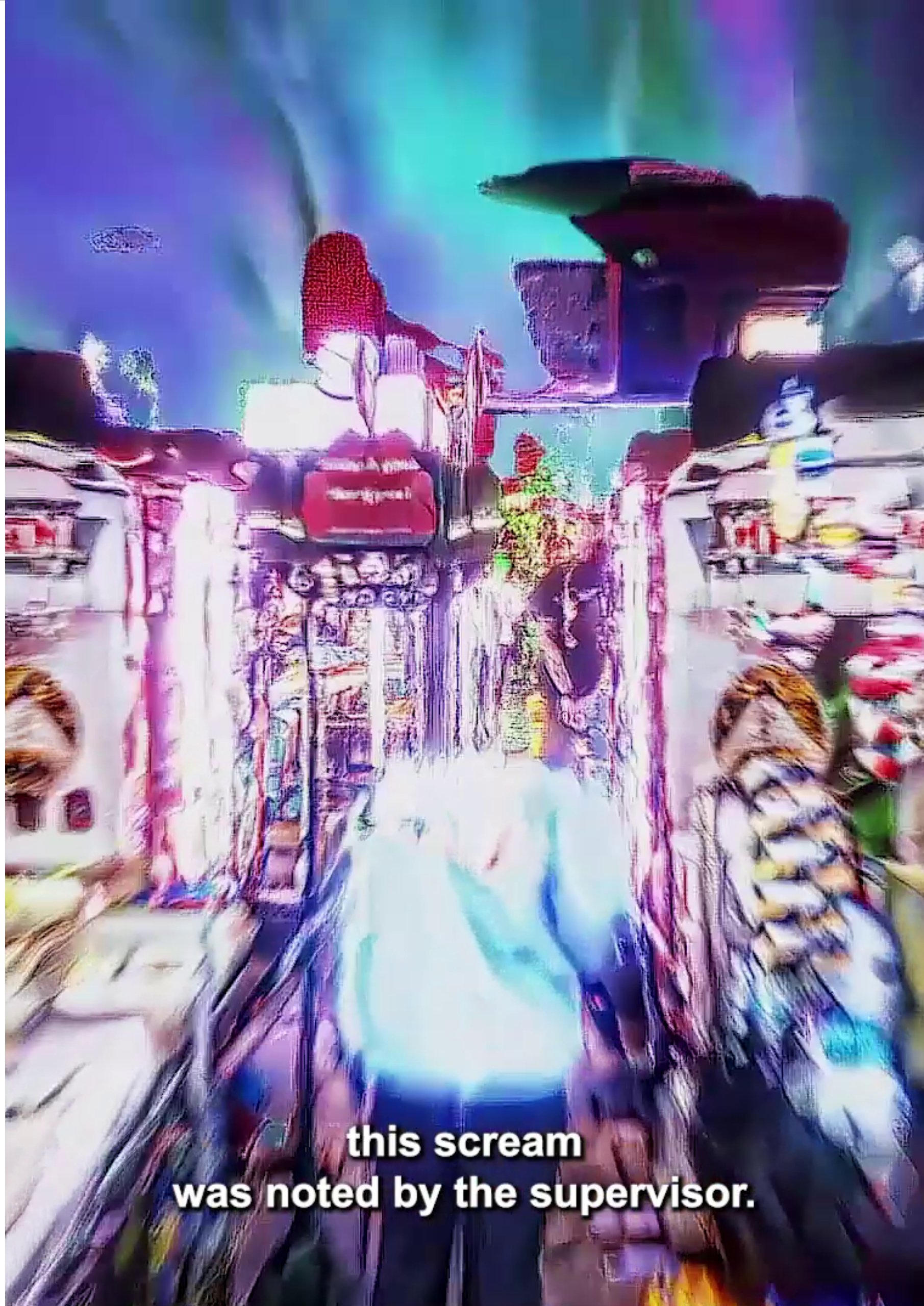
In seemingly ordinary supermarkets, everything stands on the verge of transformation. The everyday environment along with everyone undergoes a transition into an unstable spatial condition.

Shifting traces this process: people and objects appear to traverse invisible layers of reality following the emergence of an extradimensional presence. What was once familiar becomes indeterminate, as if space itself were recalibrating according to an unfamiliar logic.

BIO

Mirage Bureau is an artist working at the intersection of artificial intelligence, poetics, and visual storytelling. His practice explores emerging frontiers of AI-generated image-making, treating the body and language as delicate instruments of connection, continually disrupted by noise, projection, and emotional overflow.

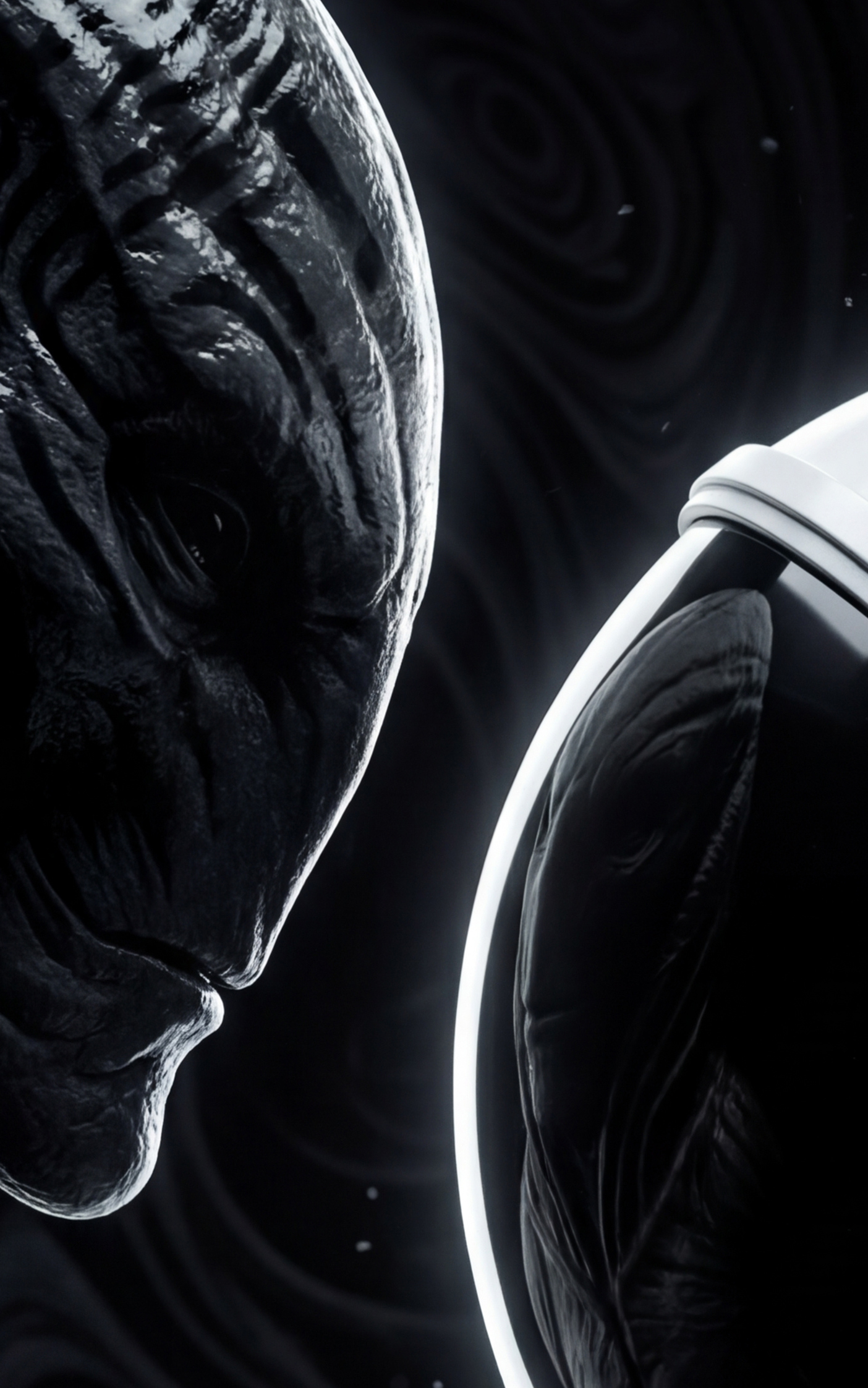
Jaspreet Singh – Aethrimus – India

AETHRIMUS

Jaspreet Singh


FILE SÃO PAULO 2026: Inter-creativity – Art and Technology – CINEFILE | Short
Electronic Language International Festival


Aethrimus – India

A mysterious object known as 3I Atlas, expected to pass harmlessly through space, suddenly changes course and impacts the Moon, destroying a U.S. satellite in the process. The unexplained event triggers global alarm. A rapid-response mission is launched to investigate the anomaly before it threatens Earth. When the team reaches the Moon, they uncover a shocking truth: the object is not a comet, but an alien spacecraft hidden beneath the lunar surface.

BIO

Jaspreet Singh is an independent filmmaker from India with a strong passion for science fiction, mystery, and experimental storytelling. His work explores themes of the unknown, technology, and human perception, blending cinematic visuals with emerging digital and AI-assisted filmmaking tools. Jaspreet creates atmosphere-driven narratives that challenge traditional storytelling and invite audiences to question reality, intelligence, and existence.

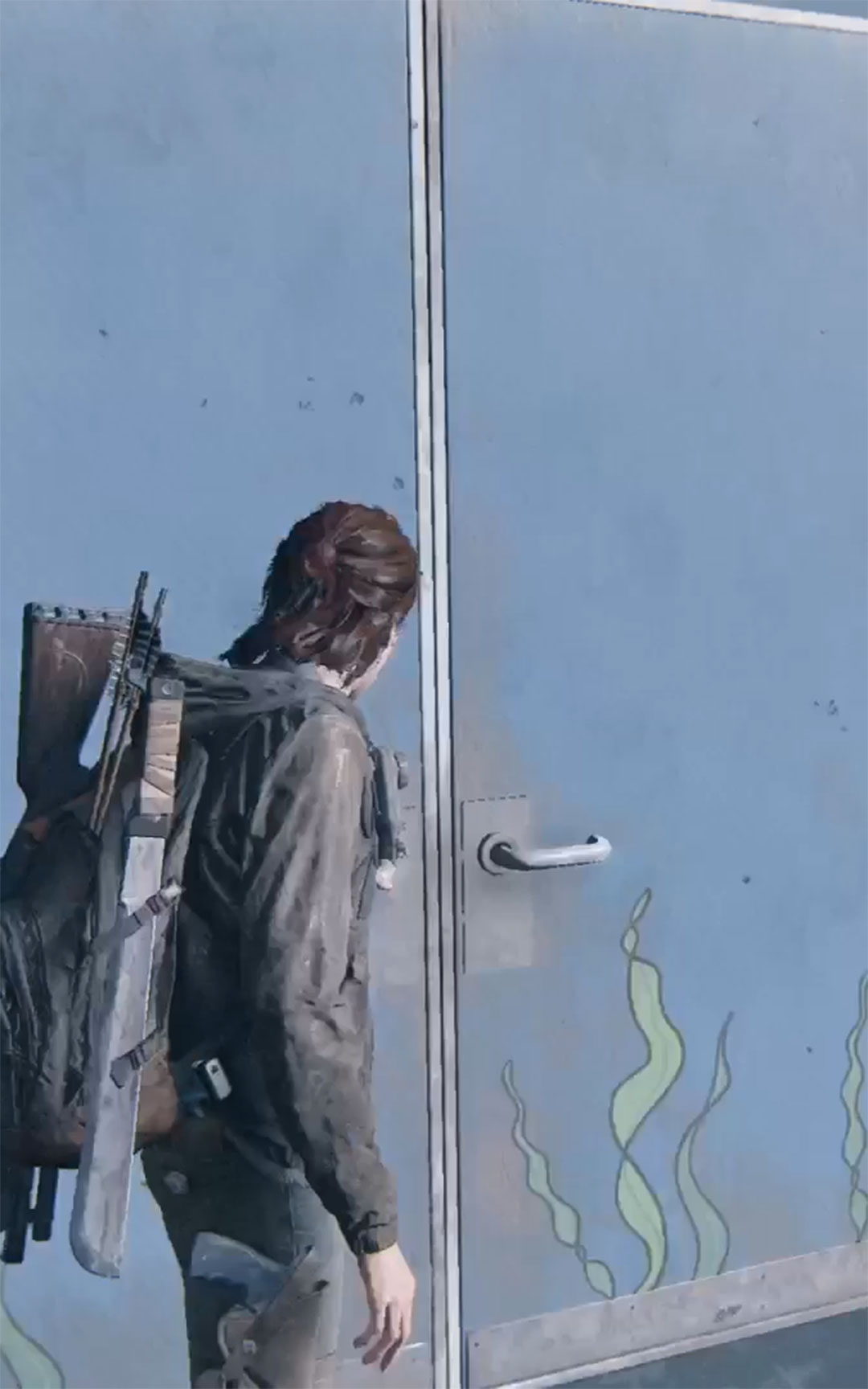
Natalie Maximova – Awaiting Oblivion – England

AWAITING OBLIVION

Natalie Maximova


FILE SÃO PAULO 2026: Inter-creativity – Art and Technology – Full-length
Electronic Language International Festival


Awaiting Oblivion – England

Awaiting Oblivion explores the collapse of simulated reality in The Last of Us II, revealing spaces where boundaries between representation and existence dissolve. As the world fractures into glitches and voids, it exposes the instability of meaning, unmasking the illusion of coherence and confronting the observer with absence at the core of perception. A poetic voiceover amplifies the dissonance between digital precision and fluid, ephemeral ecological and philosophical inquiry.

BIO

Natalie Maximova is a London-based artist and researcher. Her work probes how simulated worlds produce and break meaning. Using machinima, game engines and post-photographic methods, she investigates glitches, edges and out-of-bounds zones, exposing the design logics and politics of mediation that shape how we see and inhabit digital spaces.

Andrés Brisson – The Flavour of Kiebebe – Argentina

THE FLAVOUR OF KIEBEBE

Andrés Brisson


FILE SÃO PAULO 2026: Inter-creativity – Art and Technology – Full-length
Electronic Language International Festival


The Flavour of Kiebebe – Argentina

Two wandering souls abandon their lives of luxury and embark on a journey into the unknown in search of their ideal world. Along the way, they encounter fire, water, and an omen. Without trying to resist, they surrender to it as in a dream, blurring the boundaries of reality. A poetic exploration of desire, loss, and transformation.

BIO

Andrés Brisson is an audiovisual artist and composer born in 1988 in La Plata, Argentina, and based in France. He was an artist-in-residence at the National Museum of Modern and Contemporary Art of South Korea (MMCA), and his works have been exhibited in Argentina, Brazil, Mexico, France, and South Korea. His work focuses on immersive and transdisciplinary projects.

Vanessa Rosa – Little Martians: Dear Human, My Muse – Brazil

LITTLE MARTIANS: DEAR HUMAN, MY MUSE

Vanessa Rosa


FILE SÃO PAULO 2026: Inter-creativity – Art and Technology – Animation
Electronic Language International Festival


Little Martians: Dear Human, My Muse – Brazil

Little Martians are future beings who claim to be the creators of our reality. One of them wants to apologize.

This film is created with handmade ceramic pieces that are transformed into AI-powered avatars in a sci-fi universe. Using a variety of AI techniques the sculptures become generative characters that can tell their own stories. The film is a character introduction for Verdelis, a plant humanoid Little Martian who lives in an abandoned biodome on Mars and has a deep empathy for humanity.

BIO

Vanessa Rosa is a Brazilian-born, US-based visual artist whose work seamlessly blends physical and digital media to create immersive storytelling experiences. With roots in street art, her practice has evolved to encompass murals, ceramics, projection mapping, and AI-assisted art, often exploring themes of world history, cultural exchange, and speculative futures.

S4RA – lil~mér~maid~~ ~ – Portugal

LIL~MÉR~MAID~~ ~

S4RA


FILE SÃO PAULO 2026: Inter-creativity – Art and Technology – Animation
Electronic Language International Festival


lil~mér~maid~~ ~ – Portugal

Emerging from the liquid space between myth and simulacrum, a mermaid who once gave up her voice and tail reappears multiplied across digital surfaces, where the body fragments and expands through states of desire and silence. An echo, foam and ghost of an unstable presence. It unfolds a restless hybridity, haunted by scripted roles and metamorphosis to exist in the age of hyperreality.

BIO

S4RA works with video installation and immersive digital environments. Explores consensual power relations, desire and confinement, crossing the political body with liquid and post-capitalist landscapes. Waves are imagined as an affective system and interface of information — an economy between pleasure & surveillance. Moves in cycles of liberation, where the virtual environment is simultaneously territory.

Rikardo Druskic & Saša Peševski – BLU – Long Night Of The Soul – Bosnia and Herzegovina

BLU – LONG NIGHT OF THE SOUL

Ricardo Druskic & Saša Peševski


FILE SÃO PAULO 2026: Inter-creativity – Art and Technology – Animation
Electronic Language International Festival


BLU – Long Night Of The Soul – Bosnia and Herzegovina

Inspired by Jungian psychology, the animated film follows BLU as he enters Xanthea 2502, a realm inhabited by ghosts, archetypes, and mythological beings. In this symbolic universe, BLU confronts his inner demons and undergoes a psychological transformation. The narrative is introspective rather than linear, emphasizing atmosphere, movement, and silence, with sound design still in development.

BIO

Rikardo Druskic is a multidisciplinary experimental artist working across painting, digital animation, and virtual reality. He is the creator of the sci-fi art cycle Xanthea 2502, exploring mythology, AI, and subconscious realms.

Saša Peševski is a director and professor at the Academy of Arts in Sarajevo, specializing in acting, theater, and film direction while mentoring emerging artists.

David Young – Q(a,v,7,m,m2,d4a-21,7,16,13,31,55) – United States

Q(A,V,7,M,M2,D4A-21,7,16,13,31,55)

David Young


FILE SÃO PAULO 2026: Inter-creativity – Art and Technology – Randomic Dimension
Electronic Language International Festival


Q(a,v,7,m,m2,d4a-21,7,16,13,31,55) – United States

Q(a,v,7,m,m2,d4a-21,7,16,13,31,55) is a quantum drawing generated from actual quantum computer data—entangled qubit values and noise from decoherence, when quantum states collapse into classical reality. Custom code written to interrogate this data searches for visual patterns within quantum behavior. Rather than explaining phenomena, the work creates conditions for felt encounter—building non-mathematical intuition through direct engagement with what these machines produce.

BIO

David Young is a computational artist and researcher investigating quantum computing and AI through aesthetic rather than mathematical means. His work is held in the collections of Kunstmuseum Bonn and Kunstsammlungen Chemnitz and has been featured in Artforum. He holds an MS from MIT Media Lab. He lives and works in New York. 

Jiabao Li & Botao Amber Hu – EchoVision – China

ECHOVISION

Jiabao Li & Botao Amber Hu


FILE SÃO PAULO 2026: Inter-creativity – Art and Technology – Augmented Realities
Electronic Language International Festival


EchoVision – China

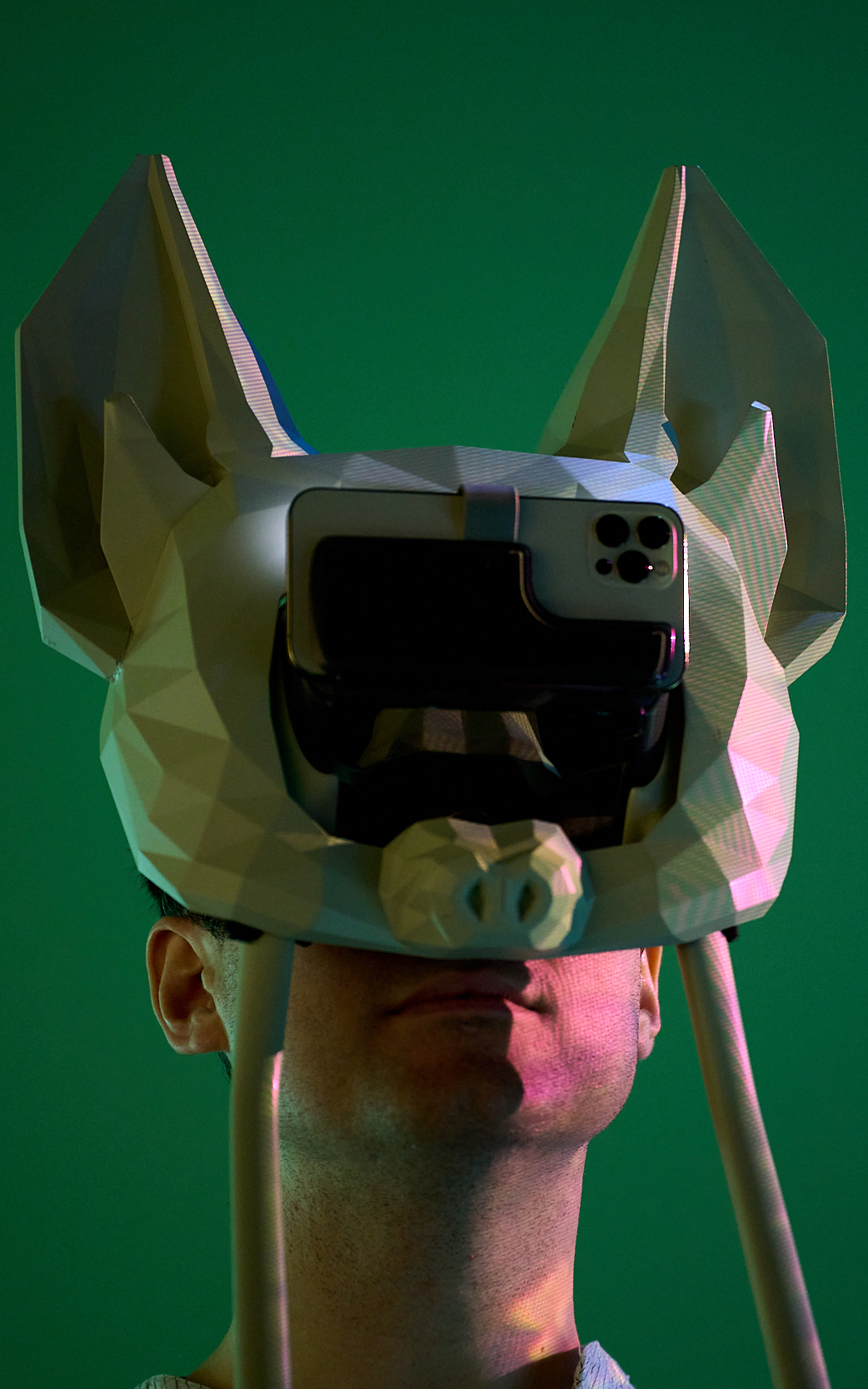
What is it like to be a bat? EchoVision is a mixed reality art experience that simulates echolocation, immersing participants in the perceptual world of bats. Exhibited in a natural habitat, it shows mixed reality’s potential to foster empathy for non-human species. The work explores eco-phenomenological mixed reality, opening paths for ecological education and more-than-human perspectives through embodiment.

BIO

Botao “Amber” Hu is a social computing researcher and experiential futures designer. He creates projects using social mixed reality and directs the Reality Design Lab, exploring soma, speculative design, and spatial computing.

Jiabao Li is an artist and Associate Professor at Northeastern University. Formerly at UT Austin and Stanford, she creates works on climate, interspecies co-creation, and perception using AR/VR, wearables, robots, performance, and installations.

Isabell Bullerschen – Ipseria – Switzerland

IPSERIA

Isabell Bullerschen


FILE SÃO PAULO 2026: Inter-creativity – Art and Technology – Augmented Realities
Electronic Language International Festival


Ipseria – Switzerland

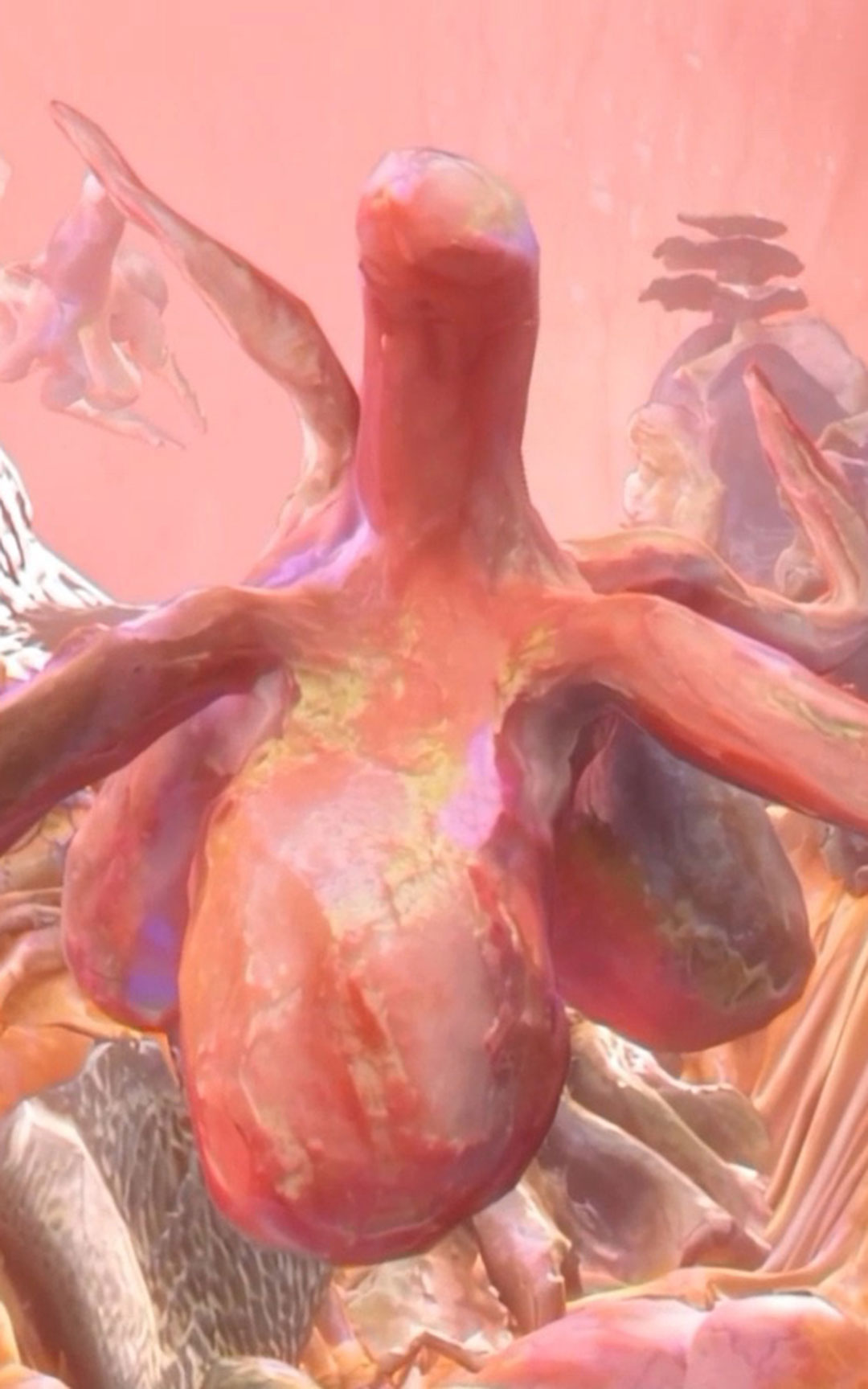
An unusual experience awaits recipients: a virtual reality with no digitally-generated content. ipseria and its virtual environment have their origin in the physical realm. Various materials like clay, plasticine and latex have been modeled, as well as organic materials, such as lichen or slime molds, have been collected and cultivated. By using 3D scanners the sculpted, collected, and grown elements were digitized, then processed in the 3D program Houdini and finally combined in the gaming software Unity to create a 360° VR experience. Hence, the virtual and physical worlds are intertwined.

BIO

Isabell Bullerschen (she/her) is interested in slimy organisms and the construction and blending of realities. Through installations and videos, she explores the potential that lies in the deconstruction and rewriting of narratives. She employs a meta-surgical method in which her work serves as a scalpel to dissect anthropocentrism. 

CREDITS

Concept/Script/Direction/Modelling/3D Scans/Production: Isabell Bullerschen

3D Animation: Florian Baumann 

Game Design: Sebastiaan Cator

Programming: Arno Justus

Sound: Aske Lyck Pedersen and Paloma López & Leslie García (interspecifics)

Voice Over: Netanya Woodard, Molly Schaad 

Flute: Chantal Dubs

Scent: Andreas Wilhelm 

Seating: Jope Schneider

Project Advisor: Roger Meier

With the support of: Swiss Art Council Pro Helvetia, Kanton Zürich Fachstelle Kultur, Stadt Zürich Kultur, Ernst Göhner Stiftung

Sophia Bulgakova – INEVITABLY BLUE – Ukraine

INEVITABLY BLUE

Sophia Bulgakova


FILE SÃO PAULO 2026: Inter-creativity – Art and Technology – Installations
Electronic Language International Festival


INEVITABLY BLUE – Ukraine

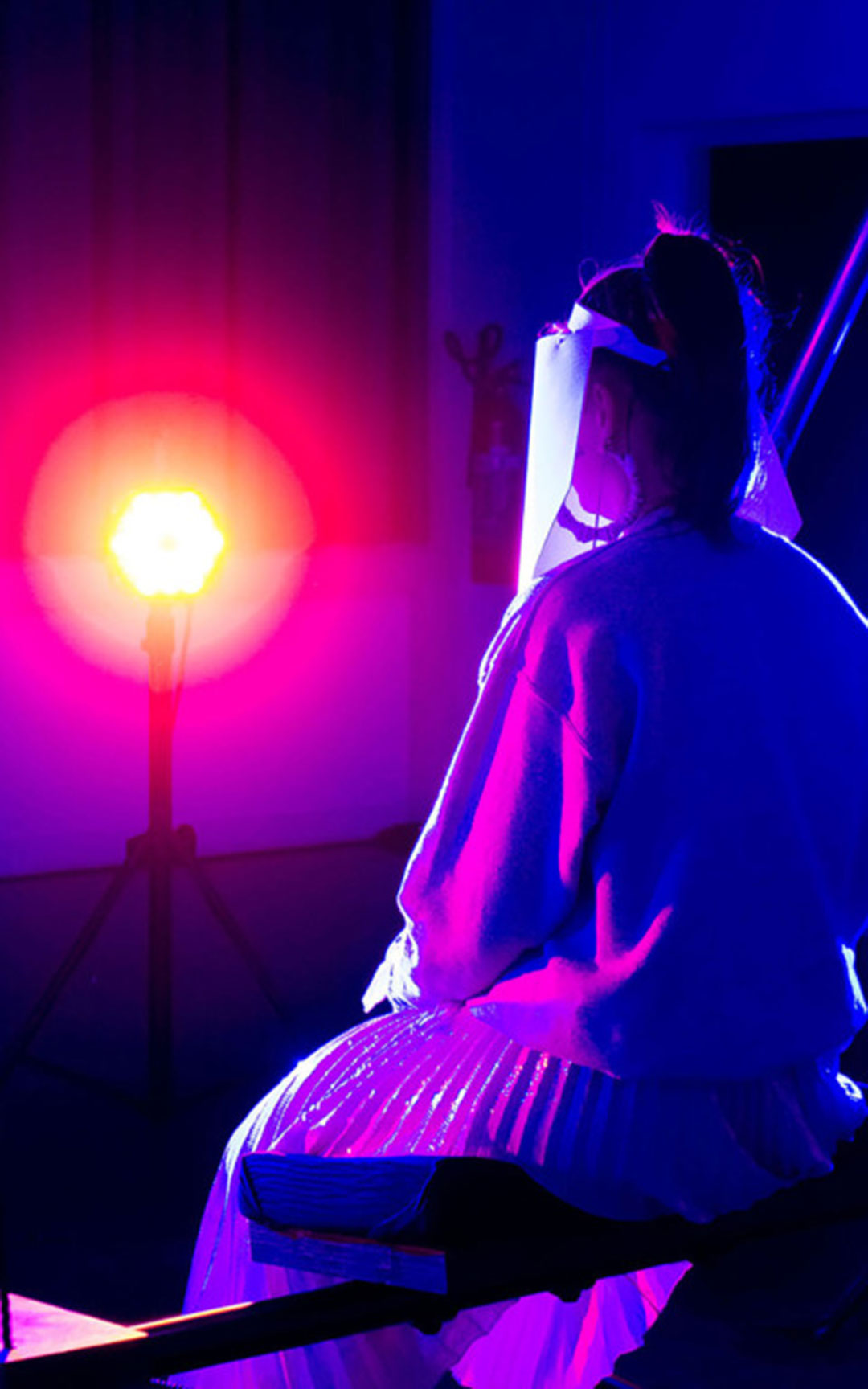
Interactive installation that invites the audience, one by one, to participate and get inside the composition of coloured light and levitative movements of the swing. The participant undergoes, losing the senses of reception, perception, and proprioception, entering a space that only consists of colour, own thoughts, projections, and imaginations.

BIO
Sophia Bulgakova (born 1997, Odesa, Ukraine) is an ArtScientist, interdisciplinary artist and activist currently based in the Netherlands. She works with art, technology, and contemporary social structures, focusing on the relationship between cultural identities, perception, and imagination. Through various sensorial inputs in her installations and performances, she engages viewers, impacting their ways of perceiving reality and exploring new possibilities beyond it.

Frederik Duerinck – Algorithmic Perfumery by EveryHuman – Netherlands

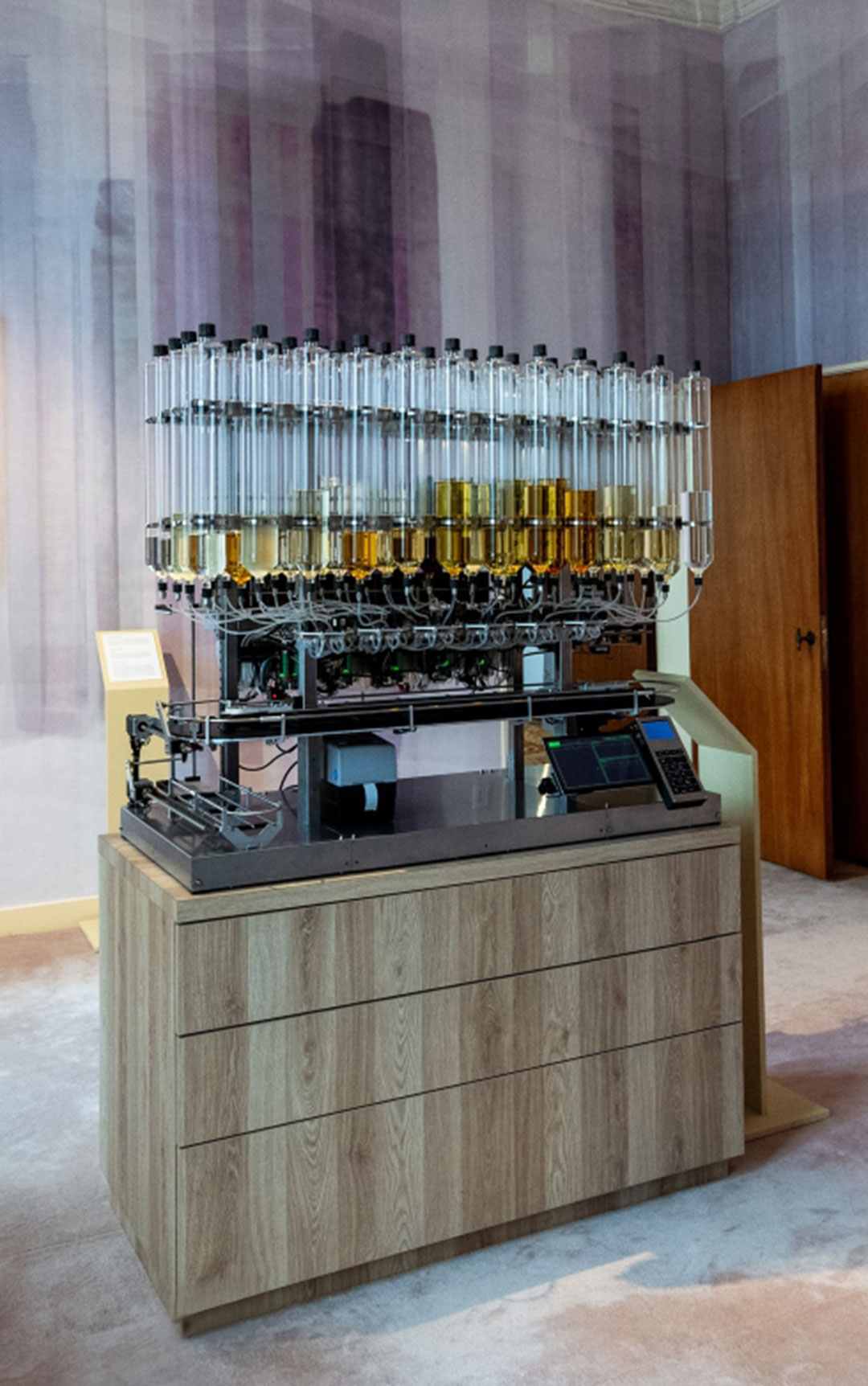
ALGORITHMIC PERFUMERY BY EVERYHUMAN

Frederik Duerinck


FILE SÃO PAULO 2026: Inter-creativity – Art and Technology – Installations
Electronic Language International Festival


Algorithmic Perfumery by EveryHuman – Netherlands

Algorithmic Perfumery began with a simple question: what if every human could create their own scent? Designed as an object of curiosity, the installation invites people into a dialogue with themselves. Through interaction with an AI, visitors explore memory, imagination, preference and identity, creating a unique fragrance along the way. Scent is one of our most profound senses. It shapes emotion, evokes memory, and influences us long before we become conscious of it. By combining technology and perfumery, Algorithmic Perfumery creates a space for curiosity, reflection, and self-discovery.

BIO
Amir Admoni and Fabito Rychter have collaborated for over 10 years, creating films, TV shows, and theatrical works marked by a distinctive visual style and singular storytelling. The duo has gained international recognition, earning 71 awards and presenting their work at more than 120 festivals. Gravity VR is their first joint venture into virtual reality, followed in 2021 by Lavrynthos, their second VR project.

Amir Admoni & Fabito Rychter – Gravidade VR – Brazil

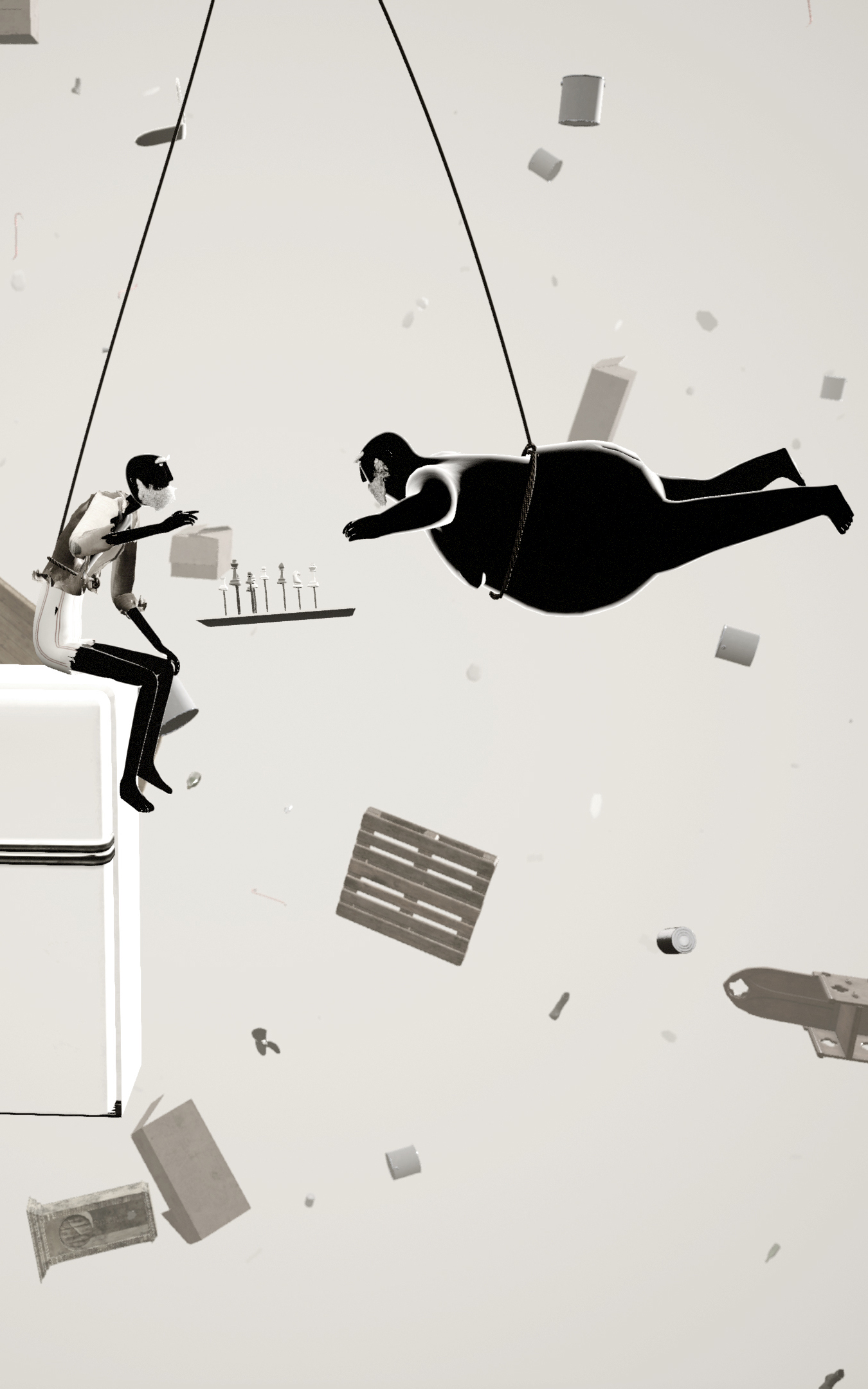
GRAVIDADE VR

Amir Admoni & Fabito Rychter


FILE SÃO PAULO 2026: Inter-creativity – Art and Technology – Installations
Electronic Language International Festival


 Gravidade VR – Brazil

Gravidade VR takes place in a surreal world where everything, including the public, is constantly falling. In this universe, with no walls, horizon, or sense of up and down, there is no room for vertigo or fear. Within this setting, we meet Osório and Benedito, two brothers who have spent their entire lives in this endless fall. But, as with all things in life, this journey is about to come to an end.

BIO
Amir Admoni and Fabito Rychter have collaborated for over 10 years, creating films, TV shows, and theatrical works marked by a distinctive visual style and singular storytelling. The duo has gained international recognition, earning 71 awards and presenting their work at more than 120 festivals. Gravity VR is their first joint venture into virtual reality, followed in 2021 by Lavrynthos, their second VR project.

QUBIT AI – International Electronic Language Festival – Art and Technology

QUBIT AI | quantum & synthetic ai
Electronic Language International Festival

July 3rd to August 25th
Tuesday to Sunday, 10am – 8pm
FIESP Cultural Center

Design: André Lenz
Image: Iskarioto Dystopian AI Films – Athena

QUBIT AI

In its 25 years of existence, the International Electronic Language Festival (FILE) is an internationally renowned Brazilian project that since 2000 has explored the intersection between art and technology. With more than two decades of history, the festival stands out for fostering exhibition spaces and debate about artistic innovations driven by disruptive and innovative technologies, inviting the public to get involved with experimental forms of art that challenge the boundaries of conventionality. Currently, two of these technologies stand out in the contemporary scenario: the accelerated development of quantum computing and artificial intelligence corroborated by synthetic data.

Quantum computing, an emerging revolution in the technological field, offers a new range of creative possibilities for contemporary artists. This new era allows the exploration of unprecedented frontiers through a new computational format that consists mainly of quantum superposition and entanglement, a new field of exploration for synthetic computer science, as well as for the arts in general; on the other hand, artificial intelligence, fueled by synthetic data, offers artists a new way of making and understanding art, opening up space for new forms, concepts and artistic expressions.

Entitled QUBIT AI, the exhibition delves into this unexplored territory presenting a selection of works of art resulting from the connection between artistic creation and technology, proposing a theoretical reflection on what the interrelationship between quantum computers and synthetic artificial intelligence will be.

Visitors will be invited to experience immersive installations, experimental videos, digital sculptures and other forms of interactive art, which intertwine reality and imagination. The exhibition encourages reflections on the influence of technology on art and contemporary society, while at the same time providing an environment to compare already established technological arts (analog and digital) with the possible futures of art in the synthetic era, enhanced by quantum computing. The QUBIT AI exhibition at FILE SP 2024 transcends the mere presentation of works of art; it is a journey to the limits of human creativity, driven by the convergence of art, science and technology.

Ricardo Barreto and Paula Perissinotto
co-organizers and curators of FILE
International Electronic Language Festival
 

QUBIT AI: Camila Magrane

The Witness

FILE 2024 | Installations
International Electronic Language Festival
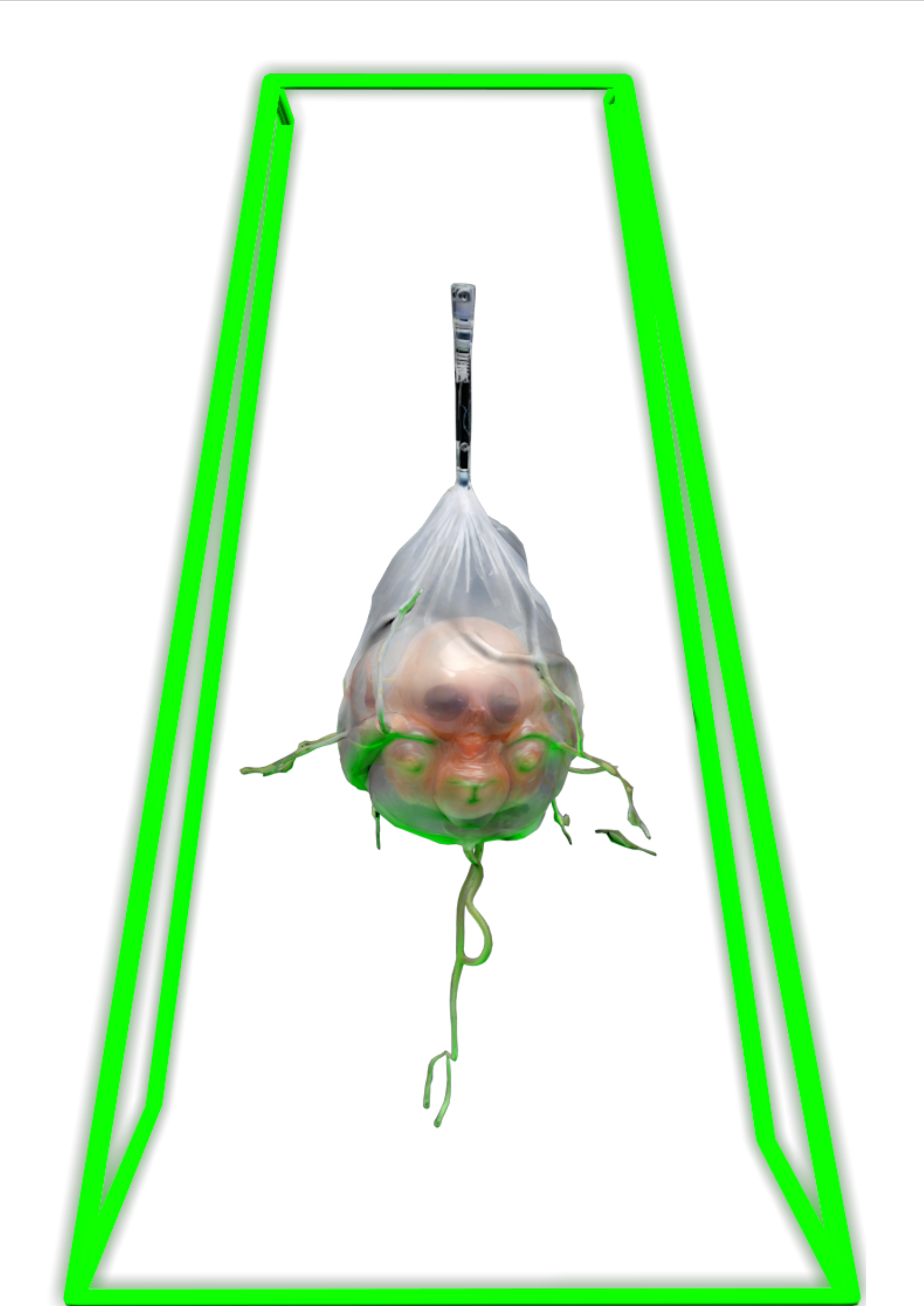
Image activated by augmented reality, where 3D animated subjects and scenarios are integrated into a physical photograph. Inspired by the work of Carl Jung, the image is part of a larger series that explores themes such as identity, introspection and transformation. Through AR, game elements were introduced into the piece, offering virtual content unlockable through interactions.

Bio

Camila Magrane is a Venezuelan-American visual artist known for her augmented reality images, integrating 3D animated scenes and subjects into physical photographs. With experience in video game development and a passion for analog photography, she explores the dialogue between the virtual and physical worlds. Magrane’s images are inspired by surrealist compositions and reference the graphic hyperrealism of contemporary video game design.

QUBIT AI: Banz & Bowinkel

Bots
FILE 2024 | Installations
International Electronic Language Festival
Bots presents a computer-controlled society through a series of algorithmically controlled humanoid avatars that appear on physical carpets using augmented reality (AR). Real-time performances synthesize human behavioral patterns into a formalized digital social study. Omnipresent, combined with our devices and incorporated into virtual environments, the work reminds us of our own digitalized world, in which we are surrounded by invisible bots.

Bio

Giulia Bowinkel (born 1983) and Friedemann Banz (born 1980) live in Berlin and have worked together under the name Banz & Bowinkel since 2009. In 2007 they graduated from the Art Academy with Albert Oehlen and started making art with computers . His work encompasses computer-generated imagery, animation, augmented reality, virtual realities and installations.

QUBIT AI: Anna Vasof & VRinMotion Team

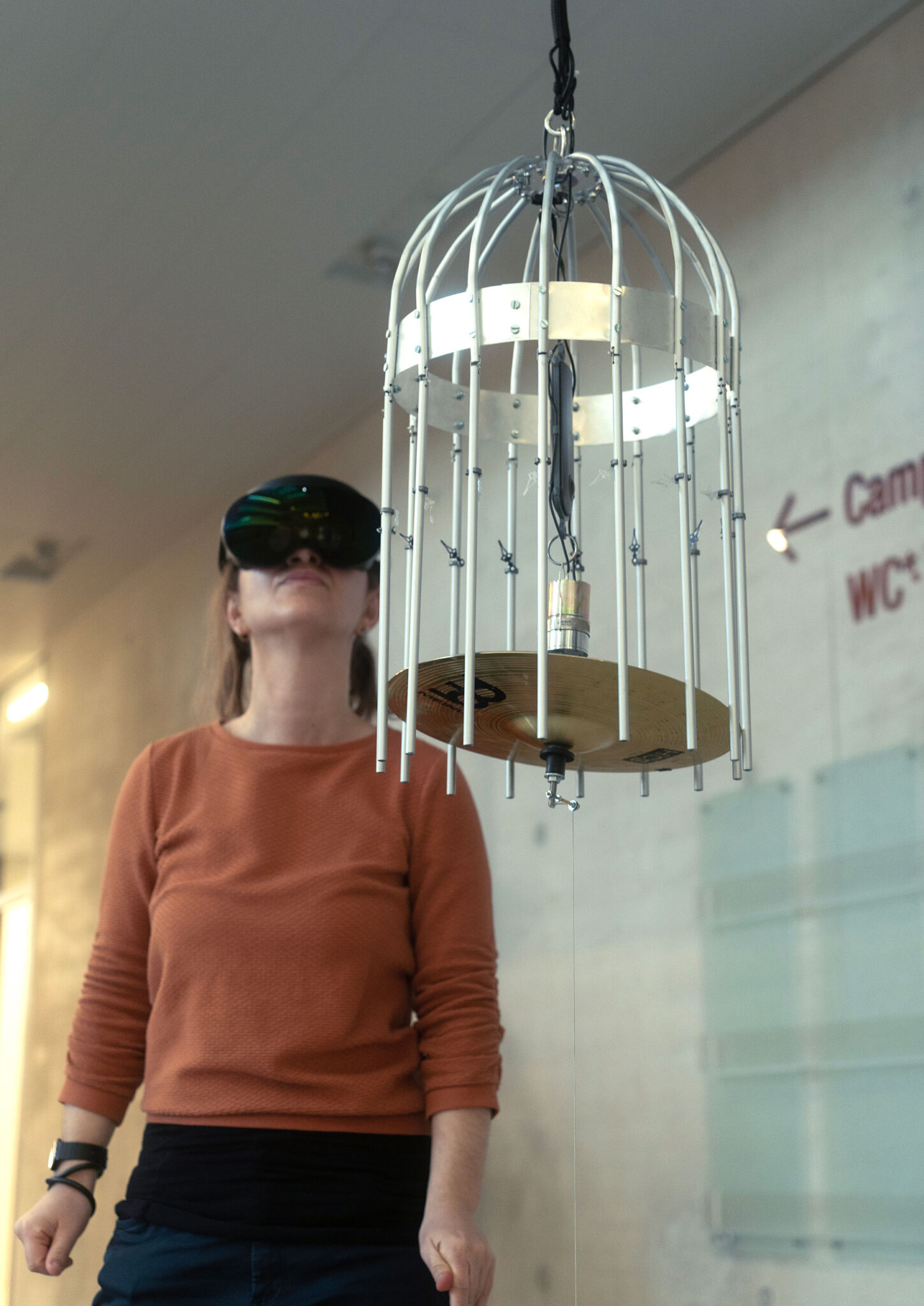
The Cage of Time

FILE 2024 | Installations
International Electronic Language Festival
Interactive installation that presents a kinetic instrument object and virtual reality glasses, functioning as a device that animates the illusion of the passage of time in virtual space. In the fabric of existence, time weaves a cage around our ephemeral moments, limiting our perceptions of the past, present and future. By embracing this paradox, we may discover that the cage of time becomes the crucible where the alchemy of experience transforms our understanding of existence.

Bio

Anna Vasof is a multi-award-winning artist who focuses on filmmaking, short videos, and time-based sculptures. VRinMotion is an artistic research project based at St. Pölten University of Applied Sciences in Austria that investigates how features of stop-motion animation and motion capture can be combined with virtual reality to enrich current artistic discourse.

Credits

VRinMotion Team: Franziska Bruckner, Christoph Schmid, Clemens Gürtler, Matthias Husinsky, Christian Munk, Julian Salhofer, Stefan Nebel, Vrääth Öhner.
Concept by: Anna Vasof.

QUBIT AI: Klaus Obermaier, Stefano D’Alessio & Martina Menegon

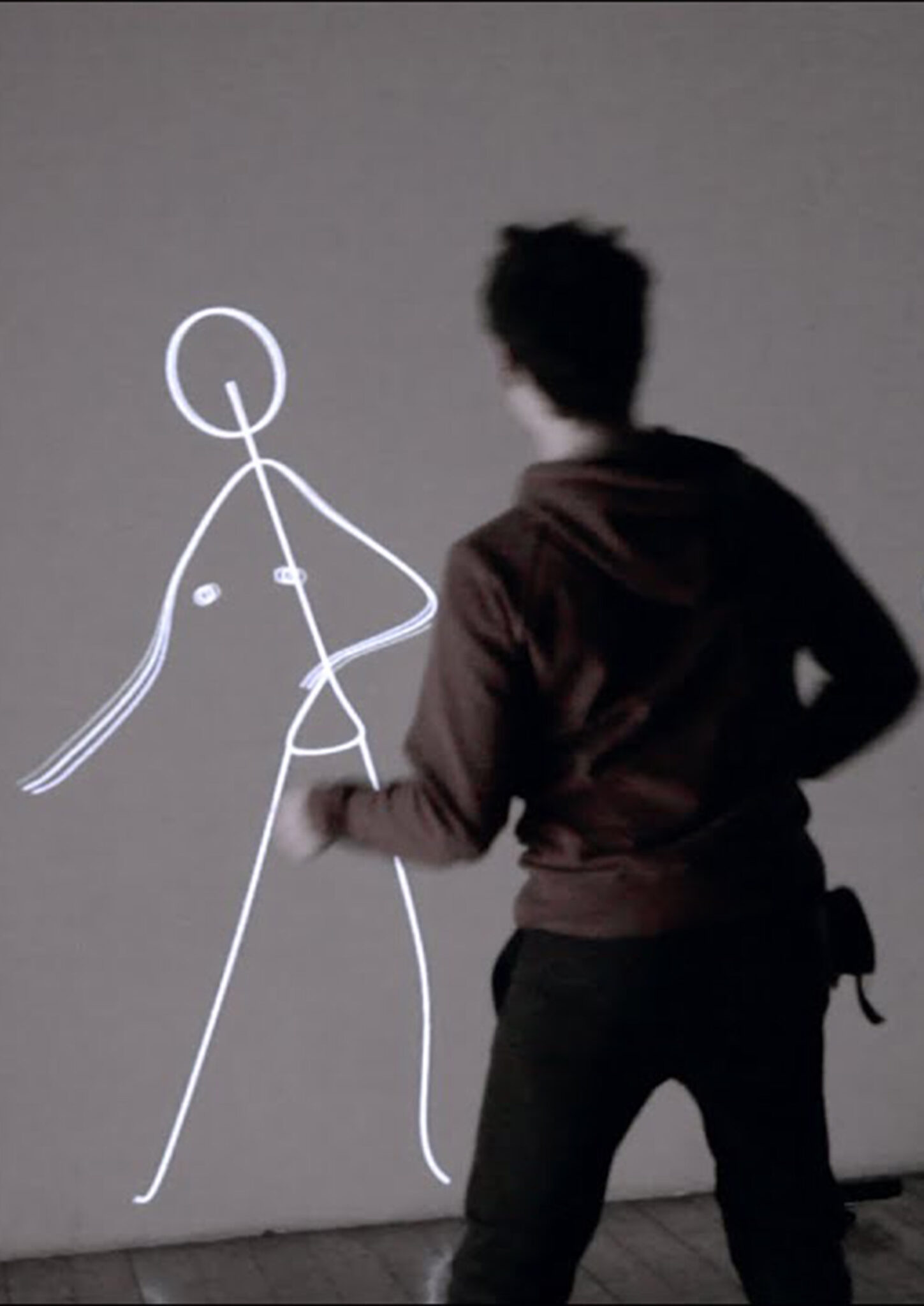
EGO

FILE 2024 | Installations
International Electronic Language Festival
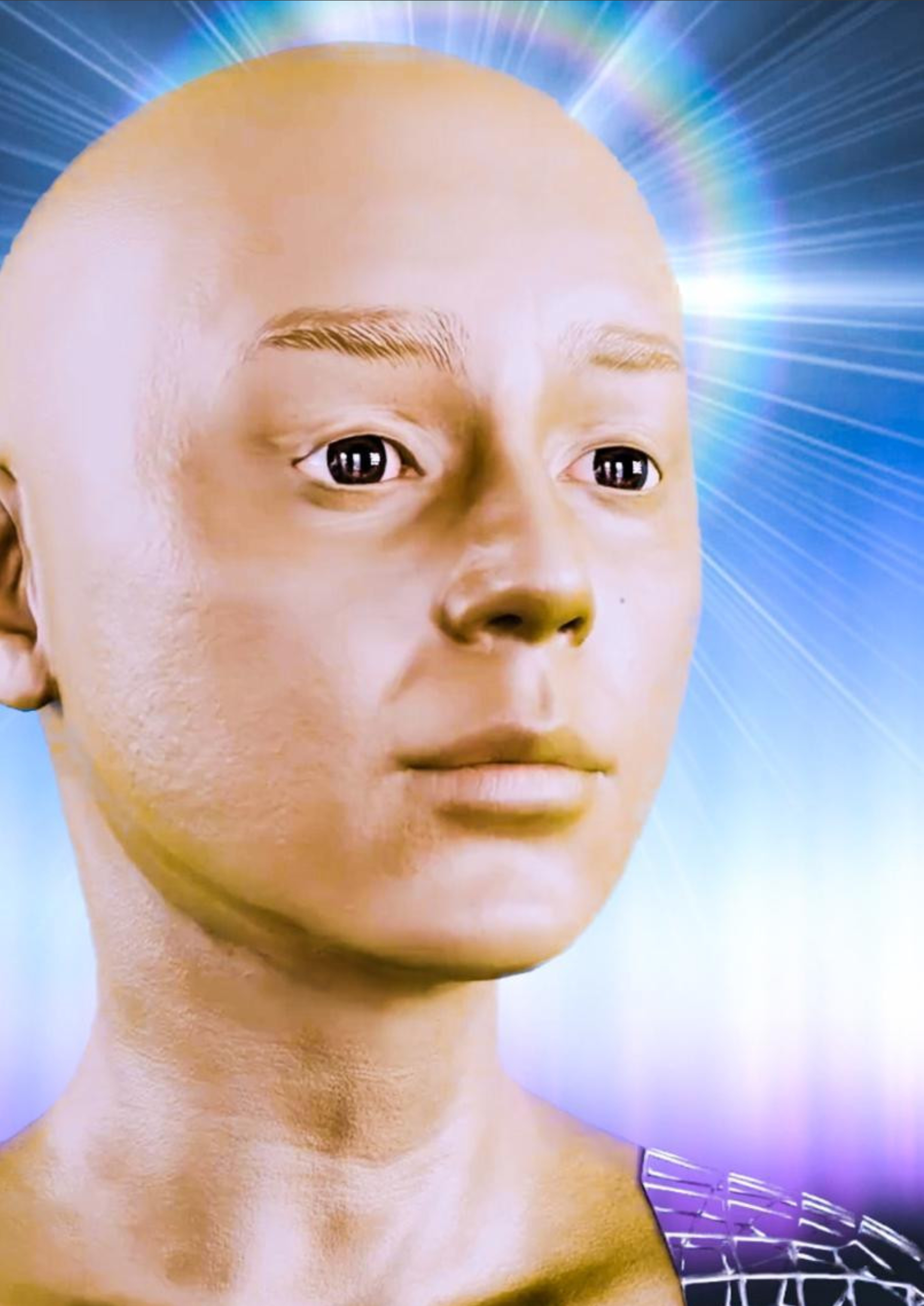
The mirror stage in psychology explains how the Ego forms through objectification, where one’s visual appearance comes into conflict with emotional experience, a concept called ‘alienation‘ by psychoanalyst Jacques Lacan. The interactive installation EGO reenacts and reverses this process by distorting the mirror image based on the user’s movements, highlighting the tension between the real and the symbolic, the Ego and the It, subject and object.

Bio

Klaus Obermaier is an interdisciplinary artist, director and composer who creates innovative works in the performing arts, music and installations using new media. Stefano D’Alessio researches social issues induced by the internet and explores how the web and its derivatives influence human behavior and the body. Martina Menegon creates intricate assemblages of physical and virtual elements, exploring the contemporary self and its hybrid corporeality.

QUBIT AI: Michael Sadowski (aka derealizer)

Stealth Technology of Ancient, Cosmic Pantheons

FILE 2024 | Aesthetic Synthetics
International Electronic Language Festival
Michael Sadowski (aka derealizer) – Stealth Technology of Ancient, Cosmic Pantheons – Austria

An abstract painting in motion, with colors and shapes exploding and transforming to the rhythm of the music. The dynamic element is not trapped in a static image, but can unfold in time and space.

Bio

Using Stable Diffusion, a visual synthesizer, the artist turns fantasies into videos using just a PC, similar to the invention of printing 600 years ago. Exploring the interplay between software algorithms that create visual worlds and the artist’s mind guiding this process is incredibly exciting. Unlike traditional cinema, there is no ‘reality’ or humans involved, making it a satisfying medium for creating visual art.

Credits

Visuals: Michael Sadowski
Music: Stealth Technology of Ancient, Cosmic Pantheons by The Intangible

QUBIT AI: Michael Sadowski (aka derealizer)

Distortions of The Past

FILE 2024 | Aesthetic Synthetics
International Electronic Language Festival
Michael Sadowski (aka derealizer) – Distortions of The Past – Austria

Fractal elements that resemble cosmic structures evoke the illusion of traveling through a fractal universe. Rules, in the form of prompts, and chance interact with each other to create a visual fantasy.

Bio

Using Stable Diffusion, a visual synthesizer, the artist turns fantasies into videos using just a PC, similar to the invention of printing 600 years ago. Exploring the interplay between software algorithms that create visual worlds and the artist’s mind guiding this process is incredibly exciting. Unlike traditional cinema, there is no ‘reality’ or humans involved, making it a satisfying medium for creating visual art.

Credits

Visuals: Michael Sadowski
Music: Distortions of the Past by Dreamstate Logic

QUBIT AI: Kelly Luck

Kelly Luck
Strangeland 1 (excerpt)

FILE 2024 | Aesthetic Synthetics
International Electronic Language Festival
Kelly Luck – Strangeland 1 (excerpt) – United States

From a surrealist point of view, the main attraction of generative AI, for the artist, is its lack of memory. At any given moment, she only has the current frame and instructions on how to proceed, similar to free association in dreams. This work is part of a series of long-term environments designed to immerse the viewer in a constantly evolving and never-ending landscape, inviting relaxation and engagement.

Bio

As part of the first generation to grow up around computers, Kelly Luck quickly became fascinated with the creative possibilities of this new technology. Her journey has ranged from pixel art and graphic ‘hacks’ to the 90s demoscene, 2D and later 3D graphics, and now the modern tools of digital art. With the emergence of generative AI, it endlessly explores how technology continues to blur the line between imagination and reality.

QUBIT AI: Michael Sadowski (aka derealizer)

Magic Drops

FILE 2024 | Interator – Sound Synthetics
International Electronic Language Festival
Michael Sadowski (aka derealizer) – Magic Drops – Austria

Moving abstract structures and grimacing masks, colors that change and pulse to the rhythm of the music create a psychedelic experience that embodies the spirit of Techno.

Bio

Using Stable Diffusion, a visual synthesizer, the artist turns fantasies into videos using just a PC, similar to the invention of printing 600 years ago. Exploring the interplay between software algorithms that create visual worlds and the artist’s mind guiding this process is incredibly exciting. Unlike traditional cinema, there is no ‘reality’ or humans involved, making it a satisfying medium for creating visual art.

Credits

Music: Chris Robert

QUBIT AI: Michael Sadowski (aka derealizer)

In Love

FILE 2024 | Interator – Sound Synthetics
International Electronic Language Festival
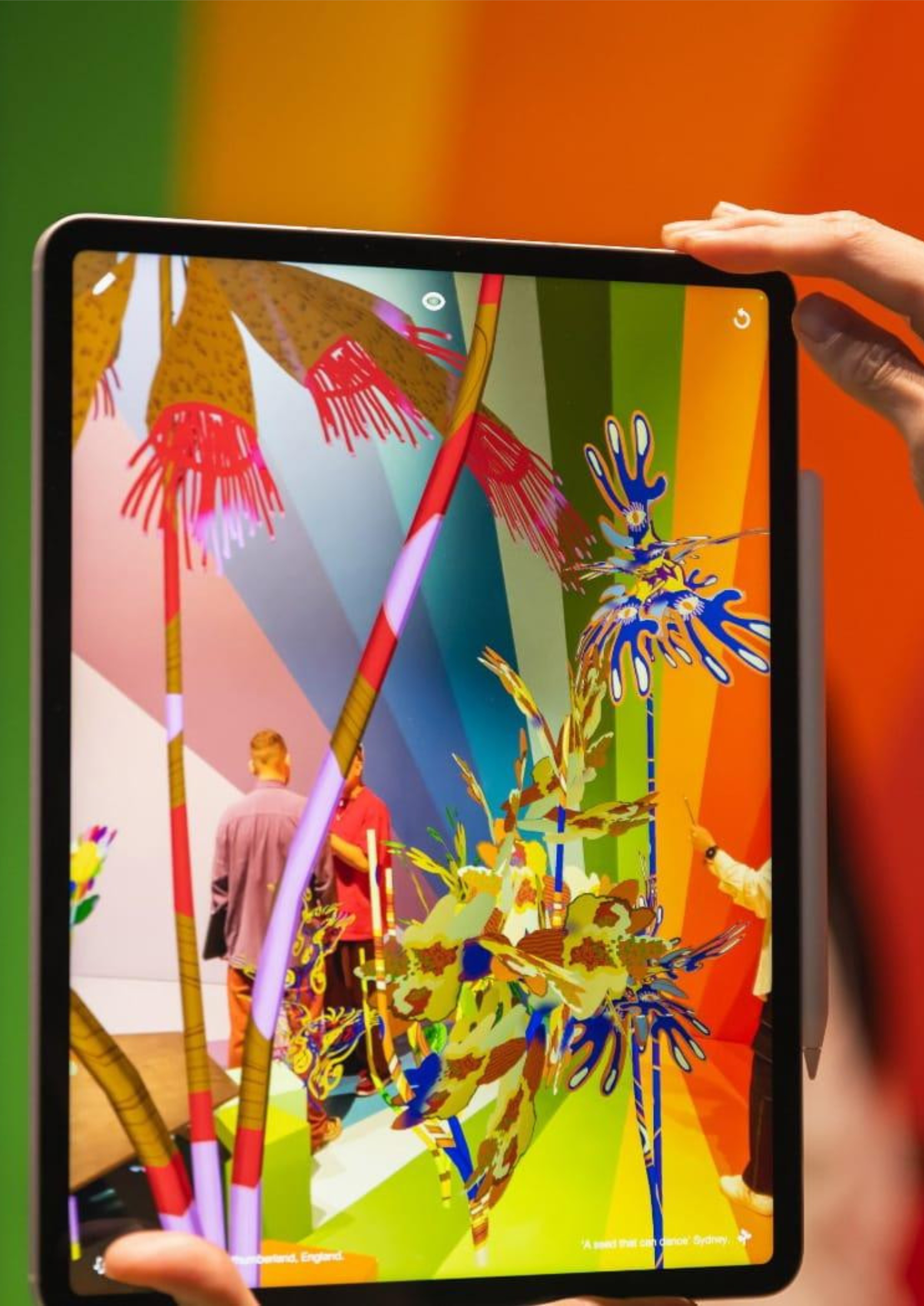
Michael Sadowski (aka derealizer) – In Love – Austria

Fractal structures move to the sound of progressive house as the virtual camera navigates through this fractal world. To intensify the psychedelic quality, a second layer contrasts with the movement, resulting in a joyful madness of colors.

Bio

Using Stable Diffusion, a visual synthesizer, the artist turns fantasies into videos using just a PC, similar to the invention of printing 600 years ago. Exploring the interplay between software algorithms that create visual worlds and the artist’s mind guiding this process is incredibly exciting. Unlike traditional cinema, there is no ‘reality’ or humans involved, making it a satisfying medium for creating visual art.

Credits

Music: Y do I

QUBIT AI: Luigi Novellino (aka PintoCreation)

Blob Alien Mouth

FILE 2024 | Interator – Sound Synthetics
International Electronic Language Festival
Luigi Novellino (aka PintoCreation) – Blob Alien Mouth – Italy

The journey begins with Deforum, using the Automatic1111 interface to create basic images with the StableDiffusion XL, EndjourneyXL, and Lora XLFullArt templates. The video undergoes a transformation using the Absolute Reality model and Lora Aurora style, guided by the IPAdapter node and refined by QrCode Controlnet.

Bio

Fascinated by the limitless domain of AI, Luigi Novellino adopts the title syntographer, a term that resonates deeply within the community. The artist often asks himself: “am I an artist?” Art, in his view, defies rigid definitions or limits; it represents a fluid expression of creativity that transcends labels. The artist’s ultimate goal is to awaken something in the viewer, provoking thoughts and evoking emotions.

Credits

Music: Oleh Boretskyi

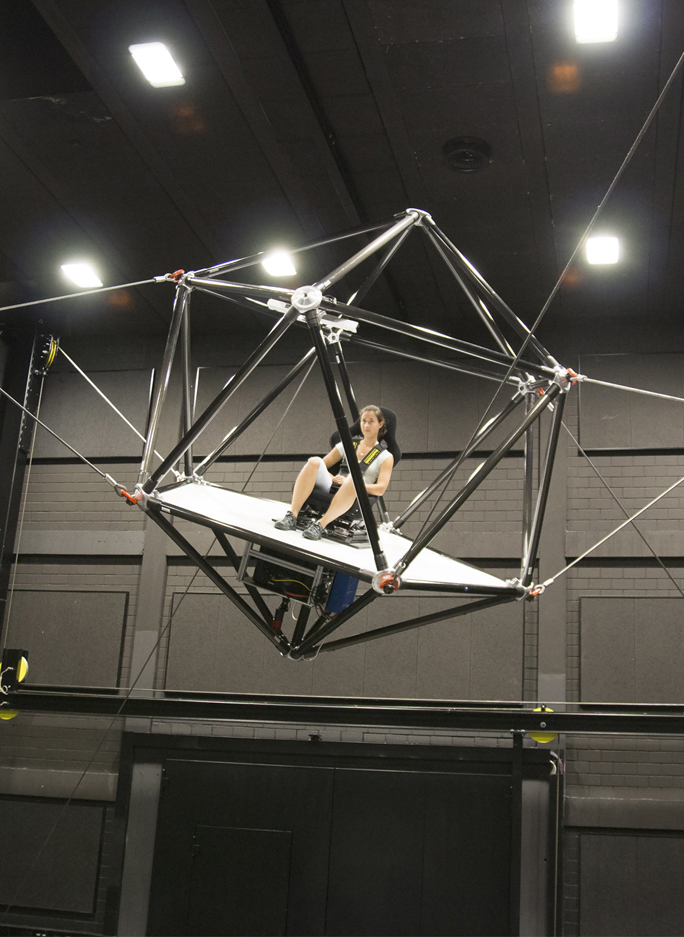
Heinrich Bulthoff

Cable Robot Simulator
Max-Planck-Institut für biologische Kybernetik

Eight steel cables, each with 1.4 tons of tensions, hold aloft a caged platform with a seat for one person. Using a wireless VR headset, that person can simulate experiences like flight while being zoomed in dozens of different ways. Eight retracting cables connected to a winch pull on the cage. It’s like a giant, flying VR jungle gym.

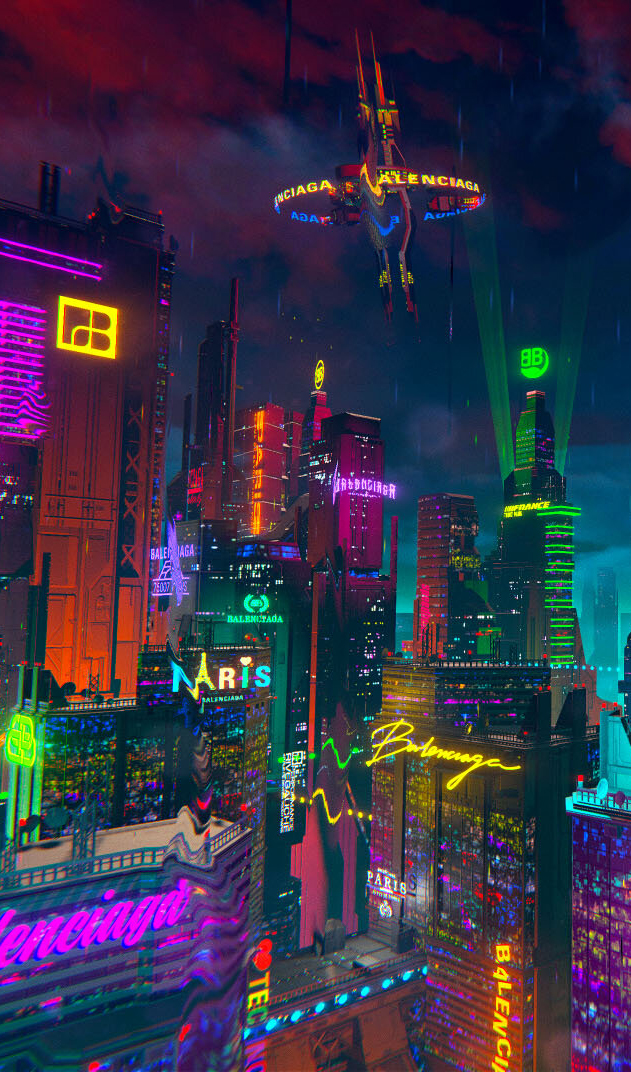
tabor robak

balenciaga collaboration
A 25 minute video loop with previously unreleased tracks by DJ Hell, made in collaboration with Balenciaga.

Here is a dramatic tension in his work between the real and the imagined in his use of often-appropriated digital objects to create virtual landscapes, which frequently contain elements – animals, machines, fragments of videogames – that are recognisable from our day to day life. This creates a symbiotic relationship between the digital and the real. In a very real way digital space has now become an intangible reality. The worlds built by Robak have a distinctly cinematic sensibility that hyperbolises the shine and dramatic effects of 3D rendered animation. The aesthetic of his work is supremely important, drawing the viewer into a truly alluring, indulgent and strangely gratifying environment. There is a further challenge to the void between high-art and the worlds of 3D animation and gaming, in the intersection between depiction and simulation. This can be partially attributed to the vernacular of advertising Robak is so proficient at utilising.

JF Malouin

Les trois Grâces

file festival
“Les Trois Grâces” is a presence and corporeality simulation in virtual reality. Exposing the underlying power struggle implied within touch, this piece explores the trespassing  of bodily frontiers and territoriality. As a sculpture, its object is not matter, but our relationship to the other.
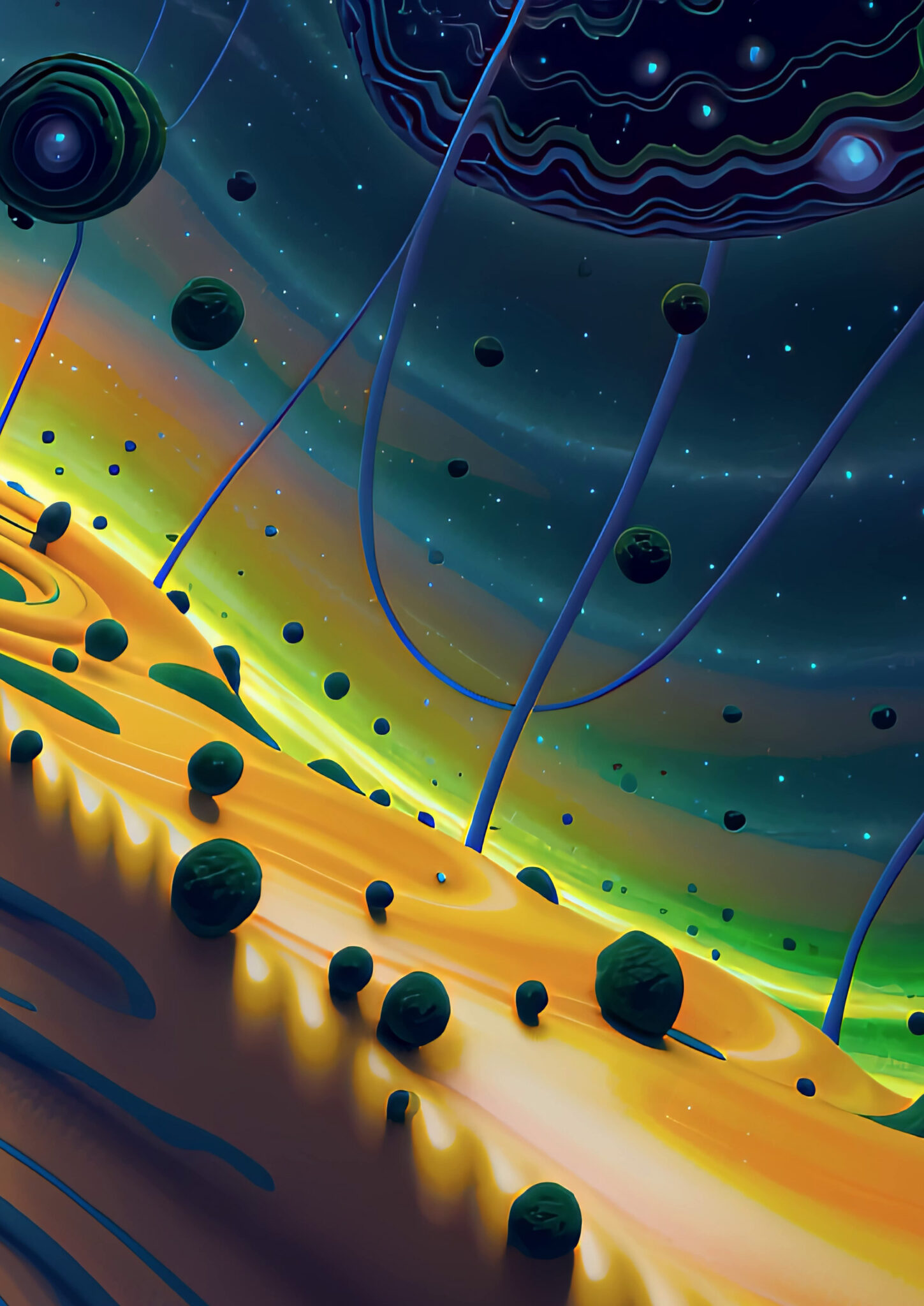
It offers a troubling experience of intimate proportions.

Random International

Presence and Erasure
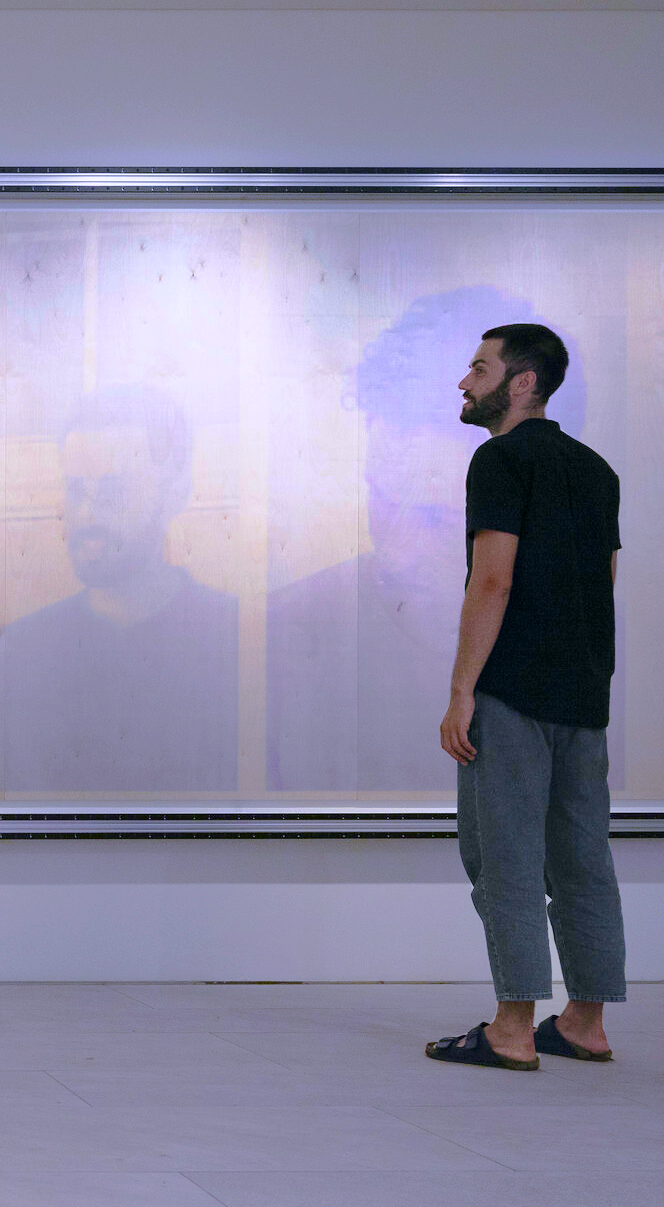
Presence and Erasure is a portrait machine that explores the reality of automated facial recognition and how people relate to their self-image, instinctively and emotionally. Within a given spatial domain, the artwork constantly scans for faces in the vicinity and photographs them. When the artwork’s algorithm detects a certain quality within a photograph, this image is temporarily printed at large scale by exposing a photochromic surface to light impulses. Each automated portrait remains for little more than a minute, before gradually dissolving into blankness. RANDOM INTERNATIONAL began to combine transient mark-making with automated portraiture early on in their practice, in 2008. Presence and Erasure marks the latest development in this body of work and assumes a minimal, industrial aesthetic that references their earliest studies on this theme. The physical impact of facial recognition and machine vision is emphasised by the exposure of the printing process itself, contrasted against the aesthetic of the high resolution portraits generated. RANDOM INTERNATIONAL intend this as a counter to the perception of surveillance footage as always being low quality, aiming to create a deeper reflection on the nature of surveillance today as well as the resounding cognitive and emotional dissonances.

Troika

AVA

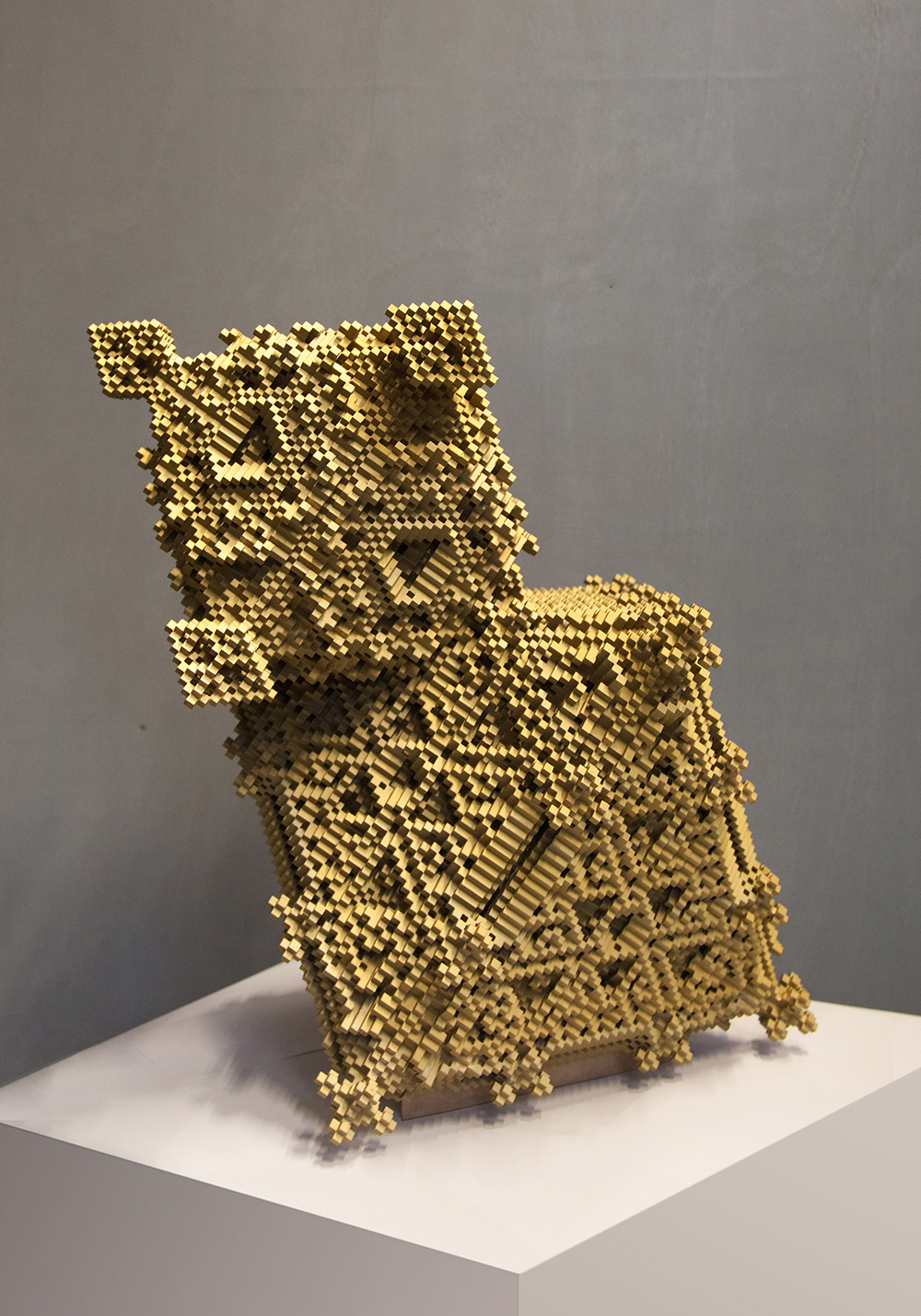
Ava’ is Troika’s first sculptural manifestation of their exploration of algorithms. ‘Ava’ is the physical result of emergence and self organisation brought about by ‘growing’ a sculpture through the use of a computer algorithm that imitates the emergence of life by which complexity arises from the simplest of things. As such the sculpture probes at the nature of becoming, existence and our strive to understand and replicate the complexities of life.In a landscape where our personal data is a raw material, and where we, humans, have become subordinate spectators of algorithms and a computerised infrastructure, we ask the question how much or little are we capable of influencing our surrounding reality, how much is predetermined, how much is down to chance.

Gustav Deutsch

Shirley
Visions of reality
FILE FESTIVAL
Shirley is a woman in America in the 1930s, ‘40s, ‘50s, and early ‘60s. A woman who would like to influence the course of history with her professional and socio-political involvement. A woman who does not accept the reality of the Depression years, WWII, the McCarthy era, race conflicts and civil rights campaigns as given but rather as generated and adjustable.
Edward Hopper movie

Tromarama

Madakaripura

Digital image projection, software, real-time internet-based data, and sound
Installation shot at St. Saviour Church, London
Tromarama is an art collective founded in 2006 by Febie Babyrose, Herbert Hans and Ruddy Hatumena. Engaging with the notion of hyperreality in the digital age, their projects explore the interrelationship between the virtual and the physical world. Their works often combine video, installations, computer programming and public participation depicting the influence of digital media on the society perception towards their surroundings. They live and work between Jakarta and Bandung.

MIGUEL CHEVALIER

Leistungspixel
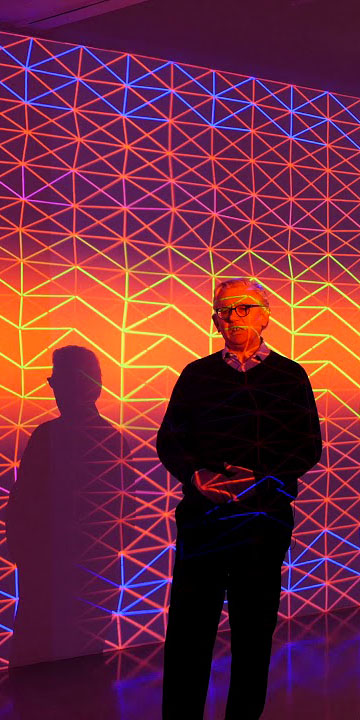
Die Power Pixels-Ausstellung besteht aus zwei generativen und interaktiven Virtual-Reality-Installationen: Complex Meshes 2020 und Oscillations 2020, eine Arbeit, die erstmals der Öffentlichkeit präsentiert wird. Oscillations 2020 ermöglicht eine grafische 3D-Visualisierung der Musik von Michel Redolfi. Eine Wellenform wird in Echtzeit entsprechend den Frequenzen und Amplituden der Musik erzeugt. Diese Klangspektren der verschiedenen Musikklänge erzeugen endlose imaginäre Landschaften. Bild und Musik reagieren in einer Verschmelzung emotionaler Natur aufeinander, die zu einer echten Synästhesie beiträgt.